After sewage spill, Potomac's trust problem hits businesses

Add Axios as your preferred source to
see more of our stories on Google.
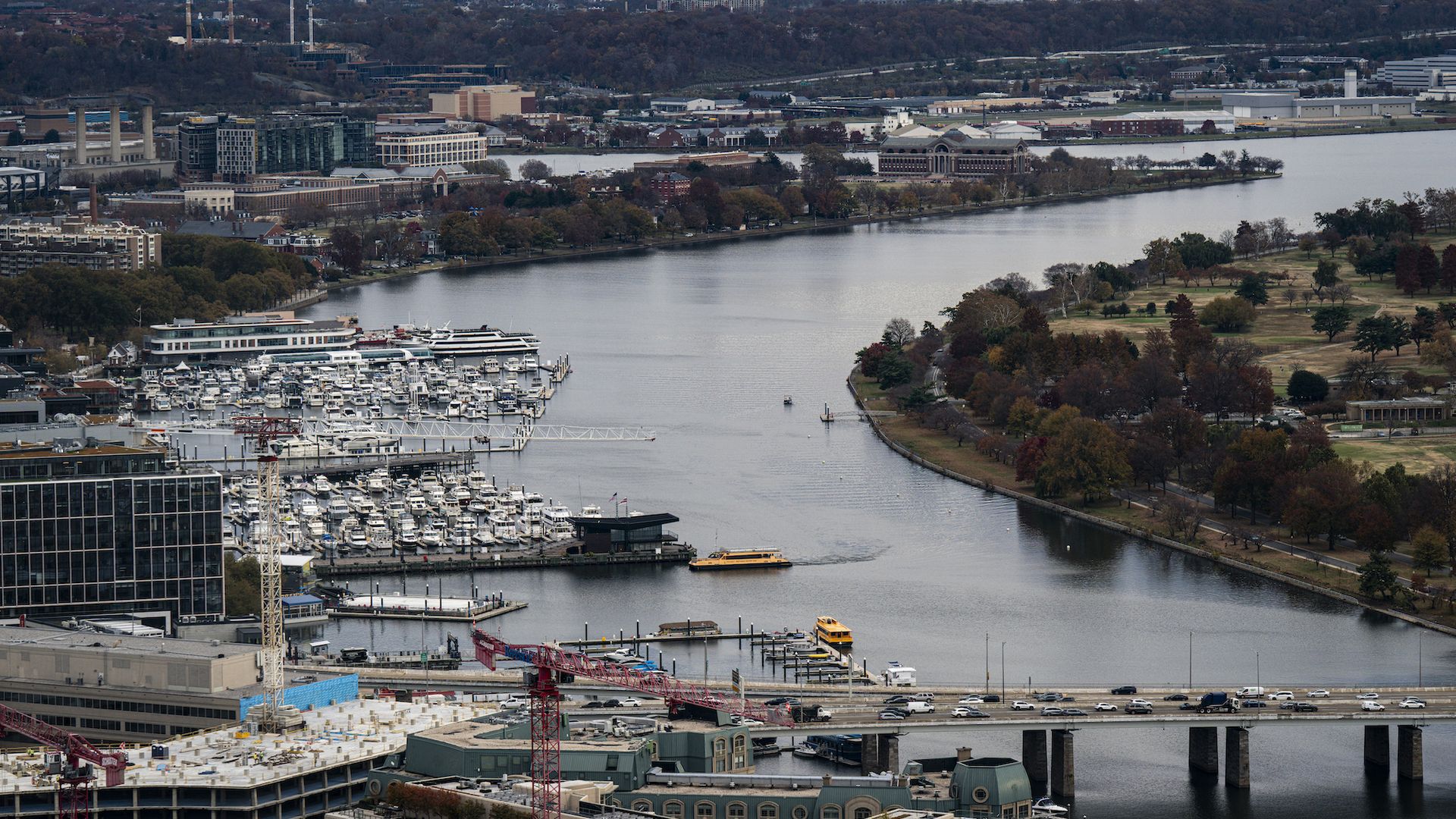
The Washington Channel at the Wharf, a new D.C. hub for boating and fishing charters. Photo: Al Drago/Getty Images
You can touch the Potomac River again, per D.C.'s health department. Whether Washingtonians are ready to is another story.
Why it matters: River season is almost here. But the stigma of the "Pootomac" — and public mistrust of the agencies testing it — may linger longer than the sewage itself.
State of play: Water testing at many sites is trending in a positive direction, and environmental remediation around the spill site is finally underway — expected to take two months.
- All good things, especially considering that mid- to late March is when the Potomac typically comes alive. Boathouses reopen, charters launch, American and hickory shad migrate upriver to spawn and fishermen flock to catch them.
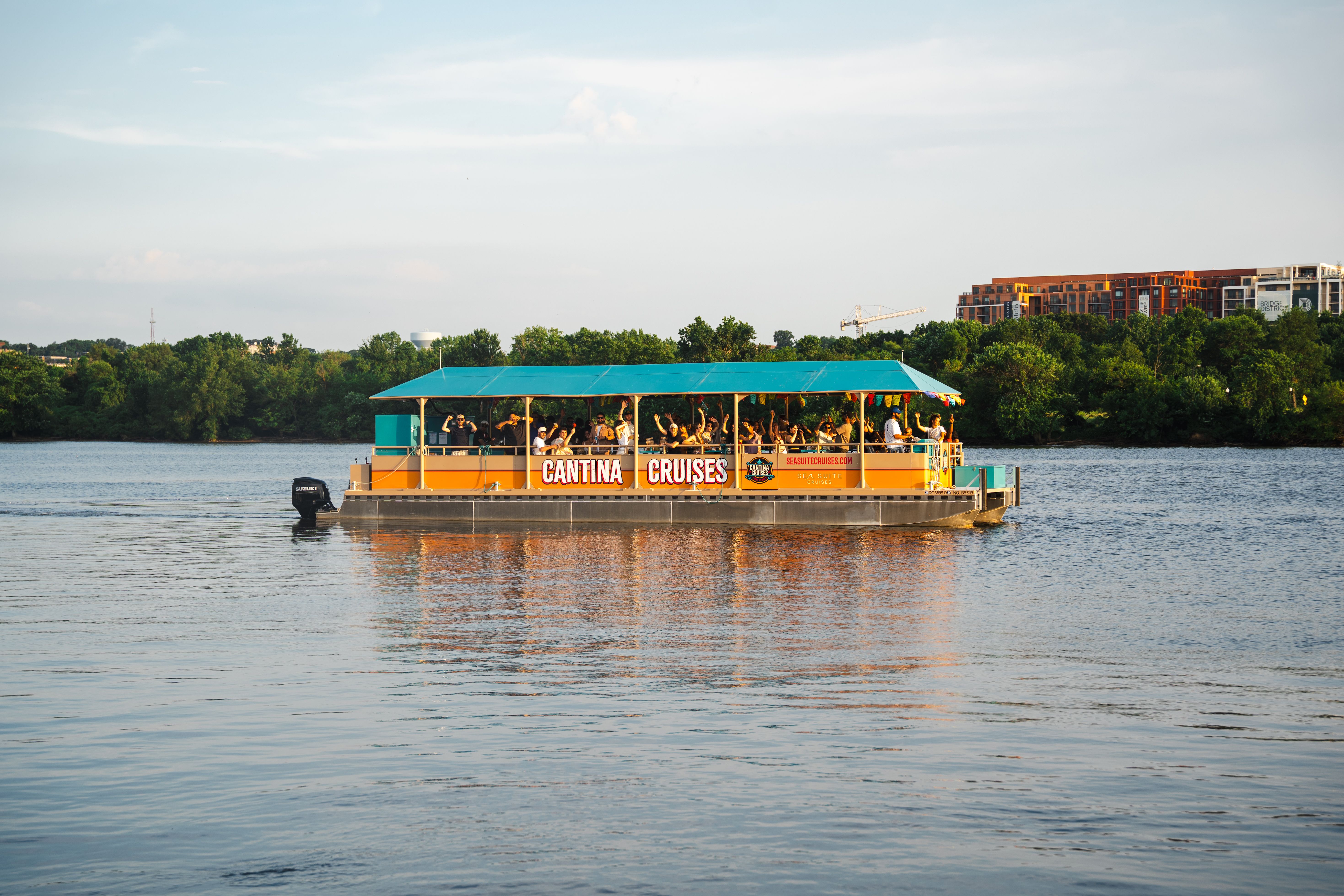
Yes, but: "This felt like a parallel to COVID," says Jack Maher, co-founder of Sea Suite Cruises, which operates 15 party boats on the Potomac. The shutdown. The uncertainty and whiplash.
- He plans to launch March 14 as scheduled — with extra precautions like increased monitoring and deep cleans between charters, even though guests don't touch the water and routes are far from the spill.
- "The biggest thing is battling public perception," Maher says. "Bridging the gap from 'Don't go near it' to 'It's safe' is a challenge."
Meanwhile, Sea Suite launched a donation campaign and will match up to $10,000 for the Potomac Riverkeeper Network's crisis fund.
- So far, bookings are tracking "pretty similar" to past years, Maher says.
Friction point: Fishing.
- Captain Tim Blanchard, who runs Fish the Potomac catch-and-release charters from Navy Yard, says he's had "zero bookings" for the spring shad run — typically a six-figure season.
- He estimates roughly $120,000 in losses so far, including $6,000 in refunds after canceling a kids winter fishing camp.
- Still, he expects summer to rebound. His Wharf tackle shop is opening soon and his camps are full.
- "I've been overly informative with parents," he says. "Perception is the biggest concern."
The commercial fishery, meanwhile, is battling its own hurdles, including a drop-off in sales due to the spill.
- "Some people say they're not going to eat no oysters from this area," Robert T. Brown, head of the Maryland Watermen's Association, tells Axios.
- He says the big seafood buyers "stopped buying Potomac," despite rigorous water and shellfish testing. "It's just not right."
Between the lines: It's unclear how much, if any, of the federal money headed to D.C. will help river-dependent businesses.
- In Maryland, officials requested federal relief for the oyster fishery, including portions in the lower Potomac.
What's next: Environmental advocates are calling for daily, public-facing water and sediment testing through the summer to restore confidence.
- "It's going to take a lot of data — and making it public — to make people feel comfortable," says Dean Naujoks of the Potomac Riverkeeper Network.
- He's also concerned about lack of funding and longer-term risks, including algae blooms like last year's "pistachio tide" in Baltimore Harbor, triggered by legacy sewage in sediment.
The bottom line: "I'm not trying to be alarmist. I'm just saying, be ready," Naujoks says. "If you're going to change the public's perception, it's going to take a lot."