D.C. on the verge of lifting Potomac River recreation restrictions

Add Axios as your preferred source to
see more of our stories on Google.
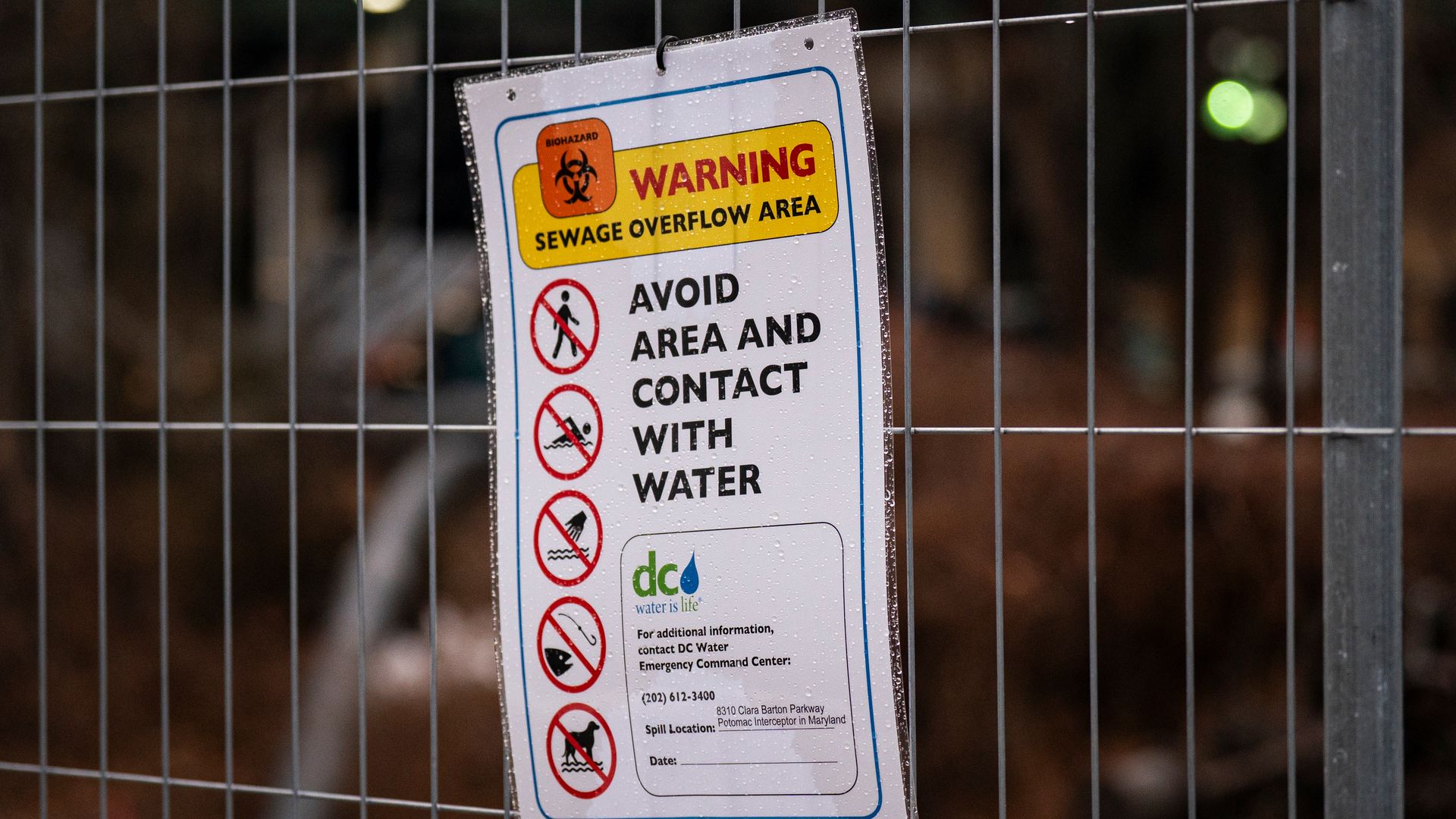
A DC Water sign instructing pedestrians to avoid the area near the C&O Canal. Photo: Al Drago/Bloomberg via Getty Images
D.C. is aiming to lift its restrictions on Potomac River recreation on March 2 — three weeks after the last sewage surge was reported (Super Bowl Sunday's "wipegate") and six weeks after the initial spill.
Why it matters: It's an early sign that the region may be turning a corner on what officials have called the worst sewage spill in U.S. history — and a test of public trust in the river.
Driving the news: Federal crews arrived at the spill site Saturday after President Trump approved D.C.'s public emergency declaration, unlocking federal aid.
- Many of the urgent questions that hovered for weeks now have clearer answers. Big unknowns remain about the exact cause of the pipe collapse — and the long-term environmental and economic fallout.
Here's what we know — and don't — so far.
Drinking water: Still safe.
- Officials continue to stress that D.C.'s drinking water system is separate from its sewer system.
- Water is drawn upstream from the spill site, making contamination "impossible," according to authorities — though testing remains ongoing out of caution.
Recreation: Possibly soon.
- The District's Department of Energy and the Environment (DOEE) says its most recent testing results on Feb. 20 showed E. coli levels below the EPA's threshold for safe recreation.
- If that trend holds, the city plans to lift the recreation advisory March 2.
Testing: More frequent — and more visible.
- DOEE is shifting from weekly to daily water testing, likely starting next week. Results will be posted to a new public information site.
- DC Water says it tests six sites along the spill's path, plus popular recreation spots downstream including Georgetown, Fletcher's Boat House and National Harbor.
Cause: Still unknown.
- Officials say they don't know exactly what triggered the nearly 60-year-old sewer pipe to collapse.
- DC Water already has a 10-year rehabilitation plan underway and was set to begin work this summer on the 10,000-foot stretch where the break occurred.
- Once emergency repairs wrap — currently projected for mid-March — officials say they'll accelerate work in the surrounding area.
Cost: $20 million — for now.
- DC Water's new estimate covers pipe repairs and environmental cleanup. Who ultimately pays remains unsettled.
- Under the public emergency declaration, the typical split is 75% federal, 25% local. But Mayor Muriel Bowser said last week she's pushing for "100% reimbursement" for D.C. and DC Water.
Meanwhile, DC Water says customers won't see rate hikes tied to the spill. (A previously planned rate increase is still expected.)
Environmental cleanup: In containment mode.
- The U.S. Army Corps of Engineers is now on site, working to keep stormwater off contaminated soil and prevent runoff into the Potomac — especially critical with recent storms and ice melt.
- DC Water and federal partners are still developing a longer-term cleanup plan for affected riverbeds, shoreline areas and parts of the C&O Canal, where an isolated stretch is temporarily holding diverted sewage.
Between the lines: Environmental groups worry about algae blooms or fish kills once temperatures rise and bacteria become more active.
- The city's annual fish and wildlife surveys begin next month and could help identify areas of concern.
Friction point: DC Water and local officials have been criticized as slow to respond and lacking transparency during the height of the spill. That's changing, bolstered by more frequent testing and community meetings.
- Two public meetings will be held this week with DC Water and local officials: one on Wednesday (7pm) at DC Water headquarters in Southeast, and another Thursday (7pm) at Bethesda's Walt Whitman High School.