Trump-stacked commission eyes Pennsylvania Avenue overhaul

Add Axios as your preferred source to
see more of our stories on Google.
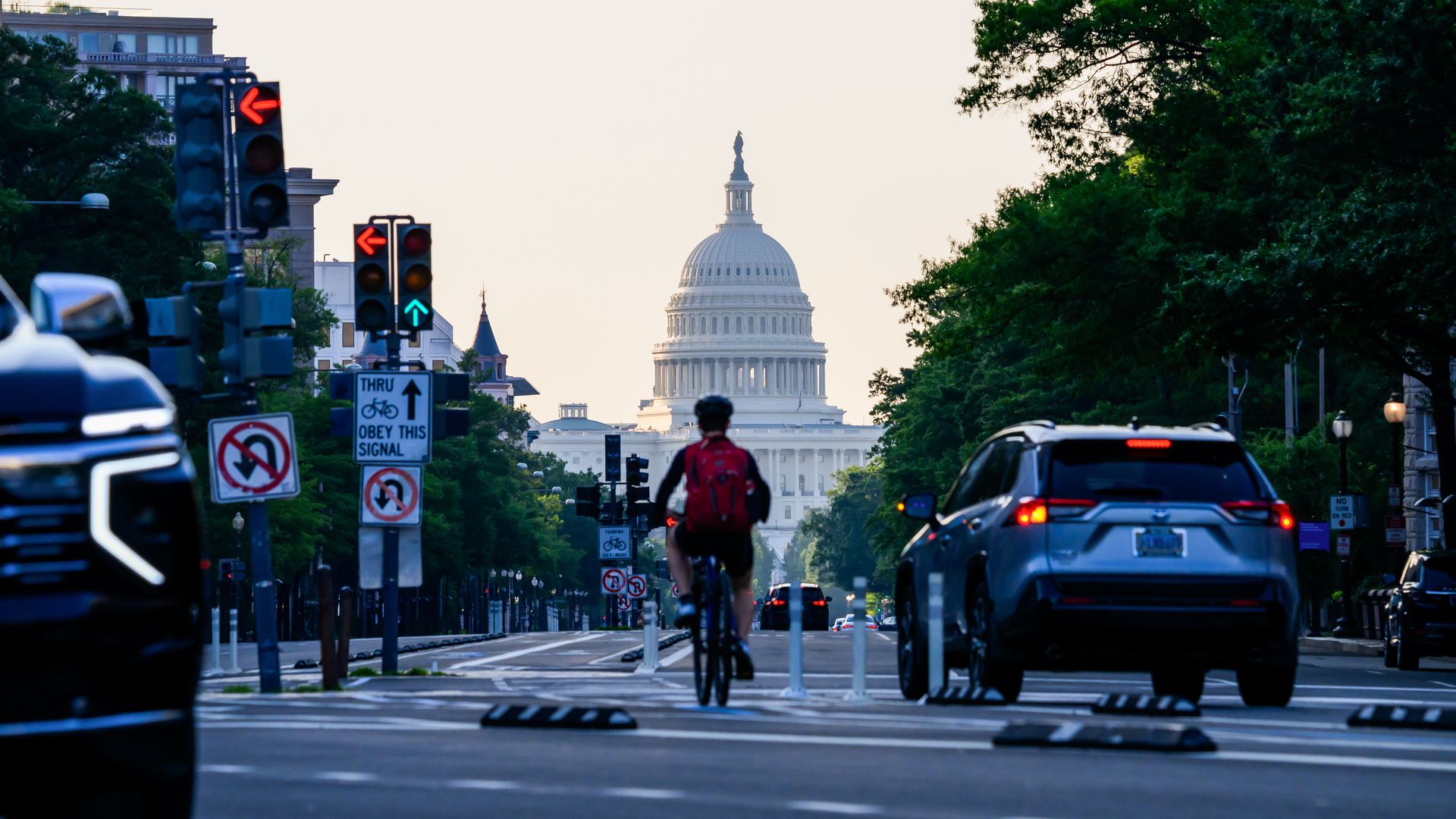
Photo: Pete Kiehart/Bloomberg via Getty Images
Federal officials want to move on a "once-in-a-generation opportunity" to remake Pennsylvania Avenue.
Why it matters: America's Main Street — once considered the most prized commercial stretch of D.C. — needs some sprucing up.
Context: The last overhaul of the 1.2-mile roadway between the White House and U.S. Capitol came in the 1970s.
- For the past 30 years, a mishmash of city and federal agencies have controlled the area — a bureaucratic cluster, as far as planning goes.
Driving the news: The National Capital Planning Commission is now pursuing a new plan to reimagine the street. The priorities:
- Fill retail holes, but not in a way that competes with downtown.
- Create better pathways to shepherd the 35 million National Mall tourists north toward Pennsylvania Avenue and downtown D.C., and back south.
- Prioritize views of the U.S. Capitol.
- Establish a better process to "host events of all scales."
Case in point: This summer's Indy Grand Prix needed an executive order to get around restrictions on branding and signage, NCPC project lead Elizabeth Miller said at its meeting last week.
- The street, she said, isn't functioning "the way it should be to fulfill its national role."
Between the lines: NCPC is the commission that has say over major D.C. projects like the Commanders stadium.
- Stacked with Trump appointees, NCPC has pushed for classical architecture and is expected to fast-track the president's pet projects like the 250 arch.
What we're watching: How the president might shape Pennsylvania Avenue — a major thoroughfare with 8 traffic lanes and median bike lanes, and a go-to site for protests, demonstrations and inauguration festivities.
The intrigue: Early design concepts included creating three distinct zones on the avenue, with names like "Market Square" — think: park space, retail and other amenities to make the street more inviting for everyday people.
- The drawings (from several years ago) carved out more space for pedestrians, bikes and transit, "and less space for cars," per the NCPC.
- Those concepts are "guiding the current design work," NCPC spokesperson Stephen Staudigl told Axios.
What's next: Project consultants are expected to present new designs in April, and final review is anticipated for early 2027 before construction can begin.