
RFK Stadium neighborhood delayed beyond 2030

Add Axios as your preferred source to
see more of our stories on Google.
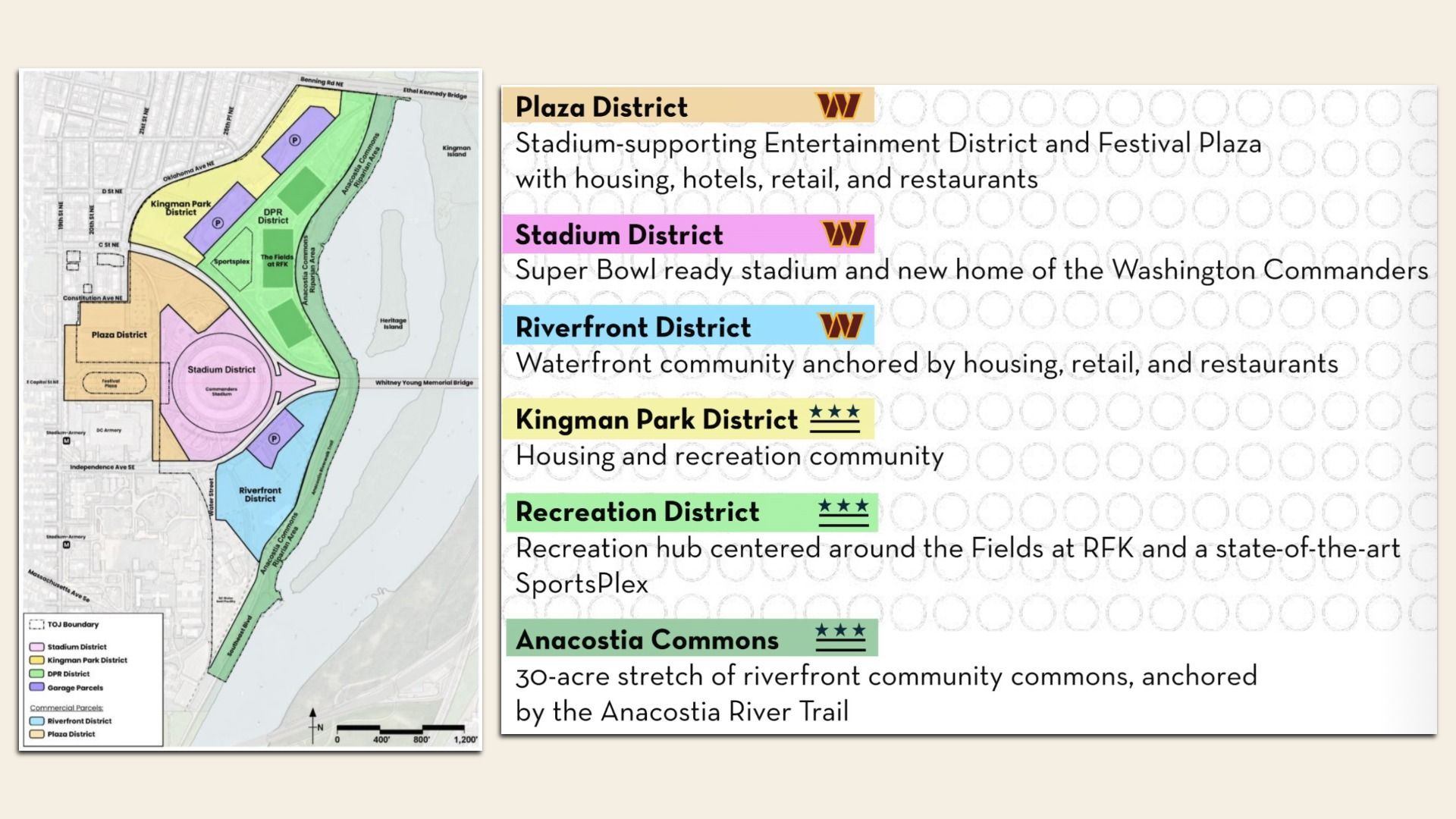
The six districts of the RFK Stadium redevelopment proposal. Image and map: Courtesy of D.C. government
Building a neighborhood around the new Commanders stadium at the RFK site will take longer than expected, after a last-minute zoning tweak scrambled plans.
Why it matters: The mixed-use riverfront development (think: apartments, retail, etc.) was a big selling point for the $3.7 billion stadium plan.
What we're hearing: The Plaza District — where the RFK site's tallest buildings for new housing and commercial are planned, along with fan zones outside the Stadium-Armory station — is no longer expected to open by 2030, in time for kickoff at the 65,000-seat domed NFL arena.
- That's because of a little-noticed provision that was included in the final RFK Stadium legislation approved last week.
- Council members hoped to exempt the mixed-use development parcels from city zoning approval, but Chair Phil Mendelson's office struck that idea on the advice of legal counsel.
What they're saying: "I decided it was better to err on the side of caution and not exempt," Mendelson told Axios in an interview Monday.
- Given how long zoning approval can take, the delays "could be a couple years," he added.
A spokesperson for the Commanders confirmed the delay but declined to comment further about timelines.
By the numbers: 6,000 homes are planned across three mixed-use districts, with about 30% reserved as affordable units.
- The D.C. government is responsible for developing the Kingman Park District, while the Commanders are in charge of the Plaza and Riverfront districts.
Between the lines: Because of zoning delays, the council last week shifted the development milestones from fixed calendar dates to rolling deadlines tied to when zoning approval is granted.
- For example, the final stage of development must be completed within 13 years of zoning approval, not by Dec. 31, 2040, as originally written.
- That means the Riverfront District — a later-stage parcel closer to the Anacostia River that's supposed to include more housing, retail and restaurants — is likely to open later in the 2040s.
Still on track: A stadium by 2030, in addition to two parking garages for fans — plus plenty of surface parking (hello, tailgating) for years to come, as construction takes time to ramp up.
- Mayor Muriel Bowser said Monday that she believes D.C. could host the Super Bowl in 2031.
What we're watching: Mendelson says that if Bowser submits accelerated revisions to the Comprehensive Plan — a big document that guides urban planning in D.C. — early next year, the land could be zoned and prepared sooner, cutting the delay of the Plaza District to 2031.