RFK Stadium deal approved in first D.C. Council vote

Add Axios as your preferred source to
see more of our stories on Google.
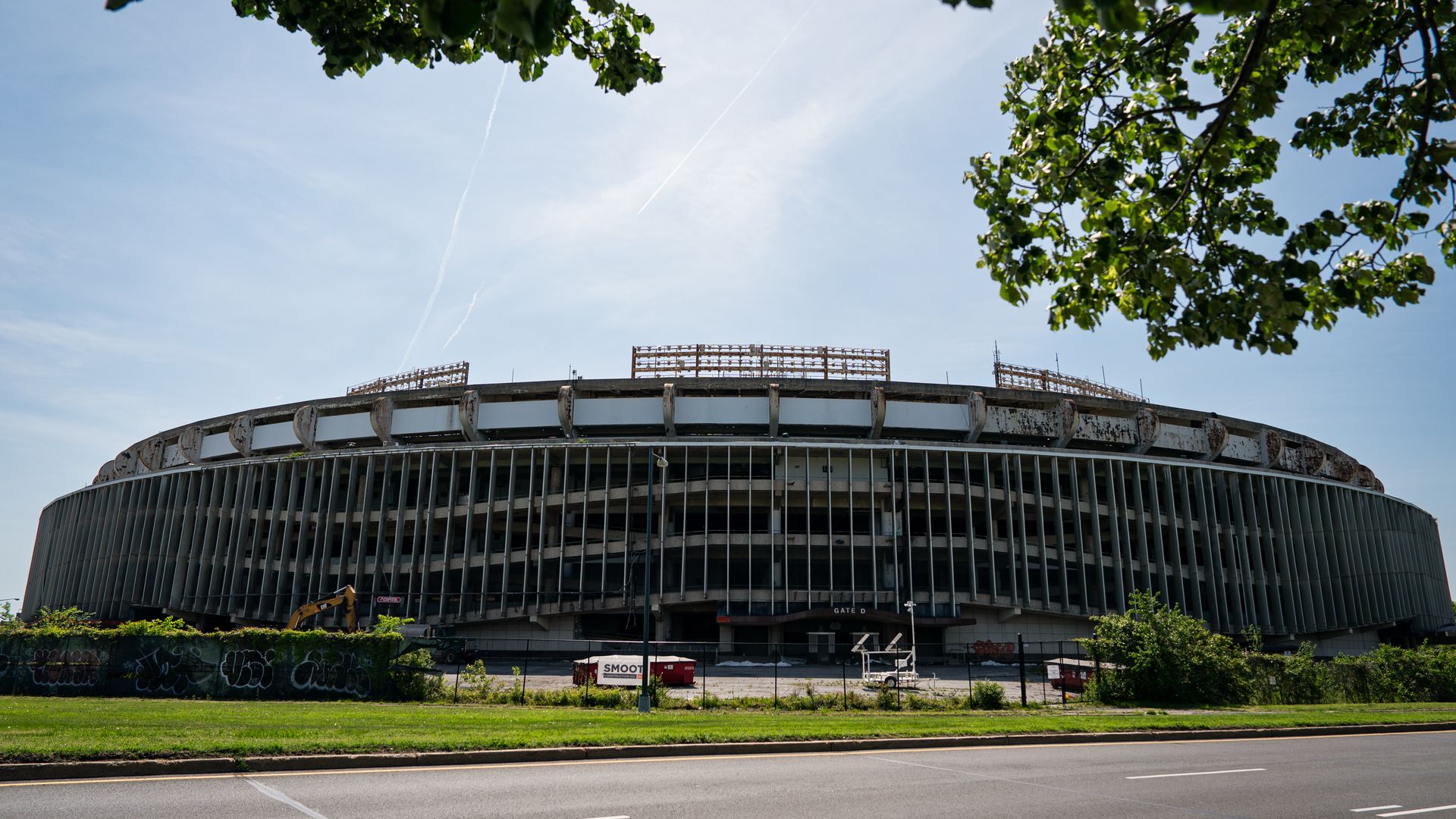
RFK Stadium, where the team played until the mid-90s. Photo: Al Drago/Bloomberg via Getty Images
It's a kickoff — the D.C. Council voted 9-3 on Friday to approve the $3.7 billion RFK Stadium redevelopment deal and bring the Commanders home.
Why it matters: The preliminary approval gets the ball flying before a final September vote — and paves the road to victory for Mayor Bowser's legacy-defining deal.
The big picture: The bill includes directives for a state-of-the-art stadium, mixed-use development with 6,000 housing units and affordable residences, thousands of jobs for D.C. residents, green space, a kids sports complex and more.
- The D.C. Council estimates the deal will earn the city more than $5 billion in tax revenue over 30 years.
What they're saying: "The era of a crumbling sea of asphalt on the banks of the Anacostia is finally coming to an end," Bowser said in a post-vote statement.
State of play: Council Chair Phil Mendelson announced a renegotiated package last week that included new investments from the Commanders.
- Then, hours before the vote, labor leaders threw their support behind the deal, moving the needle for council members who'd previously refused to move forward without a contract.
- D.C. Councilmembers Zachary Parker and Janeese Lewis-George announced that the Commanders and union leaders reached a contract, requiring that mixed-use development agreements must include 51% D.C. worker participation.
By the numbers: The Commanders, who are investing $2.7 billion, have pledged:
- $50 million over 30 years toward community projects (e.g. youth sports, grocery subsidies) — plus "all cost overruns" for the stadium and parking projects.
- 14,000 jobs for the stadium's construction — and that hiring D.C. residents will be prioritized via labor agreements.
- The team has also committed to a 10-year development plan for non-stadium parcels of land, set to be used for retail and housing.
Meanwhile, the amended deal addressed concerns around parking and congestion, and sets up a fund for transportation improvements.
- It also spoke to environmental concerns, guaranteeing the stadium will be constructed with sustainable materials, plus Anacostia watershed protections.
How they voted:
✔️ For: Mendelson, Parker, Lewis-George, Kenyan McDuffie, Charles Allen, Christina Henderson, Brooke Pinto, Anita Bonds, Wendell Felder
❌ Against: Brianne Nadeau, Matthew Frumin, Robert White
Friction point: A seeming lack of accountability to hold the Commanders to a strict timeline to deliver on the mixed-use development, in addition to the stadium itself.
- Councilmember Frumin said, "I wanted to be a 'yes,' I thought I'd be a 'yes'," but voted no after the Commanders rejected "modest mechanisms" like penalties to hold them accountable to the timeline.
- "The later that [development] waits, the smaller the benefit to the District," says Frumin.
Meanwhile, council members White and Nadeau echoed earlier concerns over the $1.1 billion taxpayer investment and return on the project.
- "It doesn't sit right with me," says White, citing the city's budget shortfall and funding cuts.
- "How can we say we don't have enough [money] for our residents on Monday, and turn around and say we have billions for a billionaire franchise on Friday?"
What's ahead: The bill requires a second vote from the full council to pass. The final vote is slated for September 17.
- It can be amended between votes, so a final touchdown is still yards away.
- The goal is for a 2030 stadium launch.
Editor's note: This story has been corrected to reflect that the D.C. Council estimates tax revenue of more than $5 billion (not $674 million) over 30 years under the deal.