How the National Aquarium gets new sharks for its jaws-packed exhibit

Add Axios as your preferred source to
see more of our stories on Google.
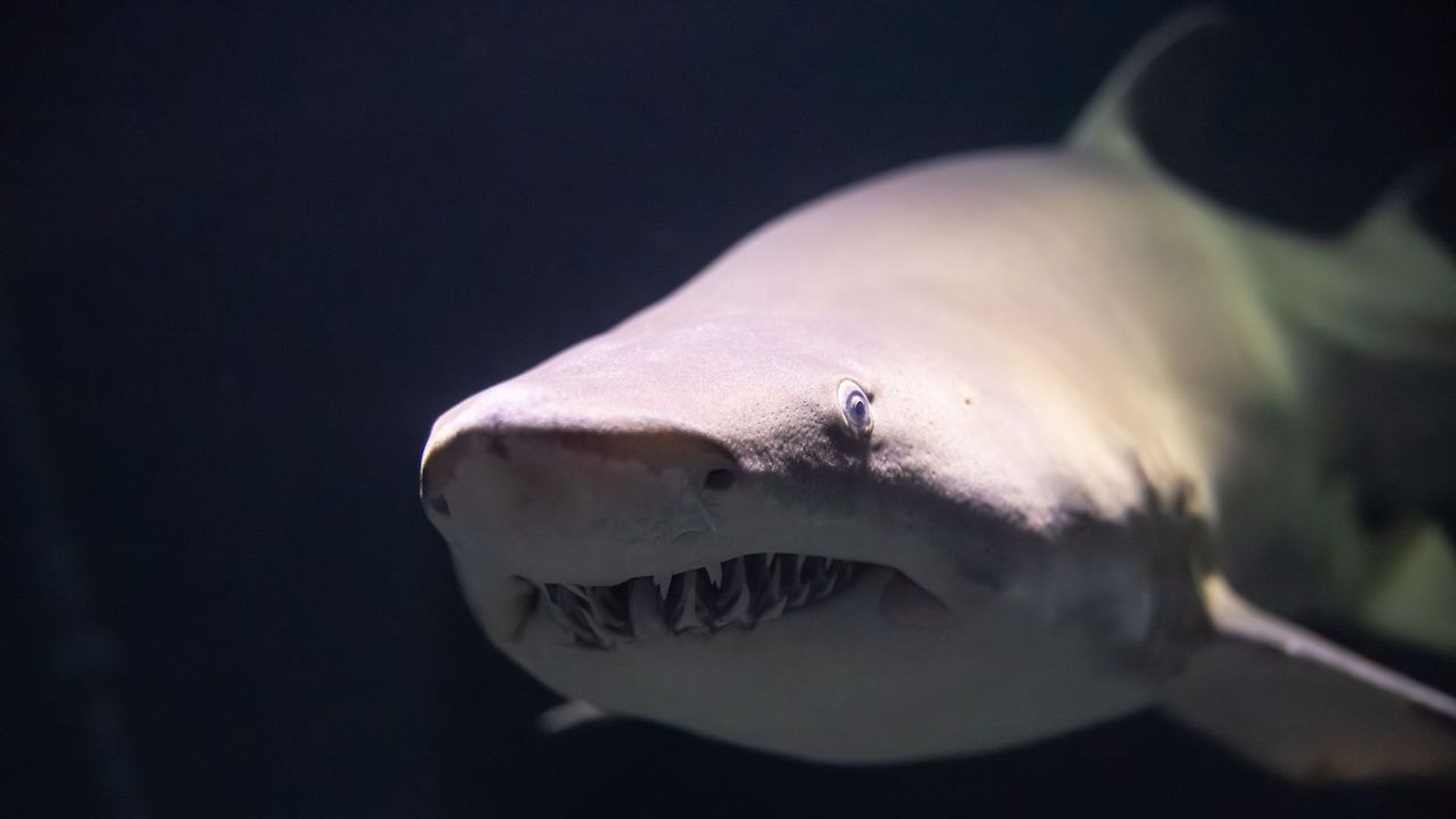
A sand tiger shark on exhibit in Shark Alley. Photo: Courtesy the National Aquarium
Pandas fly the Panda FedEx Express. Zebras get an airlift. But when Baltimore's National Aquarium needs a new shark, it's a great-white-size task.
Why it matters: It's Shark Week, but don't bask by the TV — there's an apex experience at the aquarium's "Shark Alley," where seven species cruise for your views.
- Descending into the circular 225,000-gallon tank is the closest you'll get to a cage dive on land.
The intrigue: How do sharks get there? Some species, like Atlantic sandbar sharks, swim constantly to breathe, getting oxygen through water passing over their gills (so no orca-style airlift).
- And unlike those randy pandas, sharks aren't brought to the aquarium to breed.
How it works: The aquarium only gets new sharks every few years, curator Jay Bradley tells Axios.
- Some of its longest inhabitants are also its farthest travelers: blacktips from Australia, part of an original 2013 exhibit.
- They were shipped as easygoing juveniles in individual tanks, flying cargo — no dedicated beluga Boeing for the li'l guys.
- Rarely, a baby shark (doodoododododo) is born.
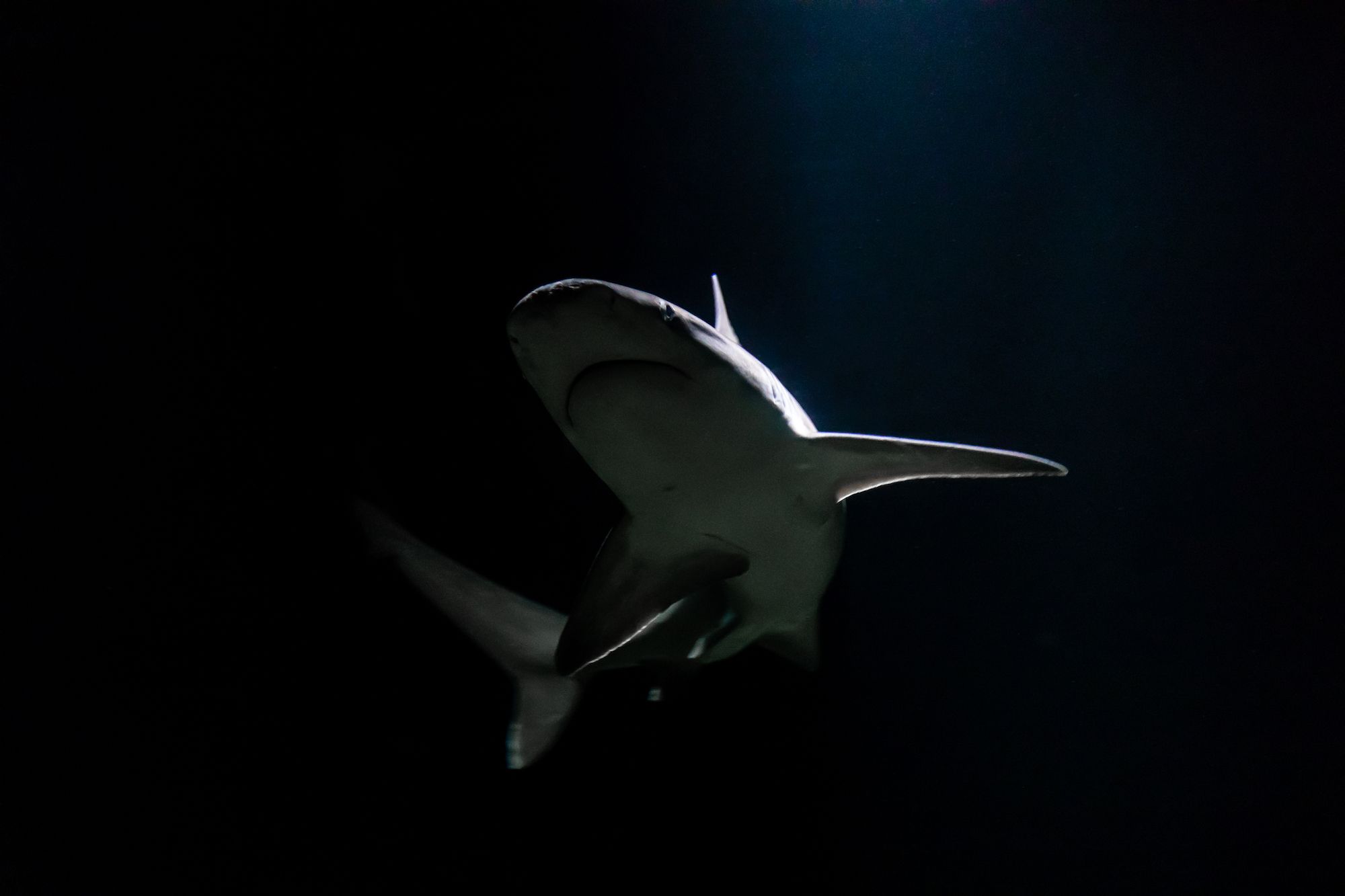
Between the lines: All sharks and rays — fun fact: shark cousins — are quarantined for 90 days in acclimation tanks in the Animal Care and Rescue Center before their permanent debut.
Zoom in: For years, the National Aquarium participated in a shark tagging program in Delaware to track and study sand tiger sharks, where they also snagged new aquarium guests. Sandbars are the most prevalent shark species in the Chesapeake Bay.
- The most recent shark newcomers were sand tigers — caught in Delaware as juveniles, placed in tanks with circulating water for breathing and transported to the aquarium via truck.
Threat level: For Atlantic shark attacks — and shark-on-shark attacks — it's low, even though there's a lot of big shark energy in Shark Alley.
- That's why bull sharks — a local species sometimes spotted in the Potomac — aren't invited.
- "They're tenacious, investigative. They tend to eat other things," Bradley tells Axios. (First rule of Shark Alley: Don't eat Shark Alley.)
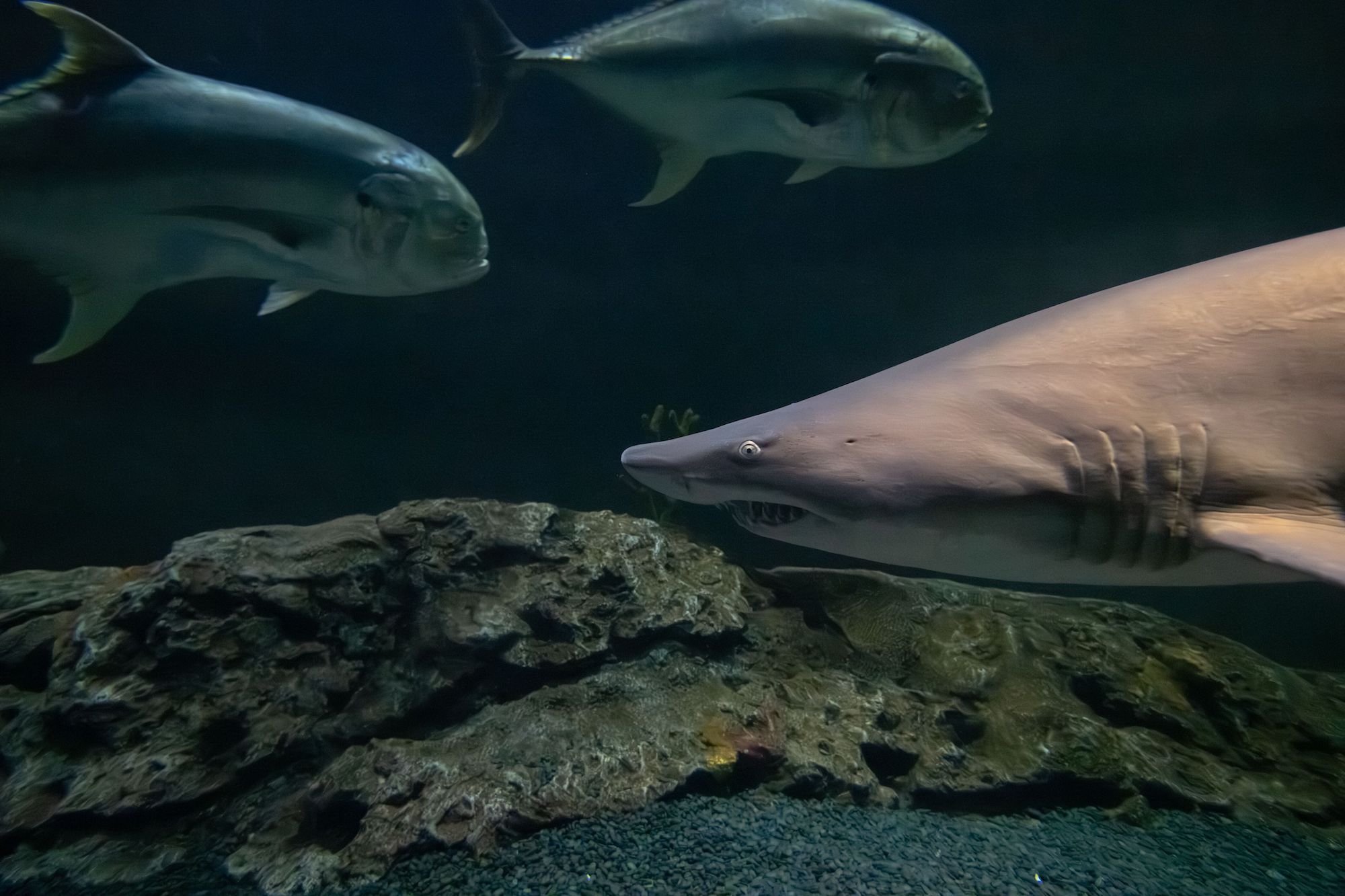
Meanwhile, Bradley says local sandbars "are a little shy." Sand tigers can move quickly, "but most of the time they're cruising."
Plus: No need for cannibalism. Sharks are fed a sushi-grade diet from a local seafood purveyor, according to Bradley, feasting on 45 pounds of striped bass, porgy and branzini a week.