D.C. area gets an "F" on air quality metric

Add Axios as your preferred source to
see more of our stories on Google.
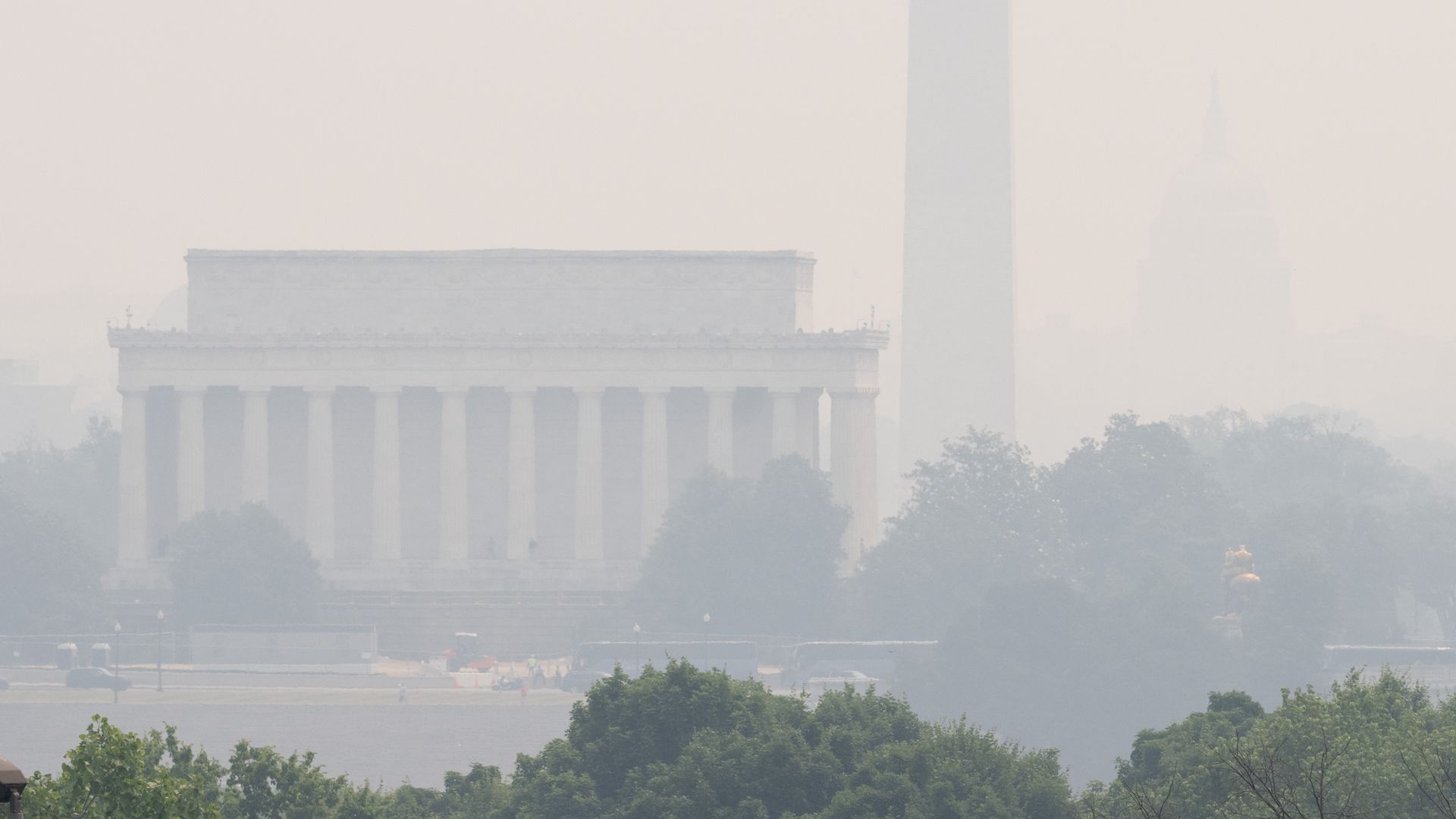
Wildfire smoke in 2023. Photo: Saul Loeb/AFP via Getty Images
The D.C. area's air quality is worsening, per the American Lung Association, which gave the region an "F" grade on a key metric.
Why it matters: Air pollution threatens everyone's health — especially children, older people and people with asthma or heart and lung conditions.
The big picture: Nearly half of Americans are now exposed to potentially dangerous levels of air pollution, the American Lung Association's 2025 State of the Air report found.
- The Washington-Baltimore-Arlington region has ranked poorly among U.S. cities for pollution, per the 2021–2023 data. That's particularly due to the 2023 wildfire smoke.
By the numbers: The district proper had short-term spikes in particle pollution, with 3.7 unhealthy days per year on average, leading to the "F" grade. Last year's report card gave the city a "C."
- The lung association says that "short-term spikes in particle pollution … can be extremely dangerous and even deadly."
- Another measure: The area ranked 36th-worst in the nation for ozone smog.
- Overall, the metro region was named the second-most polluted in the Mid-Atlantic, after the New York-Newark area.
What they're saying: "Sadly, too many people in the metro area are living with dangerous levels of ozone and particle pollution," said Aleks Casper, an advocacy director at the ALA, in a statement.
- "This pollution is making kids have asthma attacks, causing people who work outdoors to get sick and unable to work, and even contributing to low birth weight in babies."
Context: The D.C. region we're talking about in this report is vast, from Baltimore to Berkeley County in West Virginia.
Zoom out: The annual "State of the Air" report says 156 million Americans live in an area that has a failing grade for at least one measure of air pollution.
What we're watching: D.C. has had to freeze some of its planned investments in clean energy, like expanding EV charging stations, due to Trump administration cuts in grant funding.