D.C.'s progressive era is over

Add Axios as your preferred source to
see more of our stories on Google.
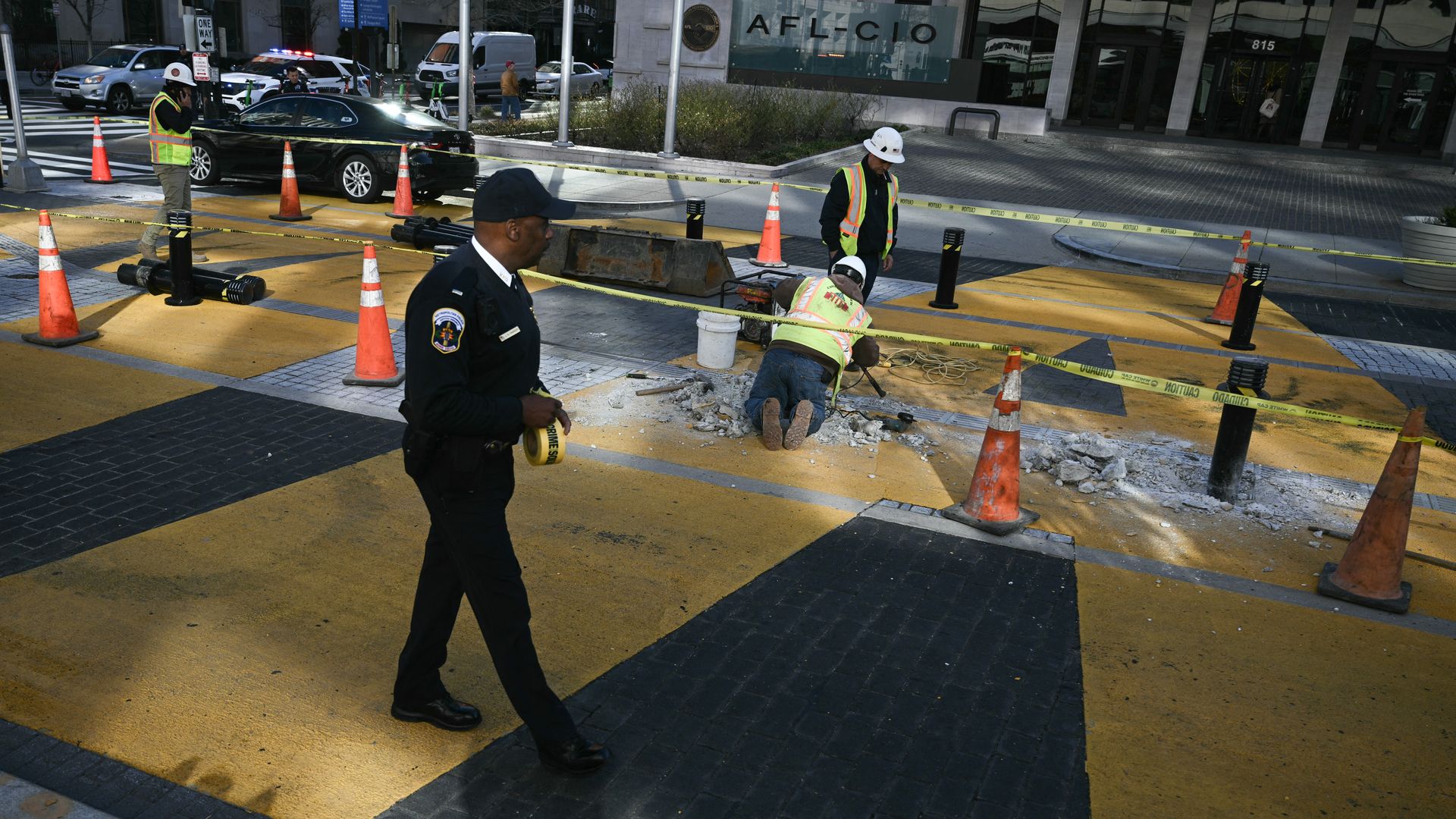
D.C. dismantled Black Lives Matter Plaza last month after pressure from Republicans. Photo: Brendan Smialowski/AFP via Getty Images
D.C.'s progressive era is over — derailed by President Trump, federal job cuts, and local economic woes.
Why it matters: The biggest fights at city hall are now less over experimental ideas like "social housing," and more about megaprojects like RFK Stadium or municipal concerns like local government efficiency and attracting new companies.
The big picture: D.C. is busy playing defense. Local leaders are fighting to preserve every inch of home rule against a GOP-controlled Congress. Making do with less money in an economic slowdown. And dodging Trump threats.
- Through it all, the Wilson Building is backtracking on government transparency in the name of pragmatism, enabling secret meetings so that lawmakers can strategize about Trump-era uncertainty.
Council Chair Phil Mendelson is pulling punches, telling me he's holding back introducing certain bills to avoid poking Congress, which has final say over the District's laws.
- The city's biggest challenge is next year's budget. The gap could be up to $1 billion. And that's before this current budget mess with Congress that forced Mayor Muriel Bowser to declare an immediate hiring freeze and consider furloughs.
What I'm hearing: "There's a shift" among residents, says Council member Christina Henderson. "They don't want the flashy. They want the bread and butter to work."
- That means making sure trash and leaves are picked up on time, having public agencies answer the phone when a resident calls, and ending million-dollar programs that aren't working.
- "I hear an increasing level of folks frustrated with just the basic core city services," says Council member Charles Allen.
Flashback: In the latter half of the 2010s, progressives began kicking out incumbents, old-school D.C. Council members who were more sympathetic to the concerns of businesses and prided themselves on being a hotline for residents who wanted to report a pothole.
- Replacing the old ward bosses were council members like Janeese Lewis George, who ran as a Democratic socialist in Ward 4, or Elissa Silverman, a pugnacious leader of the lefty bloc who wound up losing reelection in 2022.
- The Wilson Building rode a budget boom to check off a big progressive wish list — paid sick leave expansion (2014), $15 minimum wage (2016), paid family leave (2016), Clean Energy D.C. Act (2018), publicly financed elections (2018), George Floyd police reform (2020).
"We actually are further than most cities," says Henderson. "Someone might call universal pre-K progressive. We already have it. I don't see a situation where Trump is telling us that we can't continue that."
What's next: The upcoming RFK Stadium fight will reveal whether progressives, who wince at taxpayer subsidies for businesses, can take on the city's beloved sports team, the NFL, and a mayor's quest for a legacy achievement.
- Bowser wants to sink $810 million in taxpayer money for a new Commanders stadium project, per news reports. (The formal announcement is expected soon.)
The plan needs D.C. Council approval. And Mendelson is outspoken against the use of public dollars. "The D.C. treasury should not be paying toward a stadium," he told the Washington Post, estimating the true cost could be over $1 billion.
- The next few months will be full of lobbying, intrigue and media frenzy.
The bottom line: It also says something about the era we're in. The nuts and bolts of how to build up a 170-acre site is a throwback to when council members spent more time brokering land deals than fine-tuning wonkish policy.
- "We do need to build something on that site," says Council member Brianne Nadeau, who's in Mendelson's camp. "We need housing there. We need community amenities there."
💭 Town Talker is a column about money and power in Washington. Tell me about the talk of the town: [email protected]