D.C. Council allows secret meetings despite transparency objections

Add Axios as your preferred source to
see more of our stories on Google.
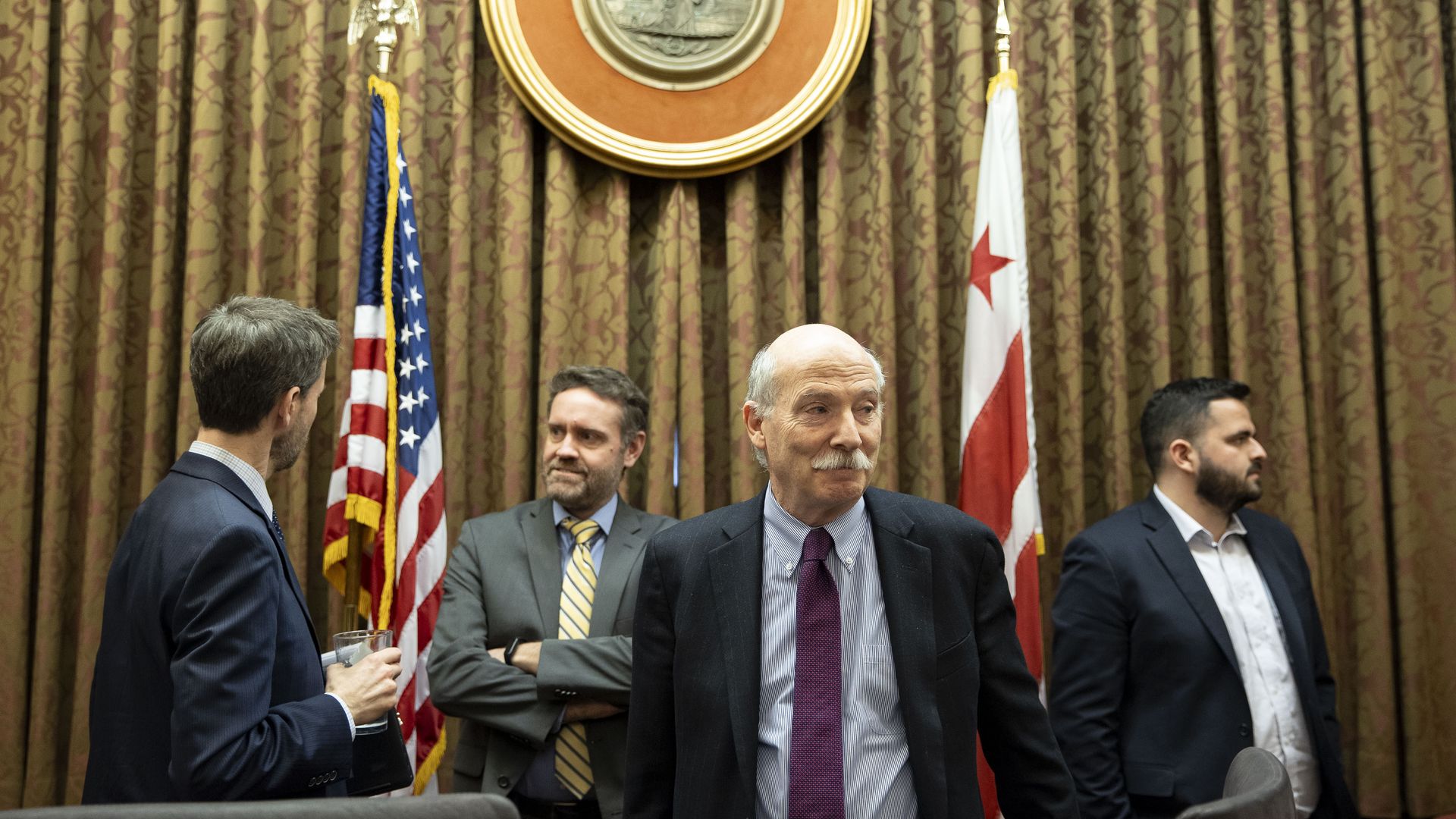
Council Chair Phil Mendelson. Photo: Mostafa Bassim/Anadolu via Getty Images
The D.C. Council voted on Tuesday to allow lawmakers and the mayor to hold secret meetings.
Why it matters: Despite concerns about government transparency, councilmembers voted to allow more closed-door meetings to discuss economic development projects, political strategizing in the Trump era, and difficult budget conversations.
Only two councilmembers voted against the bill, which was introduced as emergency legislation and would take effect immediately with Mayor Muriel Bowser's signature.
- Councilmember Charles Allen, who voted against the bill, unsuccessfully offered an amendment that would have narrowed what kinds of discussions could be held in private meetings. It failed four votes to eight.
Council Chair Phil Mendelson said the current Open Meetings law was too onerous on the council, which has in the past tried to have meetings on confidential topics like negotiations for the renovation of Capital One Arena.
- The new law will make it easier for councilmembers to have those closed-door meetings on a whim, whereas in the past they have faced scrutiny from the press and legal observers.
- "I'm tired of having to defend against the challenges from the press," Mendelson told colleagues in a pre-legislative meeting breakfast session, which was held in a room between lawmakers that the press could observe.
- Mendelson also wants to have private monthly breakfast meetings between councilmembers and Bowser.
Before voting to approve, councilmembers slightly narrowed the bill, removing language that the D.C. Open Government Coalition called a loophole that would've also allowed D.C. boards and commissions to meet in private.
Councilmember Robert White said the pace of President Trump's actions involving the District means lawmakers need to be able to meet in private for candid conversations.
- "These are just less predictable times," he said at the breakfast.
What's next: The change would stay in effect for up to 90 days under emergency legislation. The council is moving a permanent version, which is expected to include a public hearing.