Exclusive: D.C. aims to crack down on credit card swipe fees

Add Axios as your preferred source to
see more of our stories on Google.
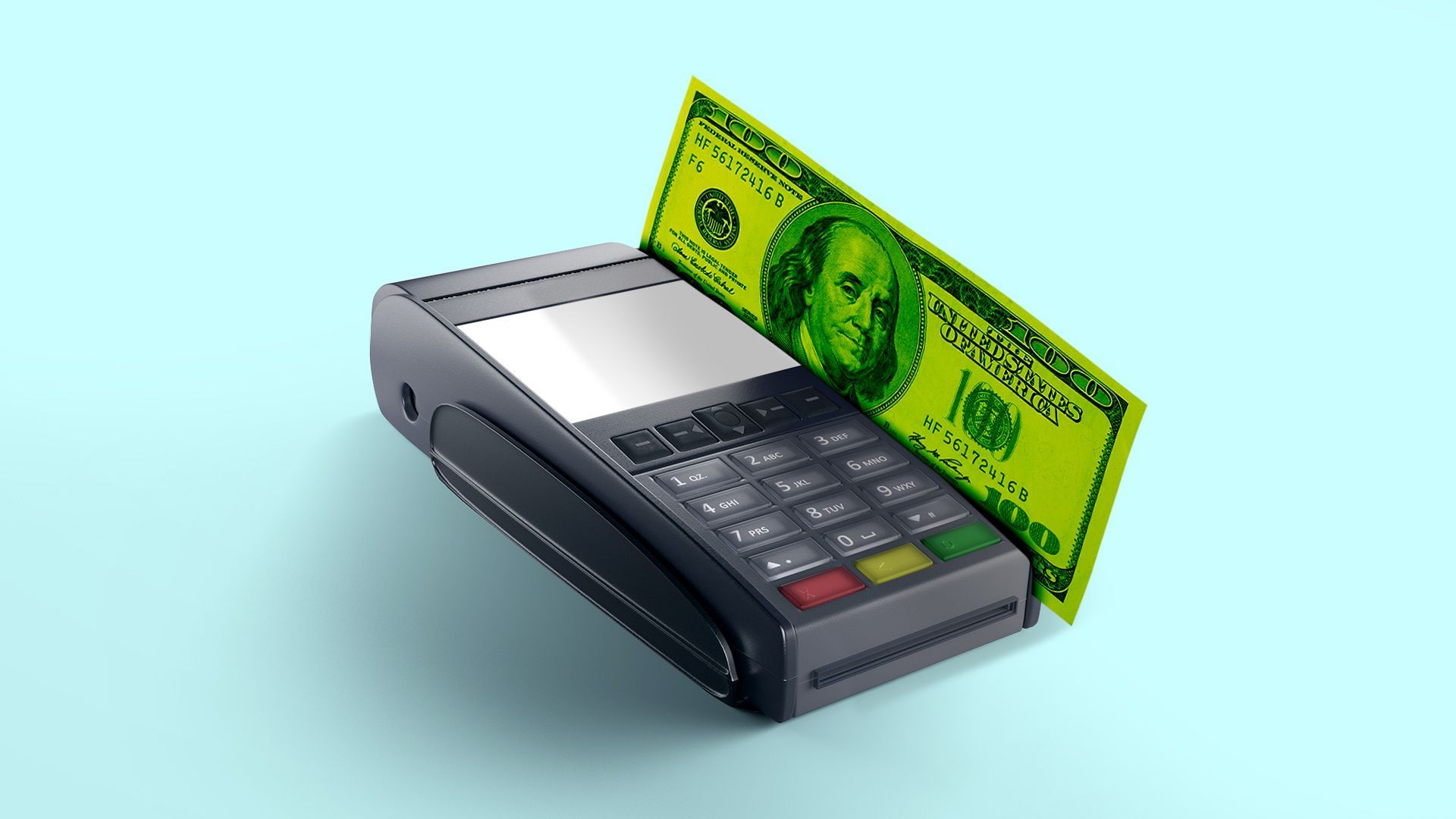
Illustration: Aïda Amer/Axios
D.C. is gearing up to fight a covert charge that can cost businesses thousands of dollars and jack up prices: credit card swipe fees.
Why it matters: Credit card companies and banks charge processing fees for every tap and swipe, which adds up — and can increase your bill — but new legislation aims to lessen their impact.
Driving the news: D.C. Councilmember Charles Allen will soon introduce the Fair Swipe Act of 2025. Under the bill, processing fees would have to be charged without sales tax and gratuity included in the total.
- It wouldn't eliminate the fees entirely, but it could soften the financial blow to businesses.
What they're saying: "Businesses are collecting sales tax to remit back to the government and gratuities to give back to employees," Allen tells Axios.
- "There is no reason that banks and large companies like Visa and Mastercard should profit off of the required payment of sales tax and tips."
- Allen introduced similar swipe fee legislation last year as part of a larger restaurant relief bill, which passed, but without the ban.
How it works: Merchants pay an average of 1.5% to 3% per credit card transaction, according to Bankrate.com.
- The same percentage fee applies whether the transaction is $10 or $10,000, but the fees and percentages themselves vary based on the type of credit card used by the customer (for example, Visa versus American Express) and other factors.
Between the lines: Some businesses openly pass on charges to customers — we've spotted credit card processing fees on a handful of restaurant and retail bills — or bake them into higher prices. Others give small discounts for cash transactions.
Bar owner John Guggenmos (Trade, Number Nine) is among the business owners leading the charge against swipe fees. He tells Axios the fees cost him more than $250,000 a year — money he'd rather spend on employee health insurance or wages.
- "It's like your landlord charging you additional rent on steps to get into your apartment because you need steps. You have to take credit cards. And it's fees on money [taxes and tips] that isn't even ours."
Behind the scenes: A number of restaurants, grocery and hardware stores, retailers, and more are also on board. They formed a new advocacy group in conjunction with the legislation: The Fair SWIPE (Small Businesses Working for Interchange Payment Equity) Coalition.
- The bill is also strongly backed by the Restaurant Association Metropolitan Washington, many of whose members say that credit card processing fees rank in their top three expenses, along with food and labor costs.
The other side: Financial institutions argue that the strength of a global payment system is that it doesn't vary by jurisdiction, nor is it built to. Your card works the same in Brookland and Bethesda. Plus, breaking out tax and tip for D.C. transactions won't be as simple or consequence-free for consumers as proponents say.
- They argue that whole interchange fees fund reward programs, which could be impacted. Card issuers could also refuse to process tax and tip if they're not being paid to do so — forcing a scenario where the customer pays partly in cash — or exit the market entirely, refusing to process transactions in the District.
Spokespersons for the Electronic Payment Coalition tell Axios it's a "bad policy." They note that interchange rates have remained flat for over a decade.
The big picture: Credit card use spiked in the pandemic as businesses limited cash transactions — increasing processing fees by default.
- D.C. started requiring businesses to accept cash in December, though digital payments are still the norm as some buck against bills due to crime and safety concerns.
By the numbers: Swipe fees hit a record high of $172 billion nationwide last year, according to the National Retail Federation, which they estimate drove up consumer prices by more than $1,100 per family.
What we're watching: The backlash against card fees has gained national momentum. Last year, Visa and Mastercard agreed to cut and cap their fees as part of a major settlement with merchants following decades of litigation.
- Legislation banning fees on sales tax and tips passed in Illinois last year. Thirteen other states, including Maryland, have introduced similar bills.
What's ahead: The Fair Swipe Act is slated to come before the D.C. Council in the coming days.
Editor's note: This story has been updated to add comment from the Electronic Payment Coalition.