Metro on track for a turnaround

Add Axios as your preferred source to
see more of our stories on Google.
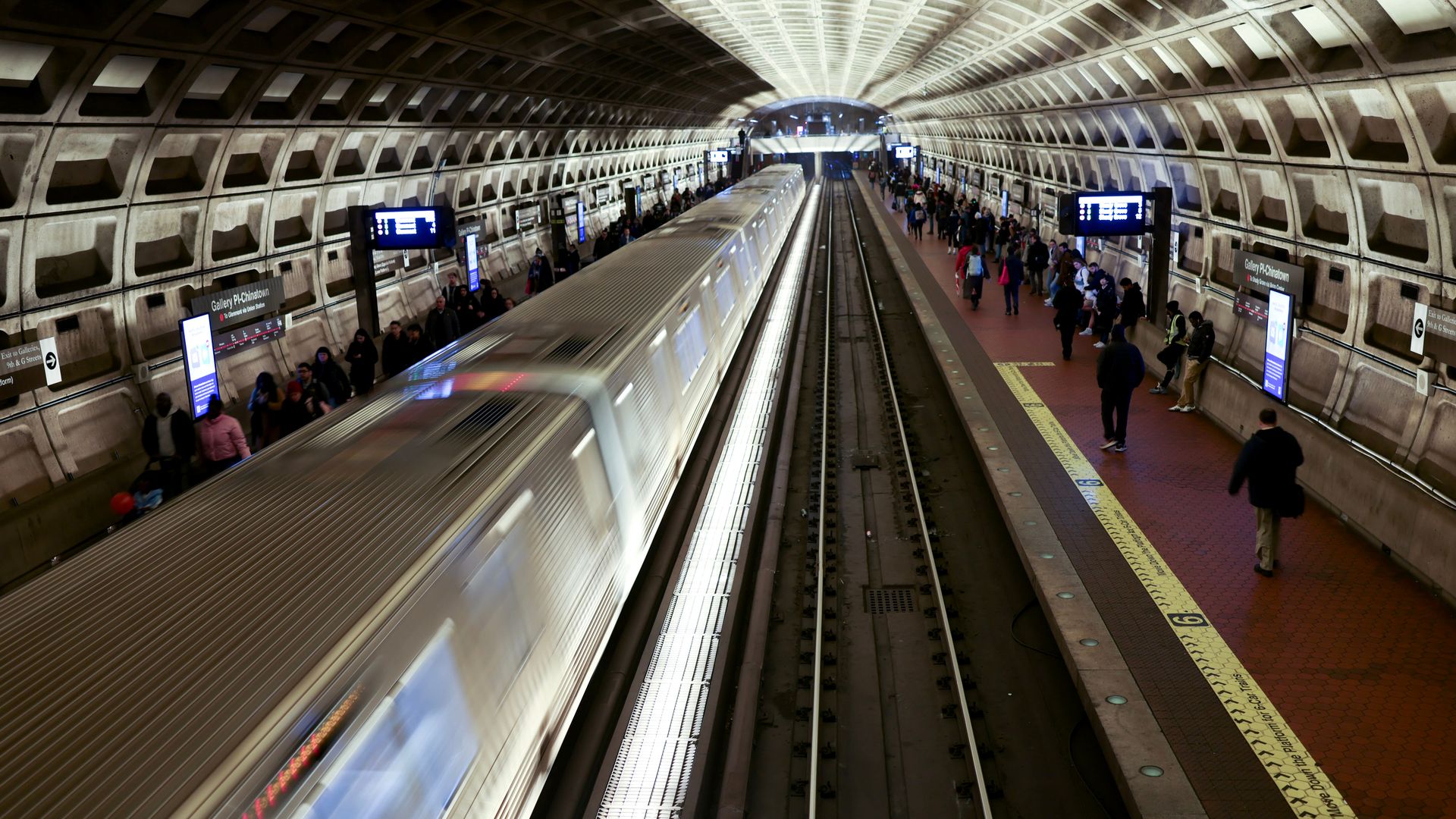
Photo: Tierney L. Cross/Bloomberg via Getty Images
Metro is making strides this year, recently bringing back automated trains on the entire Red Line and readying to launch tap-to-pay in late spring.
Why it matters: The transit agency is notching some wins under general manager Randy Clarke.
The big picture: Metro, which plugged a $750 million budget gap last year, says it has saved $500 million over the past two years while making improvements to passenger experience, like better station signs and maps.
- Average weekday rail ridership is still way down from before the pandemic, but it's improving. Last year, the system clocked in at a 35% decrease from 2019, when nearly 609,000 people used rail every day, per Metro's dashboard.
State of play: Metro ceased automation systemwide after a deadly Red Line crash in 2009. It struggled to bring it back — until December, and now Clarke plans to expand it beyond the Red Line throughout this year.
- Automatic train operation is good for making sure rides are less jerky, especially when rolling into a station.
- "Up until this, we were the only agency in the world that ever regressed in the use of technology, which is not something that we or the region should be proud of," Clarke told D.C. Council members this month.
Tap-to-pay with a credit or debit card is anticipated for late May or early June, says Clarke.
- SmarTrip cards (including panda-themed ones) aren't going away, but this will be another frictionless way to pay for transit.
Between the lines: Metro is focused on bread-and-butter modernization (like upgrading elevators and installing anti-fare-evasion gates) as opposed to big new expansions.
- "There's no new big investment," Clarke told council members at a Feb. 4 meeting. "This is all, How do we modernize the stuff that we have?"
- Metro's short-term finances are improving, but its long-term budget is still a major issue, he says.
- He has pushed Metro this year to build a spending plan encompassing the next two years, as opposed to one-year budgets that Metro is used to.