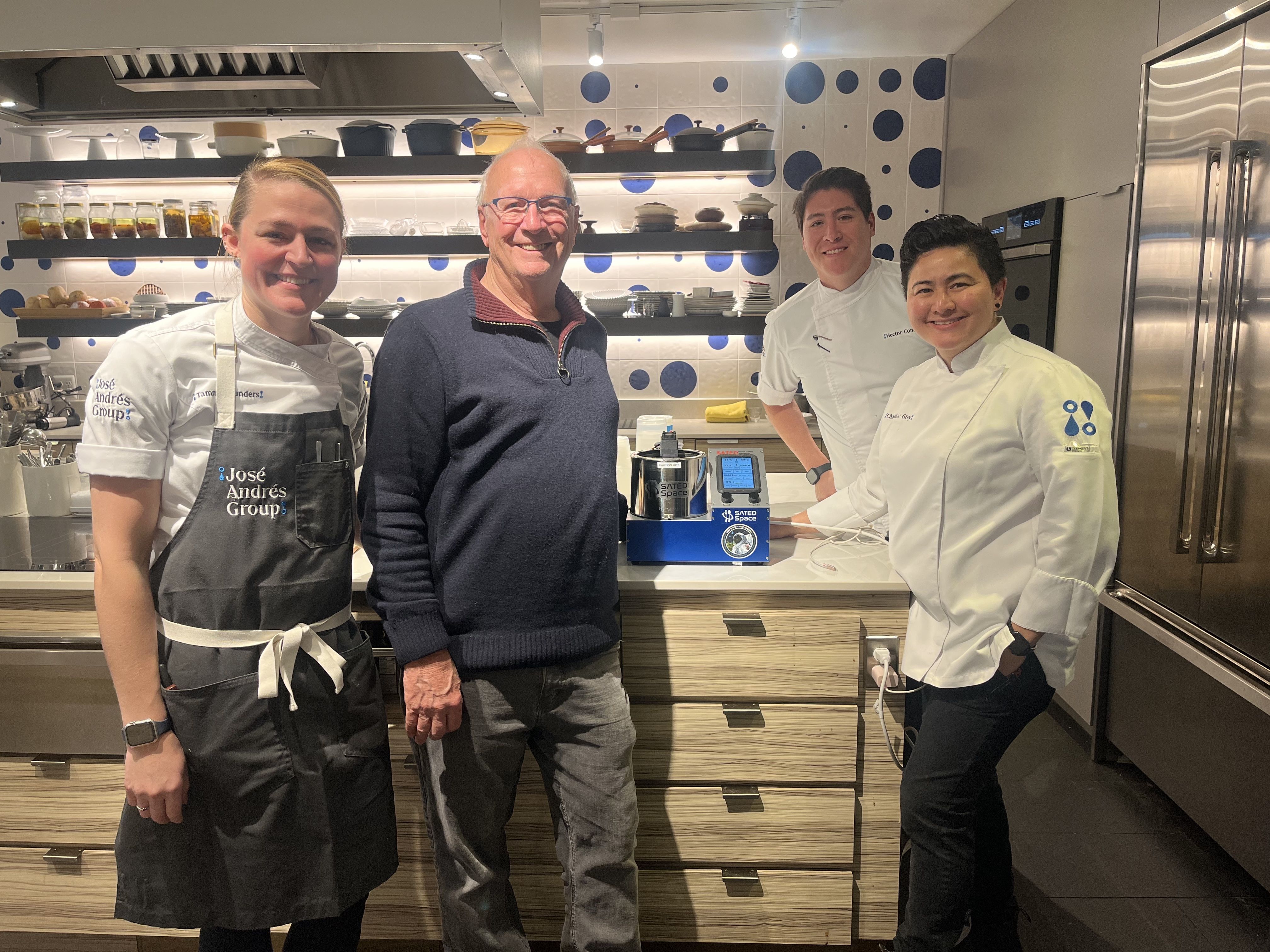
Cosmic chili: José Andrés Group is helping pioneer cooking in space

Add Axios as your preferred source to
see more of our stories on Google.
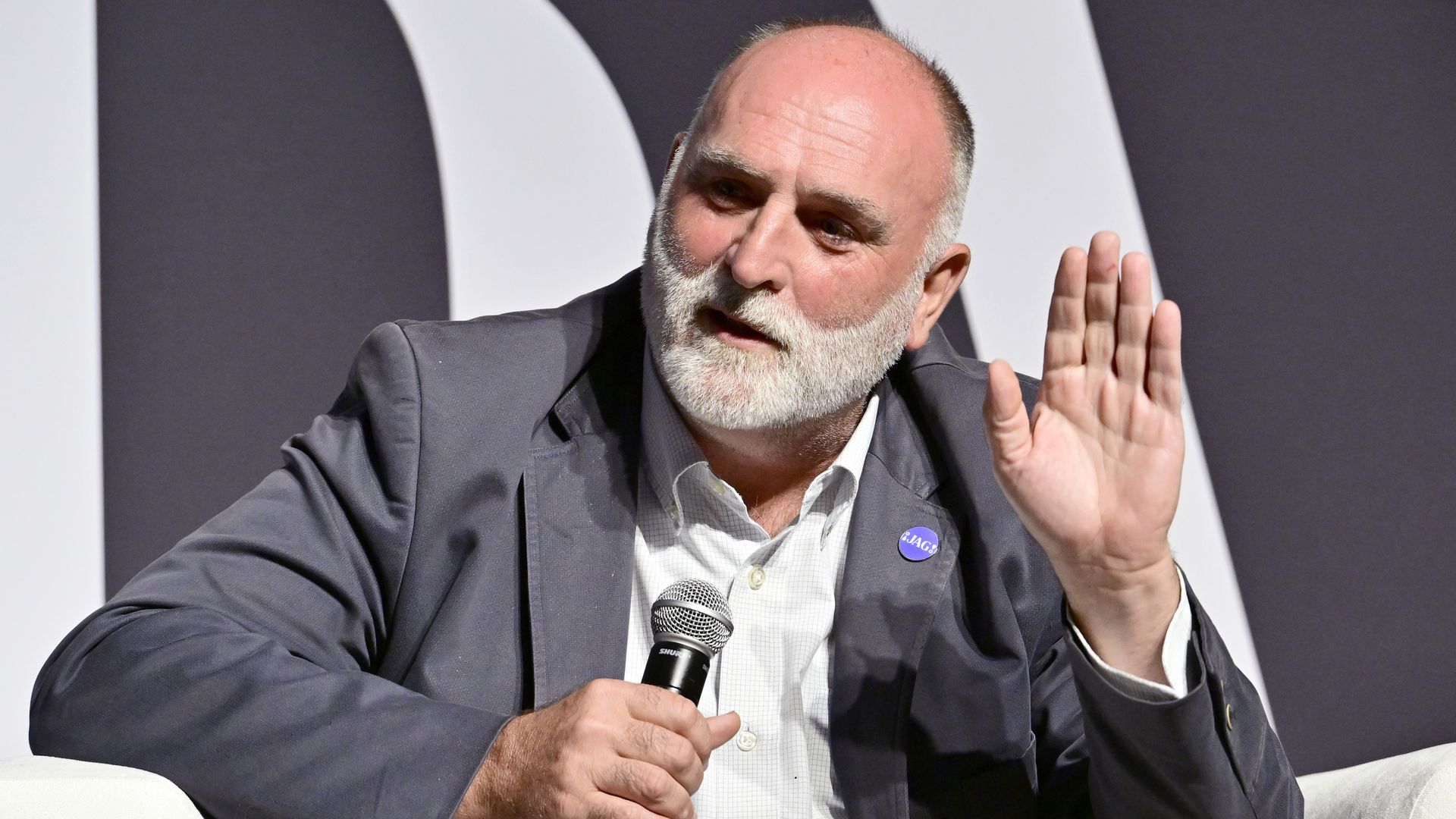
José Andrés Group is helping pioneer space cooking. Photo: Eugene Gologursky/Getty Images for Fast Company
Forget Michelin stars — José Andrés Group is shooting for the moon, teaming up with an aerospace engineer to pioneer cooking in space.
Why it matters: Astronauts survive on military-grade, ready-eat meals — not particularly appetizing on long missions — but a first-of-its-kind culinary device aims to revolutionize space food and bring its flavors closer to home.
State of play: José Andrés Group (JAG) is working with engineer Jim Sears of Ascent Technology to research and develop recipes for SATED Space, a cooking device designed to prepare food in zero gravity.
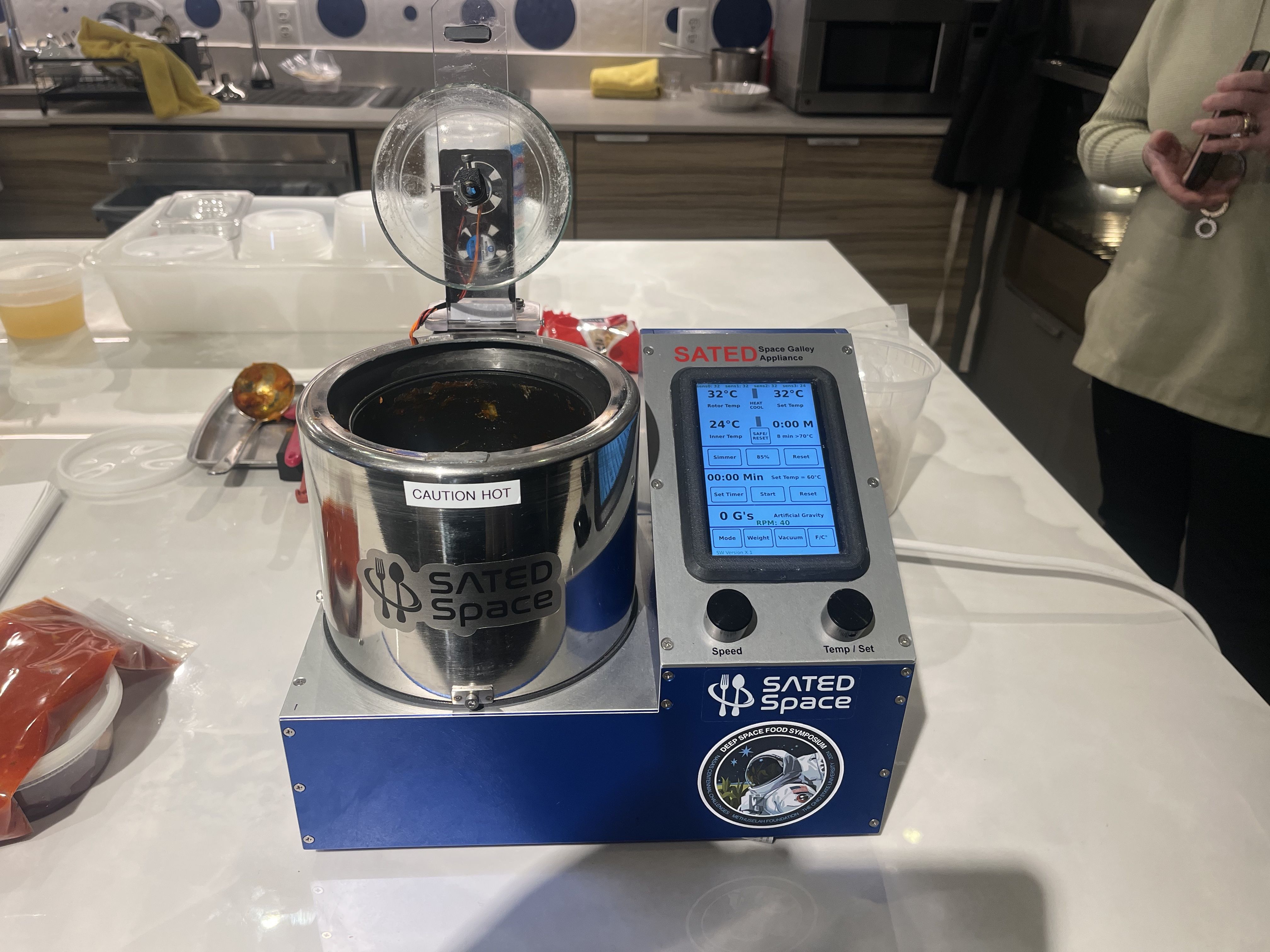
- Sears began developing the device in his Boulder, Colorado, garage as a pandemic project. The result: a rotating canister "oven" that cooks food with built-in heating elements — but with no fire, smoke or steam, all dangerous in space.
- SATED, which stands for "Safe Appliance, Tidy, Efficient and Delicious," won honors and funding in last year's NASA Deep Space Food Challenge, an international competition where teams create innovative food solutions with long-term missions in mind.
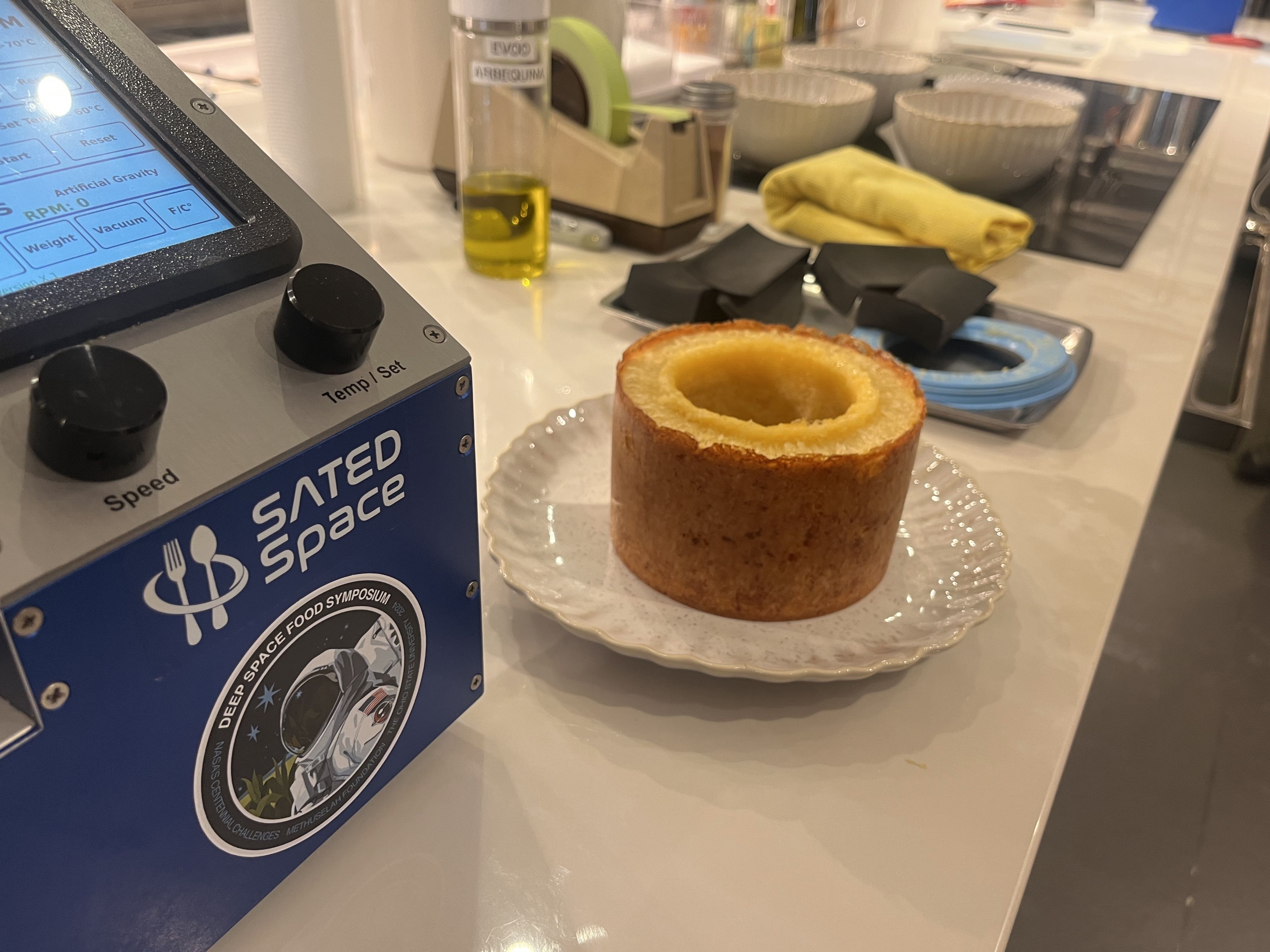
Since then, Sears and chef Charisse Grey, JAG's director of research and development, have created sweet and savory recipes for the device in Andrés' downtown D.C. headquarters — testing the bounds of time, temperature and gravitational forces in dishes like tortilla española.
Between the lines: This isn't Andrés' first foray into the final frontier. In 2022, he and Grey developed a pioneering space paella, which was sent to the International Space Station (and which is how they got involved in the current project).
The big picture: Space travel has many draws, but food isn't one of them. Sterilized, ready-to-eat packages are designed with safety, nutrition and longevity in mind. Taste — a sense that's already muted in space because zero gravity leads to stuffy sinuses — isn't the priority.
- It's one of the reasons that hot sauce is beloved by astronauts.
What they're saying: "You can't eat those little packets for 20 months and stay sane," Sears tells Axios.
- His mission: to better the quality of food, and life, in space missions. "It's hard to change. Aerospace is a very conservative industry because it keeps people alive. NASA found something that didn't kill astronauts 50 years ago and stuck with it."
- "Think about it: If you have a high-pressure, high-performance team in an oil rig, firehouse, or nuclear submarine, you feed them the very best food because you want them mentally healthy and happy for a critical job."
How it works: The oven's cylindrical cooking chamber spins at changeable speeds and pushes food against the heating elements, which allows for cooking via conduction.
- Chef Grey and her team use dry scratch ingredients — say, a powdered-cheese mix, par-cooked noodles, and dehydrated chorizo — to create homey, nutritious dishes like chorizo mac 'n' cheese.
- The goal is to ultimately build out space pantries with such items so crews prepare set meals, and eventually get creative like earth chefs.
The device is incredibly versatile. SATED can make cornbread with a cheesy, caramelized crust; pizza; or warm brownies — all of which taste like an intensified earth version (flavor being punched up for that muted taste in space).
- Sears patented a space spatula and other devices to accompany the oven, including a vacuum-like table designed to suck up crumbs and particles — both currently banned in space food, as they're dangerous when inhaled.
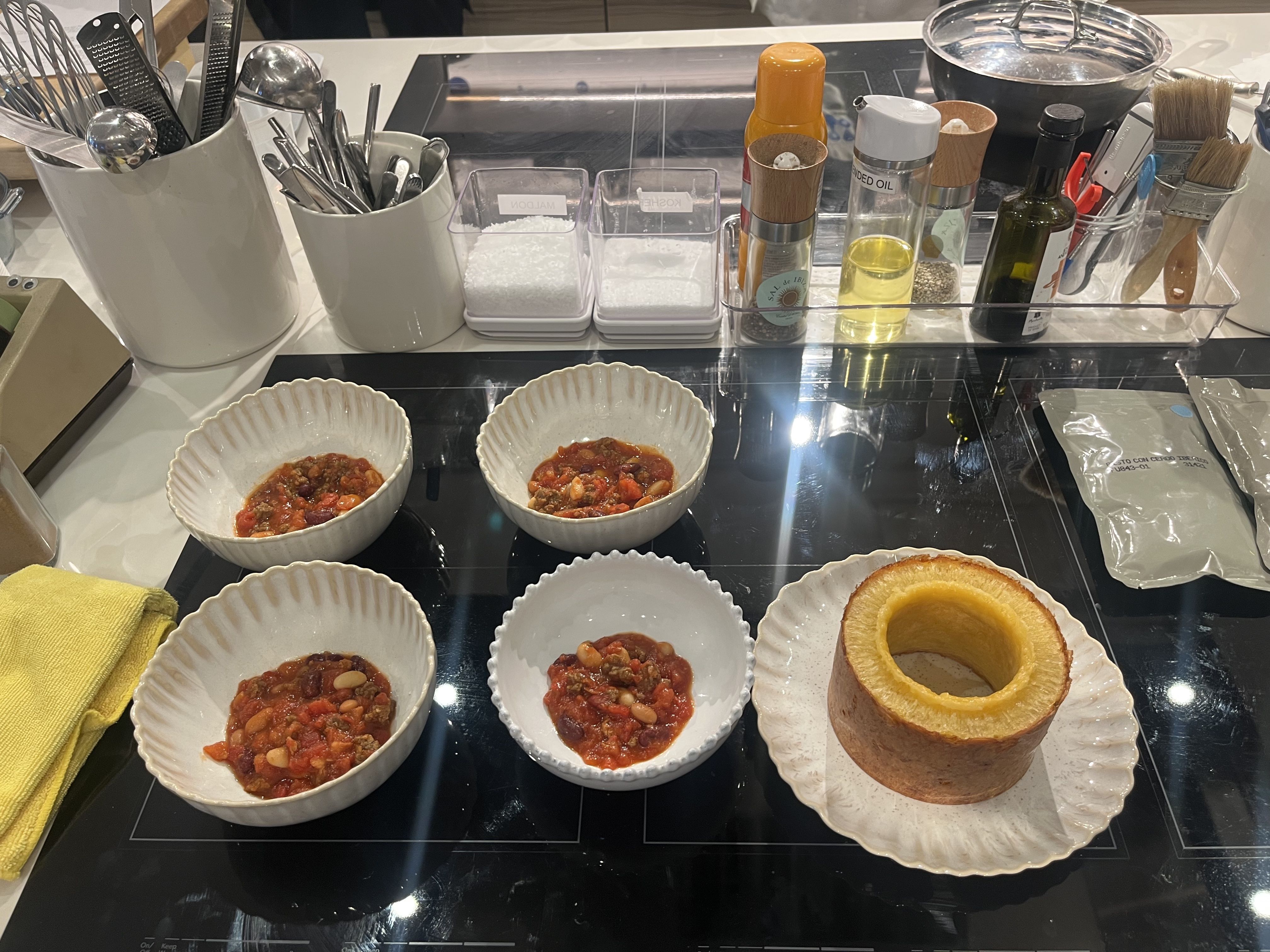
The intrigue: Having asked astronauts what they crave most, Grey says they're channeling crackers, toast, and anything with texture (again, crumbs being an orbital no-no).
- "This will be a new experience for crew members, to eat something crunchy," she says.
What's next: A lot. Following earthbound R&D, Sears is looking for a private aerospace partner to extensively test SATED in parabolic flights — a way to reproduce gravity-free conditions — improve the engineering, and ultimately launch into orbit.
- His goal: To launch in 2029, the 60th anniversary of the Moon landing.
Timing may be on SATED's side. With SpaceX CEO Elon Musk's influence in the incoming administration and the rise of space tourism, there's greater evolution and innovation in the aerospace realm.
The bottom line: Ultimately, the goal is to create a new generation of gastronauts and provide the techniques and tools for decades of culinary innovation.
- "Cooking knowledge is often legacy — we learned it from our parents, who learned it from theirs," says Sears. "That's what gets me going: You're sending joy into the future. Someone will have the joy of creating and sharing it with others."