How the Trump administration might affect D.C.'s housing market

Add Axios as your preferred source to
see more of our stories on Google.
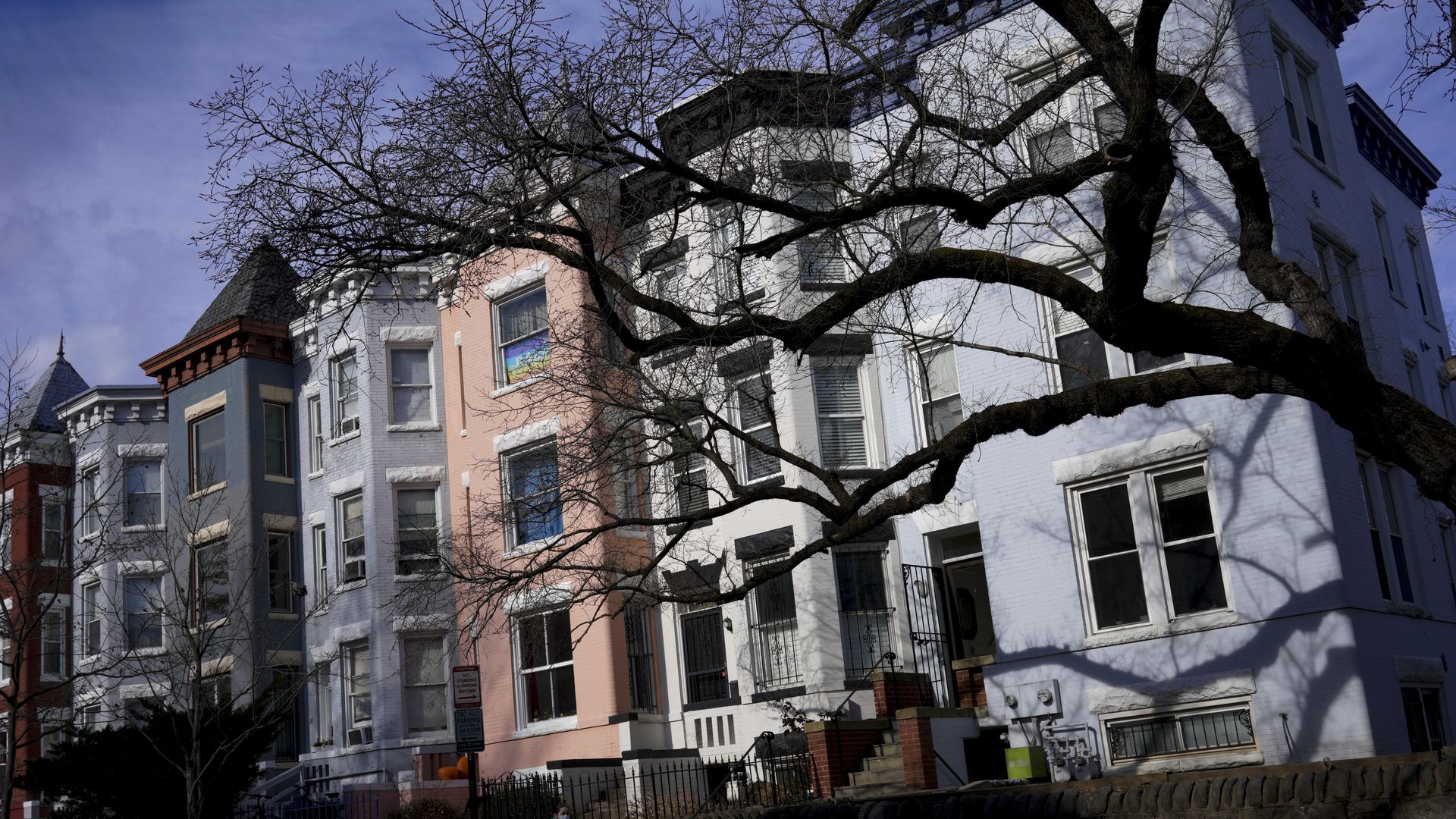
Mount Pleasant row houses. Photo: Bonnie Jo Mount/The Washington Post via Getty Images
Washington real estate experts aren't betting just yet on the new Trump administration's effects on the local housing market, but they suspect it won't be catastrophic.
Why it matters: Buying a house in D.C. has historically been considered a smart investment thanks to its concentration of white-collar workers and federal government jobs.
- But should jobs suddenly disappear, that could change.
- "Because people have so much money in housing here, it does end up being something that they usually count on as a major asset," says real estate agent Alison Scimeca. "[It'd be] like losing a lot of money on the stock market."
The big picture: Vivek Ramaswamy and Elon Musk, who are heading up the new Department of Government Efficiency (aka DOGE), have called for massive federal cuts across spending, headcount and regulations...
- ...and for federal workers to be in the office five days a week from 8am to 6pm, which could be a turnoff for workers whose jobs weren't otherwise eliminated.
What they're saying: "It's hard in the best of times to forecast, and this whole new administration is making things a lot harder," says Bright MLS chief economist Lisa Sturtevant.
- While Scimeca has heard from clients who are worried about their jobs under the Trump administration — as well as liberal locals who simply don't want to live under Trump 2.0 — she's not seeing anyone make moves yet.
- "A lot of people are holding their breath."
State of play: The feds most likely to be affected by a major government overhaul are those who bought in the last couple of years when rates were high, and who need two paychecks for their mortgage, says Scimeca.
- Older workers — who could be pushed to early retirement — might be less affected, says Sturtevant, because they're more likely to own their homes outright.
With DOGE's calls to slash remote work, it's possible that the post-COVID demand for homes well beyond the Beltway might reverse, as people move back in to be closer to the office, says Sturtevant.
Between the lines: "There [are] a whole series of things that have been proposed by the incoming administration that suggest it may become harder to be a homebuyer in 2025," says Sturtevant.
- President-elect Trump's tariff plans won't ease rates and prices in D.C.'s already competitive real estate market, local agent Christopher Suranna tells Axios.
- And Trump's calls for mass deportations could affect labor pools highly concentrated in construction, says Sturtevant, which would further limit housing supply and make real estate more expensive.
Reality check: No matter how Trump's second presidency plays out, neither Sturtevant nor Suranna anticipate a decimating blow to the local housing market.
- There might be market nuances on each side of the Potomac, but in general, the DMV's economy has become more diversified and less reliant on the federal government over the last few decades.
- And the local demand for middle-market housing is so great, says Suranna, that it would likely absorb the hit of people moving due to a downsized government.
As for all those people at the dog park speculating about moving to Costa Rica or Canada?
- Sturtevant calls it "cocktail party" talk, pointing out that many locals said the same thing during Trump's first go-round, but ultimately ended up staying put.