Pro-Palestinian protesters return to George Washington University

Add Axios as your preferred source to
see more of our stories on Google.
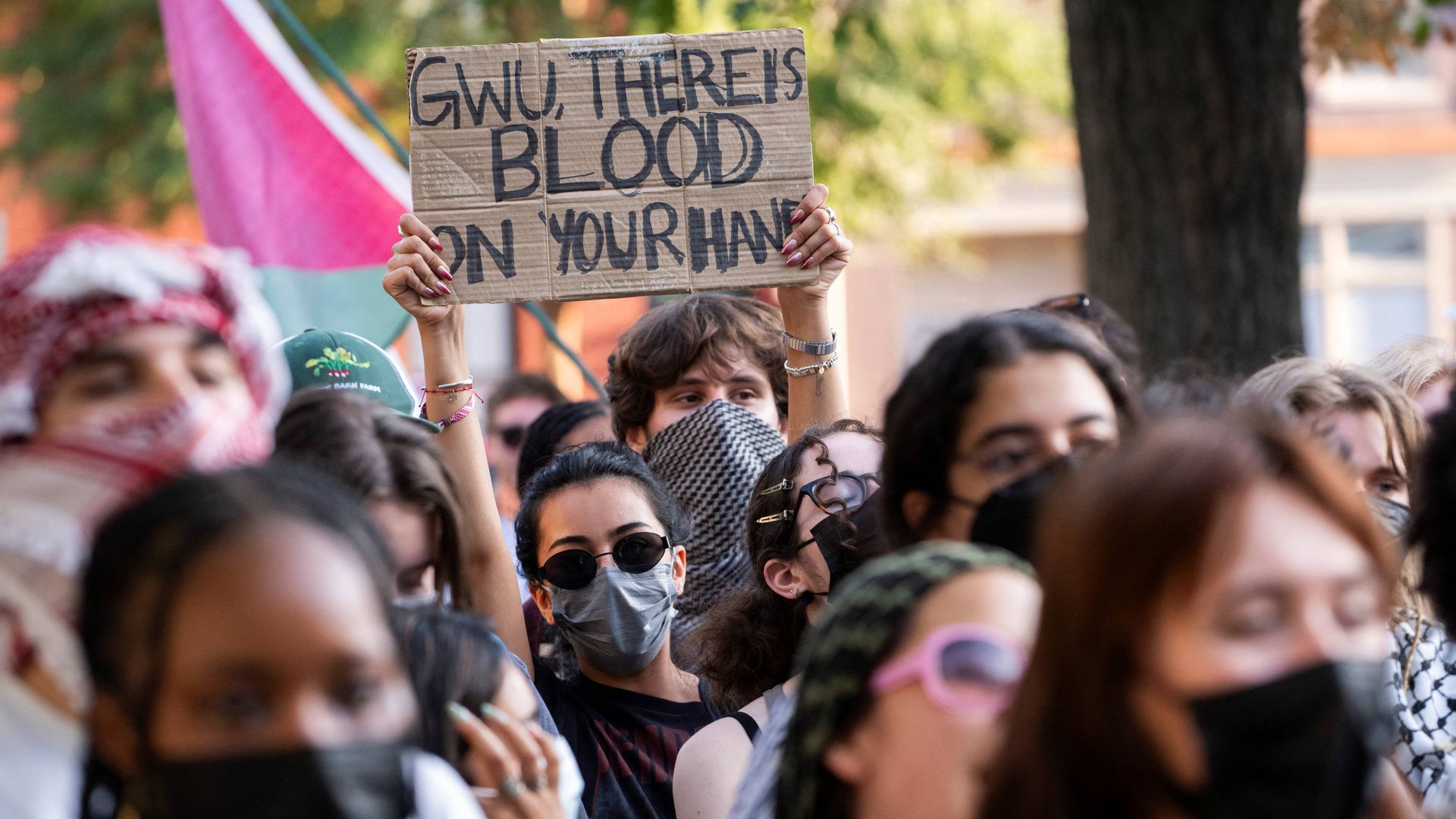
Photo: ROBERTO SCHMIDT/AFP via Getty Images
George Washington University is the site of pro-Palestinian demonstrations again as the academic year begins.
The big picture: Student protests over the war in Gaza reached an inflection point in the spring, and universities are preparing for a reinvigorated movement this fall ahead of the election.
- School administrations, which faced criticism for crackdowns on demonstrators, will be under increased scrutiny over how they respond.
State of play: About 100 demonstrators marched last Thursday to the GWU president's on-campus house, continuing to urge the school to divest from weapons manufacturers and other companies linked to Israel's war effort, the GW Hatchet reported.
- They also rallied outside the campus park where an encampment was established last year. The area is fenced off with a gate open daily from 6am to 11pm.
What they're saying: University president Ellen Granberg said in a message to the community this month that the campus has "three core commitments."
- They include "fostering a safe campus environment, respecting the GW community's right to free expression, and maintaining the operation of our education and research programs with minimal interruption."
Flashback: Over 100 tents were placed on GW's University Yard and part of H Street NW in May. Students and faculty from several DMV universities helped establish the encampment.
- At the time, a pro-Israel student group and Republicans in Congress called on the District and the university to remove the protestors.
- Police cleared the encampment after about two weeks. More than 30 people were arrested.
- Some students could have their charges dropped if they accept a deal that limits campus access for six months, the Washington Post reports.
What we're watching: Whether the encampments will return and the student activism spreads to other campuses.
- With the academic semester coinciding with the November election, Granberg described the campus as "on the doorstep of a pivotal moment in both the history of our university and our nation."