Attention, D.C. fur babies: High-end, tech-savvy vet clinics are here

Add Axios as your preferred source to
see more of our stories on Google.
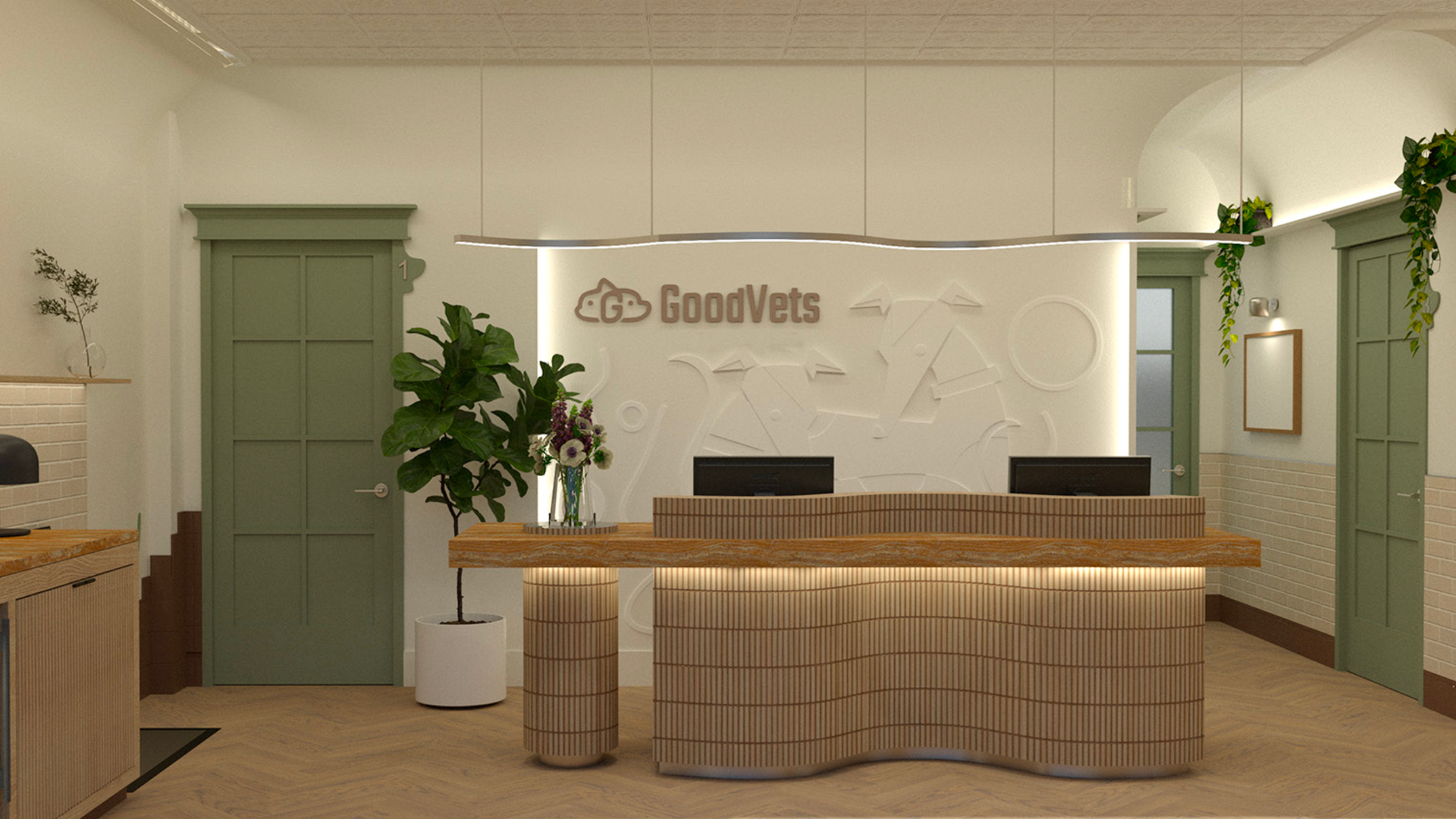
GoodVets has a new location coming to The Wharf. Rendering courtesy of GoodVets
A proliferation of tech-savvy, trendy-looking vet clinics are aiming to disrupt the animal care industry around D.C.
Why it matters: As a collective society, we're in our "fur baby" era — aka more obsessed with our pets than ever and willing to pay to make sure they're living their best, healthiest lives.
- This is especially true in D.C., a city that loves its furry friends. (See: Our dog bars, cat cafés, dog cabanas, pup workout classes, and the Fairmont bar's VIP menu — aka "Very Important Puppy.")
Driving the news: The company GoodVets is opening its first Washington outpost next year at The Wharf, joining like-minded animal care groups with existing DMV footprints like Small Door, Bond Vet, and Parker & Ace.
- These are basically the One Medicals or Forwards of the pup world, with options for app-based and virtual care, direct messaging with providers, and promises of next-day appointments via online booking.
- Oh, and did we mention the vibey decor? Think gallery walls in the waiting rooms, industrial-chic Edison bulbs, mid-century modern furniture, and fridges full of seltzer.
The intrigue: Small Door is a membership-only clinic; meanwhile, GoodVets and Parker & Ace have the options for membership-based wellness plans. (Bond, meanwhile, does not have a membership plan.)
- Parker & Ace's is $159 a year, Small Door's is $169 a year, and GoodVets' plans run around $100 a month, depending on location.
- Some of the membership plans come with unlimited visits and 24/7 virtual care, although things like tests can run extra.
By the numbers: Pet ownership exploded during Covid, and today, 66% of American households have a pet, says the American Pet Products Association (APPA).
- Last year, we spent $136.8 billion on our fur buds, per the APPA.
- 33% of paw-rents are millennials — the largest share, according to the APPA.
- And it stands to reason that as said millennials delay having kids (the median childbirth age for U.S. women is now 30, the highest recorded, according to the U.S. Census Bureau), many consider their floofs their babies.
Plus: 61% of pet owners in urban areas — aka where many of these elevated vets are opening — consider their pet to be as much a member of the family as its human members, says a Pew Research Center survey.
The big picture: This premium on our pets, coupled with an increasing rate of burnout in vets, is fueling these new companies' growth.
- The existing vet population is aging out, and people aren't graduating vet school fast enough to fill those gaps, says vet Katie Malehorn of Veterinary Park Potomac.
- The shortage is overburdening clinics and making it harder for the rising number of pet owners to snag appointments, some of which are for pressing issues due to delayed checkups during Covid.
Between the lines: Some providers are facing serious mental health consequences: Death by suicide is more likely for vets than the general population; it's 1.6 times more likely for male vets and 2.4 times for women vets, says the CDC.
What they're saying: These new groups — many of which are backed by private equity firms — see themselves as improving the existing system for clients (service that's easier-to-book, more thorough and higher tech) and providers (less volume and more one-on-one time with patients, with better pay and benefits).
- "It's all symbiotic," says GoodVets co-founder and COO David Saginur. "The patient care, the quality of facility, the quality of medical technology, the aesthetic, the look and feel."
These companies are different from big corporations, like Mars, Inc., that buy up existing small clinics, instead opening and operating their own practices from the ground up.
- GoodVets, for instance, has a partnership model where each clinic is co-owned by a vet.
Yes, but: When big groups are running vet clinics — as opposed to the (increasingly rare) small, locally owned practices — it could mean that people without adequate animal-care backgrounds or knowledge are the ones in charge, Malehorn tells Axios.
- Plus, national providers could be less in-tune with local-specific needs, she says.
Like human concierge medicine, there's also the issue of access: Vet Christine Klippen of Friendship Hospital for Animals tells Axios she worries that membership-only concepts could create barriers in veterinary care, making it so people who can afford to pay membership fees will get access to faster, on-demand care than those who can't. And some of these spots cap membership.
- "I do think, inherently, it's going to create some inequity," says Klippen.
However, both Klippen and Malehorn say that, overall, more vet clinics opening is a good thing — more practices means more available appointments and less strain on vets.
- And the virtual, on-demand options might be especially helpful to new pup parents with lots of questions, or people who have animals with medical issues, adds Klippen.