Vindaloo and VIPs: Bombay Club celebrates 35 years

Add Axios as your preferred source to
see more of our stories on Google.
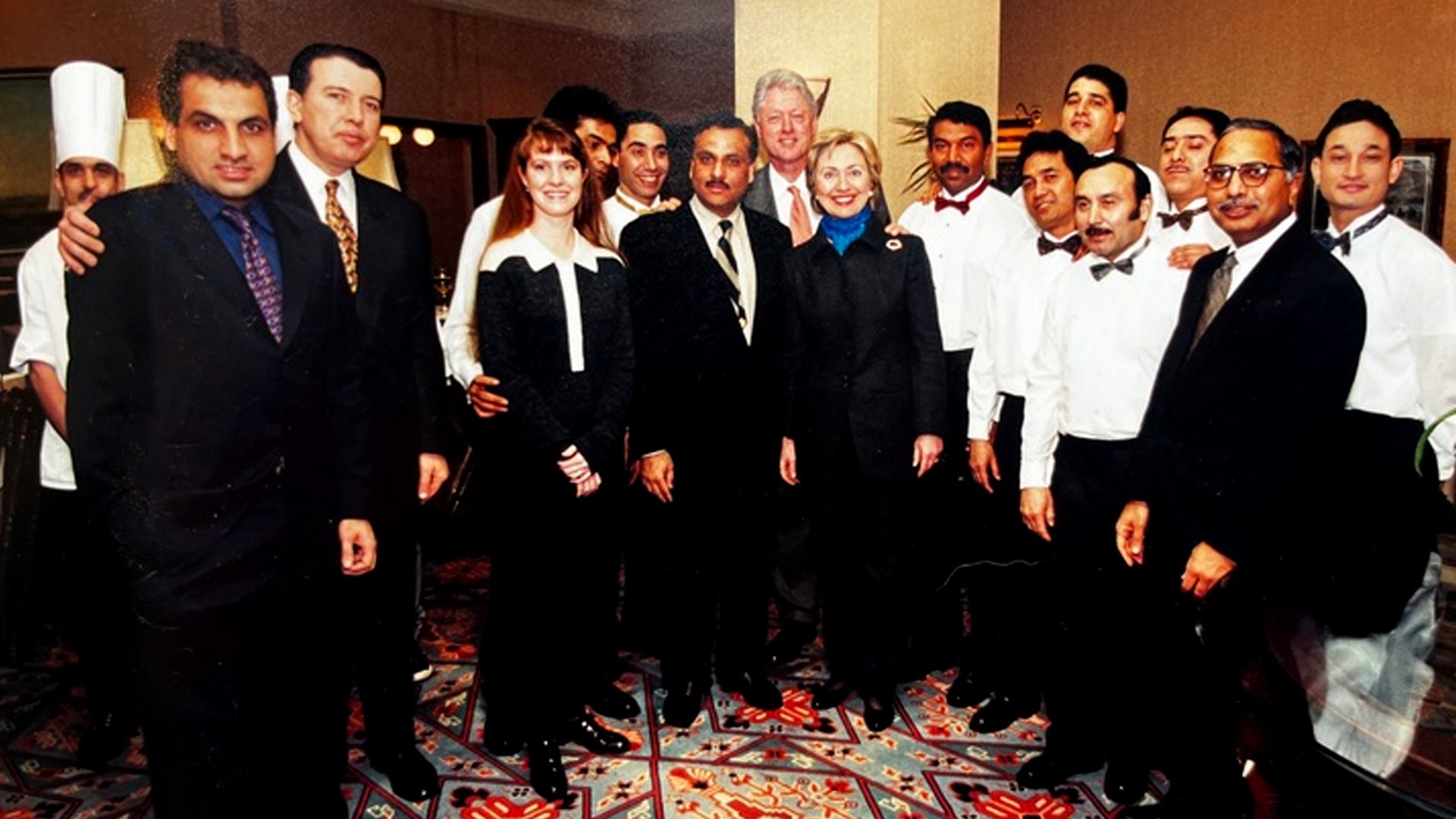
Bombay Club owner Ashok Bajaj (center left) with President Clinton and first lady Hillary Clinton. Photo courtesy of the White House
It's 1988. Ronald Reagan is president. You can't throw a gougère without hitting a fussy French restaurant in downtown D.C. And New Delhi native Ashok Bajaj just arrived with the vision of opening a rare "upscale Indian restaurant" near the White House.
Flash forward: Bajaj is celebrating the 35th anniversary of Bombay Club, his first of 18 (10 current) D.C. ventures with Knightsbridge Restaurant Group that's catered to presidents, VIPs, and celebrities.
- Starting Monday through Dec. 16, the restaurant is serving guests a free glass of Champagne and a special menu of Bombay classics, such as mango shrimp and duck kebabs.
Why it matters: Bajaj's boundary-breaking Bombay Club — now a true D.C. classic — has helped transform the way a well-heeled class of Washingtonians dine.
We asked Bajaj about pioneering upscale Indian food in the District, his biggest VIPs, and proudest moment.
First stop in D.C.: After working in high-end hospitality in London, Bajaj arrived in town and shacked up at The Willard.
- "I bought a Zagat Guide. I still distinctly remember, it was so thin. There was Jean-Louis [at the Watergate], The Prime Rib. I walked around and checked out every single restaurant."
The biggest challenge: Finding a space. Landlords complained to Bajaj that "Indian restaurants smell." He didn't give up. "I knew in my whole heart I didn't want to be in a C or B building," Bajaj tells Axios. "It was so much harder for ethnic restaurants to be in a first-class building than now."
- The original owner of 815 Connecticut Ave. NW lived in Belgium. Bajaj offered to pay for a trip to London and dinner at luxe Bombay Brasserie "to see what I'm trying to do here. He came back and said, 'Yeah! I want to do that!'"
Yes, but: Someone else bought the building before Bombay opened, and things were in limbo. That someone was Mohamed Hadid — real estate tycoon and father of supermodels Bella and Gigi — who ultimately green-lit the restaurant.
First restaurant purchase: A Yamaha baby grand piano for $14,000 – a luxury. "But that was the theme, that's what I wanted to do." It's still played in the dining room today.
First VIPs: The early crowd was mostly World Bank and IMF, "people who were well traveled," says Bajaj. "It used to be a slow buildup, not like this Instagram time." Then the media crowd (e.g. Maureen Dowd, Johnny Apple). Then the White House crowd (e.g. Madeleine Albright et al). And finally, its residents.
- President and first lady Bill and Hillary Clinton came in 1993 – the first of many visits, including Chelsea, who celebrated her 17th birthday at Bombay.
Proud moment: When Bajaj's parents, who were visiting from India, met President Clinton at Bombay Club — and then were invited to the White House.
- Especially since they weren't initially excited about their son working in restaurants. "Either you had to be an engineer or a doctor. And I wasn't smart to be either of them," jokes Bajaj.
- "At the end of the day, they wanted me to do what I felt good about doing. Hospitality has given me a lot of satisfaction. You make people happy. You create things. You transport people for two, three hours, and make them forget."
Seating chart: Bajaj learned POTUS preferences after many years: "Michelle Obama wanted to be in the dining room, but President Obama always wanted to be hidden. President Clinton wanted to go to every table. President Bush didn't work the room quite as well, but he still didn't want to be hidden. President Trump, I never saw."
Biggest security detail: POTUS? Rasika regular Angelina Jolie? "She doesn't have that much," Bajaj says. "I can tell you who brings more security: Jeff Bezos. He comes with a lot of security."
The intrigue: Bajaj is a rare restaurateur who's only closed two venues, Penn Quarter's 701 and Olivia, in three decades (and he's quick to remind you that it was the landlord's decision for 701, and Covid for the other). He's quicker to transform concepts, like the new Little Blackbird wine bar in Cleveland Park.
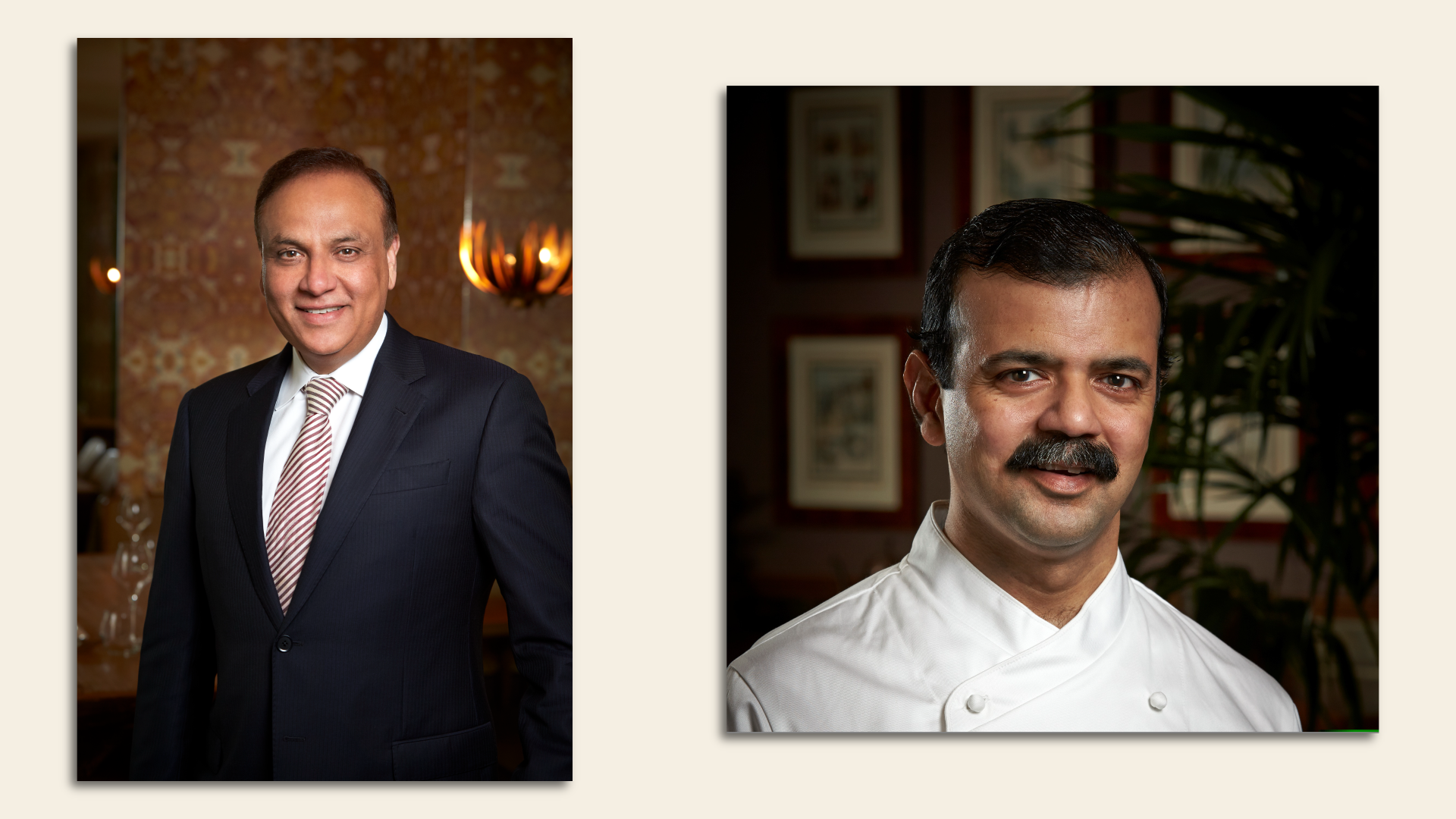
- Consistency is big. Vikram Sunderam, Bajaj's chef at Rasika and Bindaas, and Bombay's chef Nilesh Singhvi have both been with him for nearly two decades — a lifetime in industry years.
- He still drives his Mercedes to each of his full-service restaurants every night. And he's never expanded outside D.C. (nope, not even to the 'burbs).
What they're saying: "You have to find what drives you, what keeps you fresh, what keeps you motivated. It's not always the money. I always worry about standards," Bajaj says.
- "Could I open Rasika in New York? Yes, but then I'm not in the operations all the time. If I make less money, but I'm making people happy, that's more important."