D.C. lead pipes under scrutiny as EPA proposes new requirements

Add Axios as your preferred source to
see more of our stories on Google.
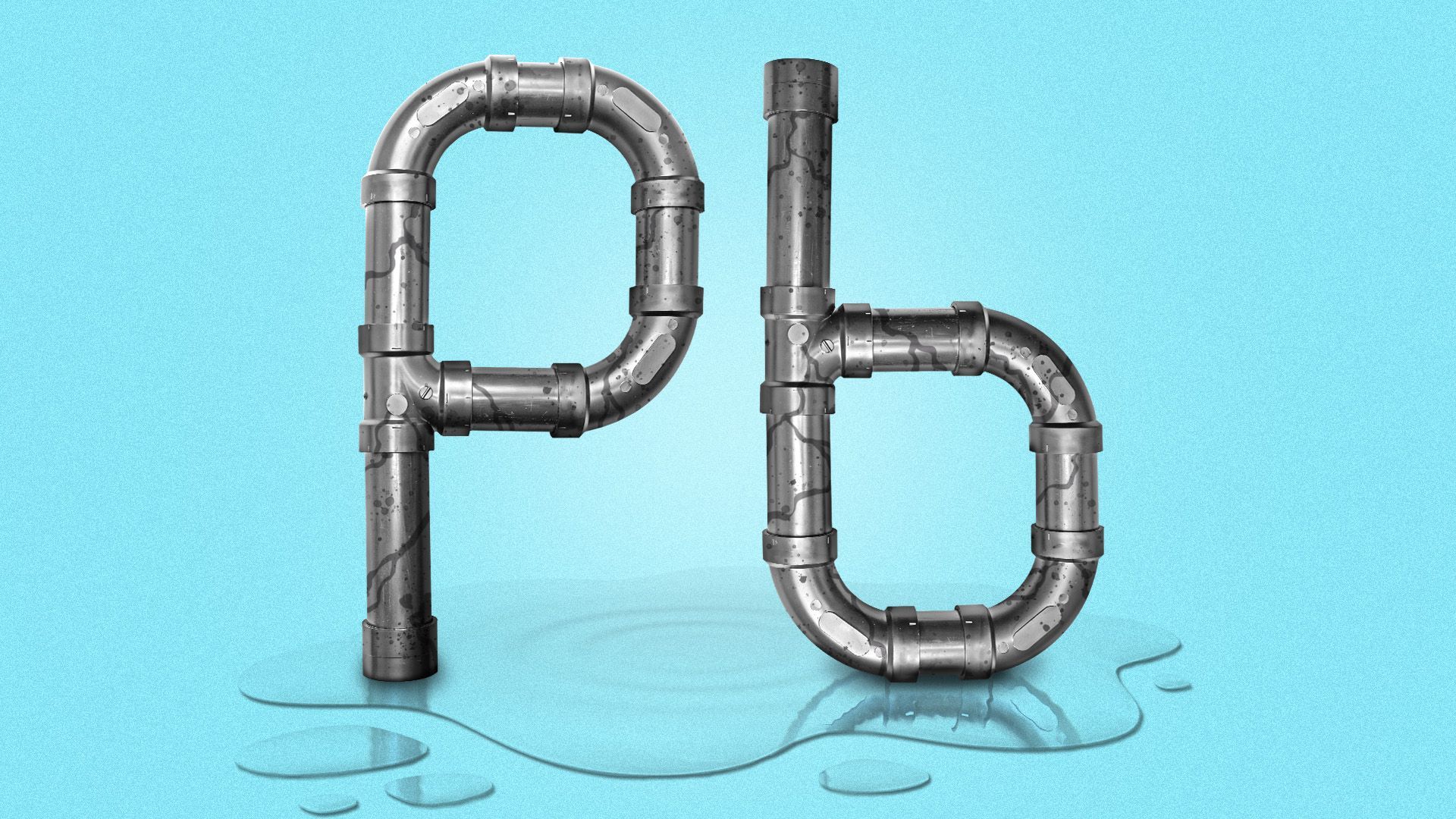
Illustration: Sarah Grillo/Axios
bbA new EPA rule is renewing pressure on cities including D.C. to replace all lead pipes within 10 years.
Why it matters: Before Flint, Michigan, a drinking water crisis over 20 years ago in D.C. increased vigilance and spurred change, but thousands of homes still contain underground lead pipes.
Driving the news: In addition to replacing pipelines, the EPA wants to lower the lead level threshold at which utilities are required to take action and improve tap sampling requirements, Axios' Jacob Knutson reports.
- If a water system does have high levels of lead, the proposal would also require the utility company to make water filters available to all consumers.
Between the lines: The EPA said funding for the project will partly come from the 2021 bipartisan infrastructure law.
- The legislation included $15 billion for lead service line replacement and $11.7 billion in safe drinking water funds that can also be used to replace pipes, per the EPA.
Zoom in: By 2030, DC Water plans to remove all lead service pipes, which are usually on private property, connecting homes to the public water supply.
- An online map discloses addresses with lead pipes and whether homeowners qualify to replace them for free.
- An estimated 9,000 homes have verified lead pipes and 12,000 are suspected to have lead pipes, as of last May, according to DC Water.
Flashback: D.C.'s water crisis was worse than the one in Flint, experts say, after a change in how the water was treated at the Washington Aqueduct in 2000 led to water absorbing lead from old pipes.
Of note: No level of lead exposure is safe for humans. Babies and children are particularly vulnerable as lead exposure can cause neurological problems.