Government shutdown and Kaiser strike deadlines loom over D.C.

Add Axios as your preferred source to
see more of our stories on Google.
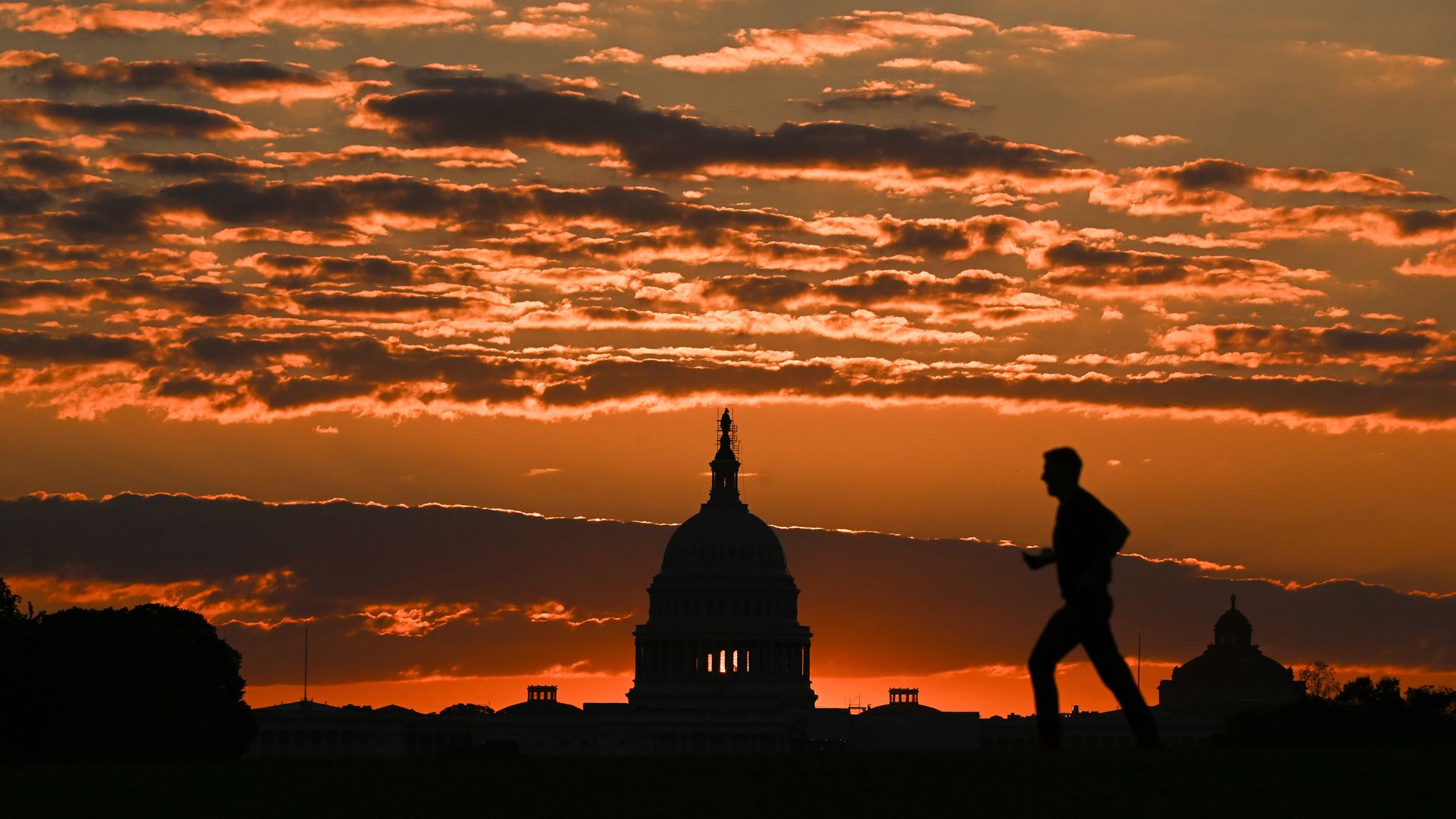
Red sky in the morning ... Photo: Matt McClain/The Washington Post via Getty Images
It's a cliffhanger weekend in D.C. as a Saturday deadline looms for two potentially seismic events: a federal government shutdown and a Kaiser Permanente strike.
Why it matters: If one or (worst case scenario) both happen, thousands in the D.C. area would stop working next week, disrupting several aspects of our daily lives.
State of play: A federal shutdown is looking increasingly likely with House Republicans infighting and a key spending bill to keep the government running up in the air.
- If the bill isn't passed by midnight on Saturday, millions of essential federal and military personnel will go without pay, while hundreds of thousands more will be furloughed. A slew of programs and key entities will be impacted, from Social Security to national parks and airports.
The intrigue: The Senate advanced a bipartisan funding bill on Tuesday to keep the government humming along through mid-November.
- But hard-line Republicans are vowing to oust Kevin McCarthy if he puts forward the legislation, and the House Speaker indicated in a private meeting Wednesday that he wouldn't consider the bill in its current form, the Washington Post reports.
Meanwhile: Nearly 4,000 Kaiser Permanente workers in the D.C. area are prepared to strike if their union — part of a national coalition — isn't able to reach a deal by Saturday with the California-based health care provider.
- Workers are demanding better pay and adequate staffing levels.
- Kaiser serves around 850,000 patients in the region. Doctors and most nurses aren't slated to strike, but the health care ecosystem would be disrupted if medical technicians, pharmacists, optometrists, nursing assistants, and office personnel walked out.
The big picture: More than 75,000 Kaiser health care workers could strike nationally over three days next week, starting Wednesday. It would be the largest health care strike in U.S. history.
Reality check: Neither the shutdown nor the strike would throw our region into chaos. But with the highest concentration of federal workers in the nation — plus a huge population of military and government contractors — the DMV is particularly hit hard.
- During the 35-day shutdown that started in December 2018, federal workers lined up at food banks and missed mortgage payments.
- José Andrés set up a pop-up kitchen on Pennsylvania Avenue to feed furloughed workers — once dishing out 11,400 meals in a day. Overall, D.C. lost more than $47 million.
Zoom in: A lot of day-to-day D.C. services won't be impacted (e.g. trash and mail pickup), but a shutdown does mean a pause on marriage licenses and pay for federal workers who help support the city's businesses and economy.
What we're watching: If the government shuts down at 12:01am on Sunday, D.C. institutions that have waited to announce their plans will be forced to act. For example, the Smithsonian hasn't announced whether museums and the National Zoo will close.
- We're also keeping tabs on the National Park Service, which has yet to announce whether certain parks and the Mall will pause operations.
Thought bubble: We haven't dreaded a "fall back" Sunday morning like this since daylight saving time.