Here's what it's like owning a dome home in Virginia

Add Axios as your preferred source to
see more of our stories on Google.
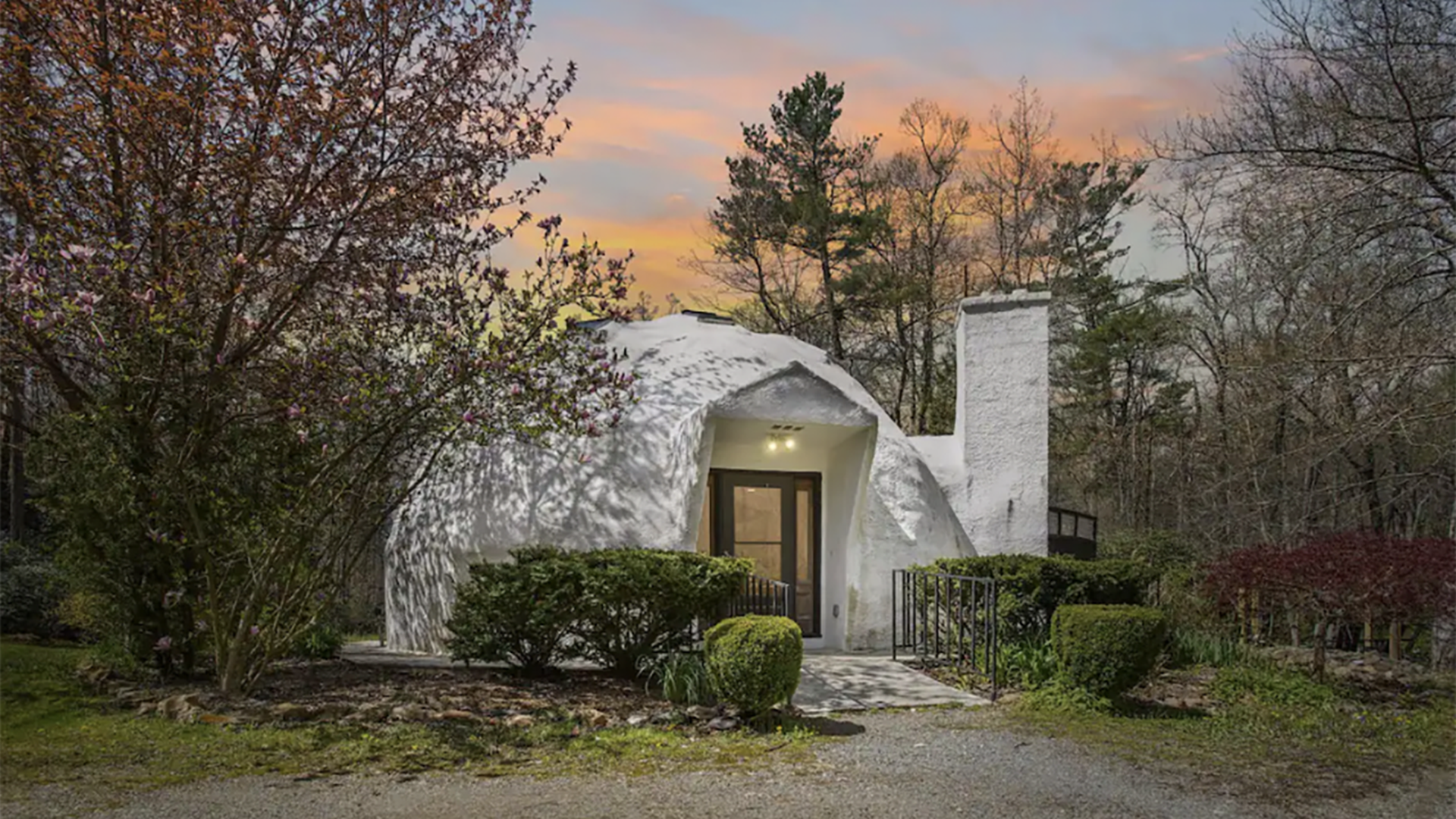
Photo: Rosenberry Media, courtesy of Heather Schlabach
More people are talking about dome homes and disaster-proof designs as a solution to climate threats.
Why it matters: Experts say increasing extreme weather could give mass-market appeal to dome structures, which are relatively cheap to build and resilient against hurricane-force winds, Axios' Cuneyt Dil writes.
Zoom in: Heather Schlabach bought her 960-square-foot Fancy Gap, Virginia, dome home as a short-term rental investment in 2022. Already the owner of two shipping container homes, she was drawn to the distinctive design.
- The curved structure is a playground for creativity, she says.
- She named the rental property "The Toasted Marshmallow," as a play off its shape.
Despite its remote location in southwestern Virginia, the dome home has been popular among guests who are intrigued by the architecture, Schlabach says.
The other side: The curved style, while inspiring, makes home updates difficult, Schlabach says. Most housing materials are made for rectangular spaces.
- Her particular dome is not easy to heat and cool because it's not well insulated.
Yes, but: Dome homes take fewer materials to build, can stand the test of time and are considered eco-friendly.
Zoom out: Natural Spaces Domes, a Minnesota-based company with customers across the country, has seen demand surge in recent years. Owner Dennis Odin Johnson tells Axios he's doubled his staff and expects to sell around 40 domes this year, up from 20 last year.
- "Our clients are looking for something different, and they're attuned to climate change," Johnson says.
The big picture: With fewer flat walls and its round shape, domes can weather severe winds and heavier snowfall while using less heating and cooling energy than a conventional house, Johnson says.
- Also, the entire exterior can be built with fire-resistant material.
By the numbers: A completed dome is generally 5-to-15% less expensive to build, requiring 60% less lumber than a standard house of the same size, according to Johnson.
- For an average size dome — 1,750 square feet with three bedrooms and two bathrooms — completed building costs range from $350,000 to $450,000 in rural areas, with costs up to 50% higher in cities and suburbs, he says.