Study: Overdoses spiked after city swept homeless camps

Add Axios as your preferred source to
see more of our stories on Google.
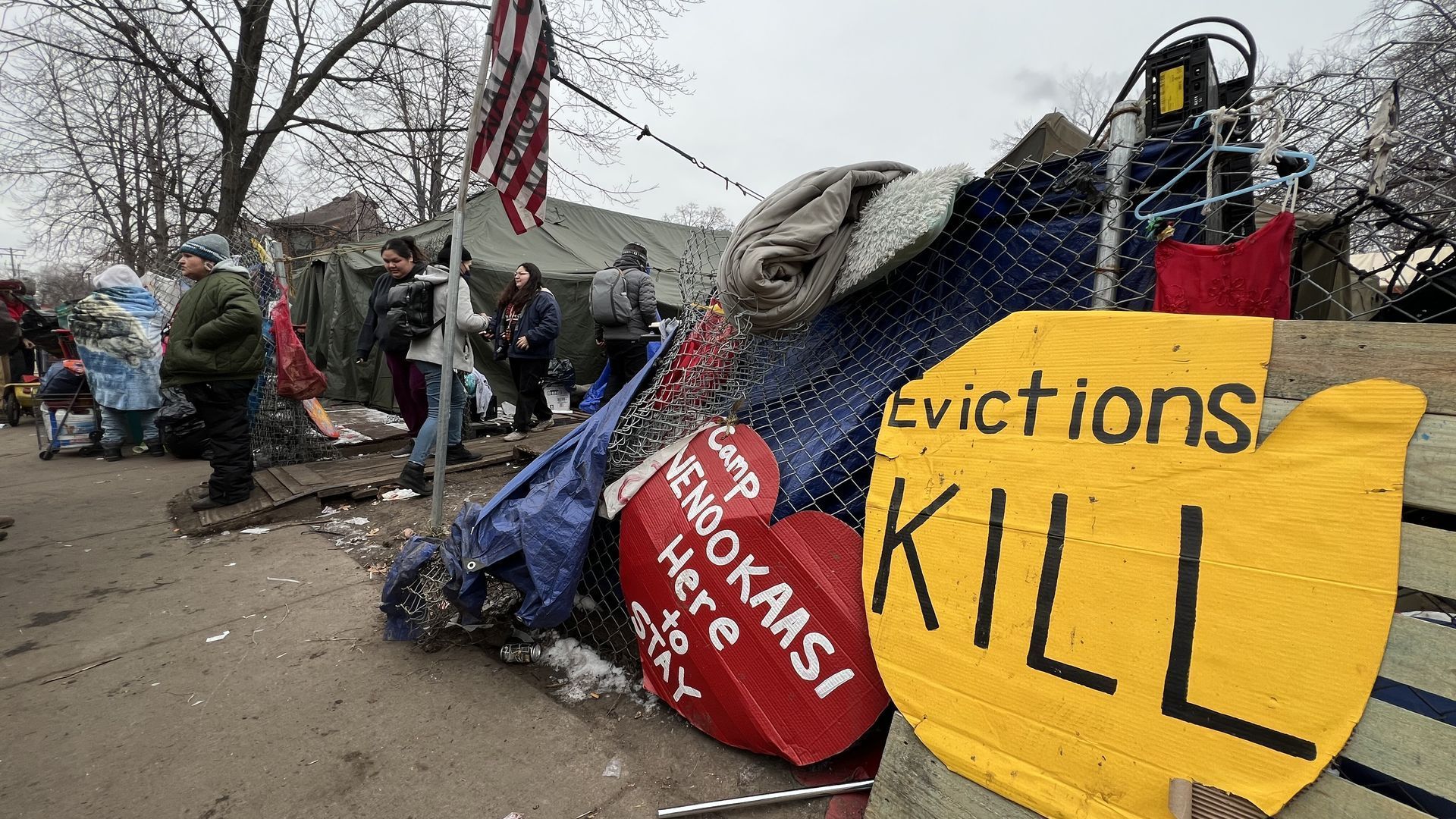
A sign at an encampment in Minneapolis' Phillips neighborhood in January 2024. Photo: Kyle Stokes/Axios
When Minneapolis clears a homeless encampment, the surrounding area experiences a sharp uptick in drug overdoses for several days afterward, according to new research findings shared with Axios.
Why it matters: The University of Minnesota-backed study is one of the first to put hard numbers behind a common critique of encampment sweeps — that they might create public health risks rather than diminish them.
Friction points: Minneapolis and St. Paul officials contend drug use is only one risk they must weigh: People living in encampments are vulnerable to fires, human trafficking and sanitation issues, they say — plus the tension encampments cause with neighbors.
What they did: U of M epidemiologist Kumi Smith's research team partnered with community members who have experienced homelessness to document 87 camps cleared in Minneapolis between April 2024 and March 2025.
- They then compared their database to the times and locations of the 1,431 nonfatal overdose 911 calls over that span.
What they found: Within a two- to four-block radius of a sweep, the risk of an overdose was 65% higher than expected over the next three days.
- Even when testing a wider area (eight blocks) and longer timeframe (two weeks), the increase in overdose risk was still statistically significant, according to a summary of the findings, which are still pending publication.
Between the lines: The Minneapolis study's use of citizen science "probably captured the sweeps problem better than any other study that we know of," says Joshua Barocas, a physician and public health researcher at the University of Colorado Anschutz.
- Barocas published a similar study in Denver that found no effect on nearby crime rates in the wake of sweeps.
- Together, the studies add to growing evidence that sweeps destabilize residents' lives without solving underlying problems, he tells Axios.
What they're saying: Sweeps "trap city governments in endless, expensive loops," Smith tells Axios. "Sweeps consume enormous public resources only to displace people down a few blocks, all while driving up the risk of overdose."
The other side: Stanford University professor Keith Humphreys cautions officials against over-interpreting these findings.
- The study doesn't measure numerous harms from encampments that sweeps address, including housed residents' safety concerns, the hit to nearby businesses and the loss of parks and public spaces.
The research suffers from a "blind spot" that "no one who isn't homeless and doesn't use drugs matters," Humphreys tells Axios. "People who use drugs matter. So does everybody else."
- Plus, a sweep could be the wake-up call certain people need to apply for housing or seek addiction treatment, argues Humphreys, a former Obama administration adviser who supports interventions like needle exchanges.
Yes, but: "Cities do not have to choose between only allowing encampments to persist or only displacing people," Smith says.
- Smith points to models that try to "resolve," rather than forcibly remove, encampments by connecting residents to services gradually.
- Barocas says there's little evidence that a sweep is effective at prompting users to seek treatment.
What we're watching: St. Paul officials have said they plan to clear all large encampments, though the date of the next sweep still isn't clear.