Minneapolis homeless camp population drops by two-thirds

Add Axios as your preferred source to
see more of our stories on Google.
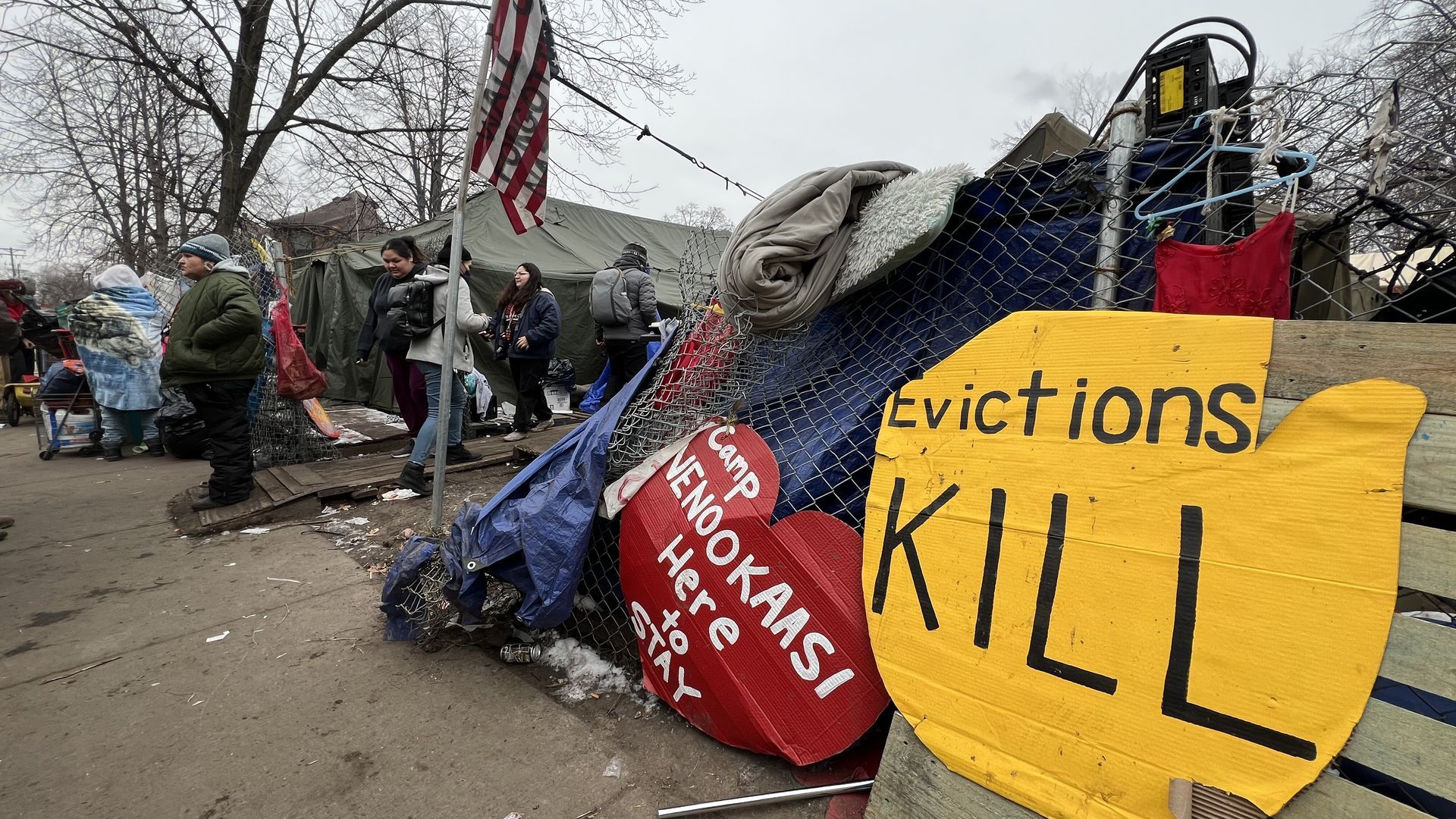
A sign at an encampment in Minneapolis' Phillips neighborhood in January 2024. Photo: Kyle Stokes/Axios
The number of people living in Minneapolis homeless encampments has fallen by two-thirds in recent months, according to the city's running count.
Why it matters: City leaders contend stepped-up police enforcement designed to block encampments from forming, paired with thoughtful outreach and community organizing, is contributing to the reduction.
Yes, but: Critics say the city has focused on attacking the symptoms of the crisis rather than its root cause — a lack of affordable housing.
- That approach "has pushed people into the shadows," anti-homelessness organizer Christin Crabtree told Axios.
What's happening: The city counted 16 active encampments with 43 residents as of Monday.
- That's down from 30-35 encampments with 150-200 residents — more typical of citywide counts in recent years, Enrique Velazquez, the city official in charge of homelessness response, told Axios.
The big picture: Police and city workers for years have often evicted encampments only for them to reform mere blocks away, with most residents no closer to permanent shelter.
Zoom in: Efforts to break this cycle by local governments, service providers and advocates recently got a boost.
- The Minnesota Indian Women's Resource Center (MIWRC) opened its doors to host a temporary warming center after fires destroyed two encampments on Jan. 6, CEO Ruth Buffalo told Axios.
What they're saying: "That evolved into something more. People found community in that space," Velazquez said.
- MIWRC hosts weekly "resource connection" events where unsheltered people can meet with case managers, find housing or get help with drug treatment, Crabtree said.
Zoom out: Velazquez credits the community-led MIWRC effort — and other outreach programming staffed by city employees and outside service providers — with the city's reported drop in encampments.
- Velazquez also says Minneapolis Police Chief Brian O'Hara's January order, which directs officers to proactively stop new encampments from forming, has been "turning off the valve."
Friction points: Crabtree — who organizes for Nenookaasi, now a mutual aid group that sprouted out of a former encampment — said she doesn't want people living outside.
- However, she contended those evicted from encampments are often forced to "stay in much, much worse conditions" — everywhere from alleyways to with traffickers.
- Velazquez said he's spoken with Hennepin County officials about improving overnight shelter conditions, but Crabtree said these spaces still struggle to adequately provide for many residents, especially substance users going through withdrawal.
- Crabtree also said community-led efforts like MIWRC's have succeeded in spite of the city, rather than because of it. (The City Council budgeted $100,000 for MIWRC's homelessness response, but that funding hasn't yet arrived, Buffalo said.)
The bottom line: "The city continues to evolve in its response to unsheltered homelessness," Velazquez said, shifting from a focus on property to the people.
- "If we help our unsheltered residents meet their basic needs, a lot of the other issues — community livability, health and safety concerns — will start to go away," he said.