Minneapolis crime dropped in early 2025, city says

Add Axios as your preferred source to
see more of our stories on Google.
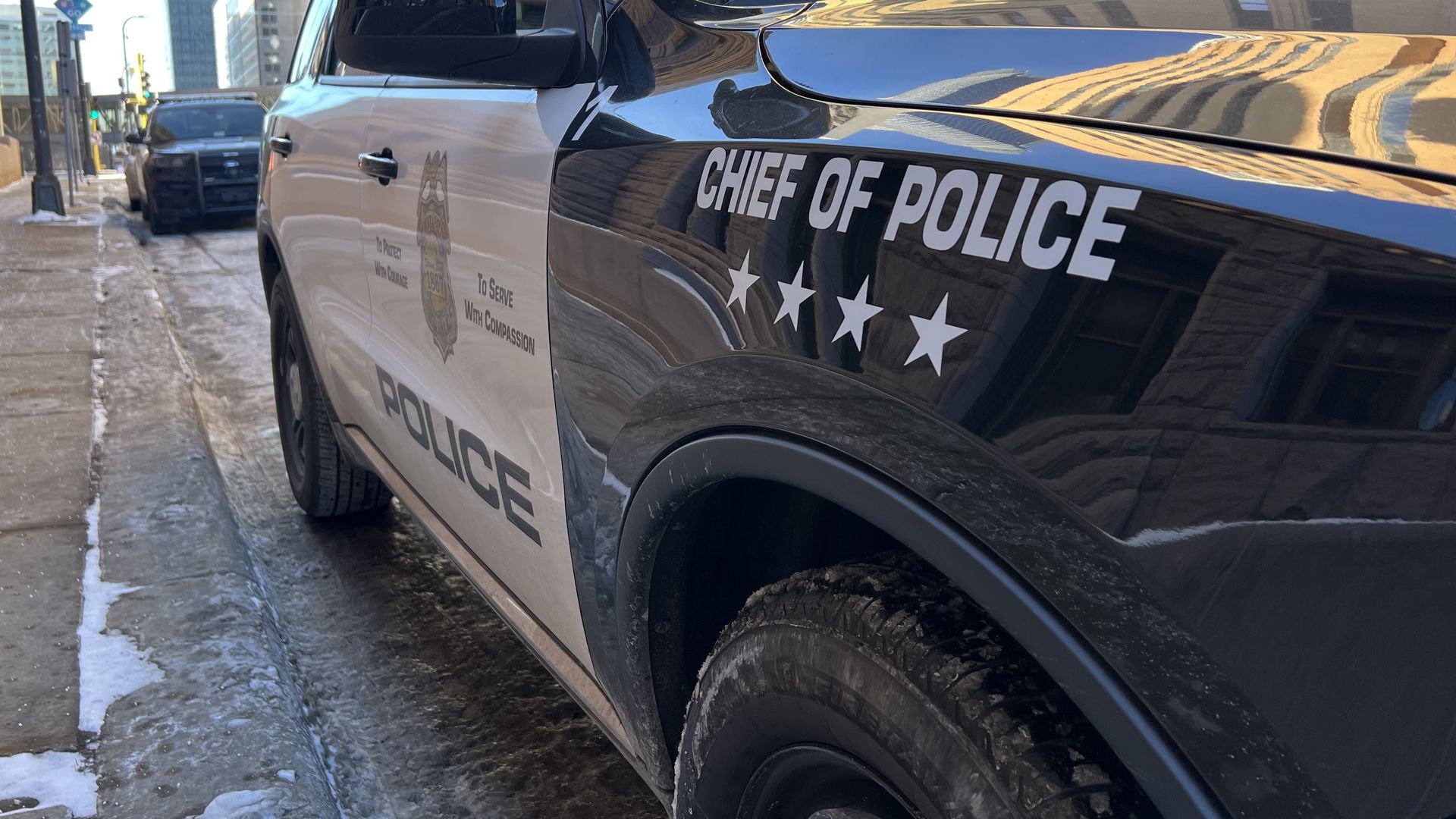
Photo: Kyle Stokes/Axios
The latest Minneapolis police data show incidents in most major crime categories decreased in early 2025, even as city leaders admit they have a long way to go in reversing a yearslong increase in violence.
Why it matters: Mayor Jacob Frey and Police Chief Brian O'Hara touted this year's early statistics as evidence their crime prevention efforts are working, even as the MPD has suffered an exodus of officers and police reform efforts slowly roll out.
- "We're on the right track," Frey told Axios.
By the numbers: Minneapolis reported two fewer homicides, nearly half as many robberies and an 11% drop in aggravated assaults through February, compared to the first two months of 2024.
- A Frey post to X also touted double-digit decreases in carjackings, auto thefts and shooting victims.
The big picture: Violence in the city has surged since 2018, before the pandemic or George Floyd's murder, and that increase hasn't fully receded.
- Minneapolis saw 76 homicides last year, four more than in 2023. Other crime metrics also rose slightly in 2024, a year when other mid-sized U.S. cities reported fewer violent crimes than the previous year, according to the Real Time Crime Index.


What they're saying: When asked why the city hasn't made more headway, O'Hara and Frey pointed out the Minneapolis Police Department is still historically short-staffed, with only three-quarters of the positions required by the city charter currently filled.
- "Individual investigators are doing case loads that are higher than they've ever managed before, and individual officers are just doing more and more work," O'Hara told Axios.
- But Frey said MPD staffing has "turned a corner," with officer hires outpacing departures in 2024 for the first time since the pandemic.
Between the lines: There has been "essentially no correlation" between Minneapolis' murder rates and the number of MPD officers in recent decades, University of Minnesota sociologist Michelle Phelps wrote in her book on the city's policing history.
- However, Phelps told Axios there is some evidence that hiring more police officers can interrupt the cycles of violence that lead to homicide — though the officers must be deployed more deliberately and strategically.
Zoom in: O'Hara credited some of the crime decrease to several initiatives, including a "curfew task force" of officers and outside partners that has helped tamp down on juvenile robbery sprees since August.
- 15 fatal shootings, nearly 20% of Minneapolis' 2024 total, occurred near homeless encampments last year. Since encampment response policies were changed in January, police have blocked six encampments from forming, O'Hara said.
Friction point: Minneapolis has aimed to contract with an array of non-profit groups to offer on-the-street interventions to de-escalate situations that could turn criminal.
- Phelps said these "beyond police" efforts deserve resources and scrutiny, especially as Frey and the City Council trade accusations that those programs are being mismanaged.
- "Last summer, [Minneapolis] had effectively no coordinated violence prevention work despite touting ourselves as pioneering that work," Phelps said.
The other side: Frey's staff has pushed back on criticism, telling the Minnesota Star Tribune that improvements are underway and that some criticism has been "mischaracterized."