Trump tariffs cost Minnesota $4.8 billion, report estimates


Add Axios as your preferred source to
see more of our stories on Google.

Illustration: Brendan Lynch/Axios
President Trump's tariffs have cost Minnesota an estimated $4.8 billion since January 2025, according to a new analysis.
Why it matters: The report, Trade Partnership Worldwide for the National Taxpayers Union Foundation, underscores that while Trump's tariffs are international, their economic impact is local.
By the numbers: Minnesota's total nets out to about $2,000 per household.
Zoom in: Over half the estimated economic toll of the tariffs in Minnesota fell on raw materials, parts and equipment purchased by manufacturers — costs consumers may not feel directly or immediately.
Yes, but: Some consumer goods categories also absorbed big economic blows, including toys and games ($616 million), clothing and shoes ($419 million) and household goods ($291 million).
Between the lines: While businesses importing goods pay the tariffs, at least some of the costs are typically passed on to consumers.
- A separate study by the nonpartisan Midwest Economic Policy Institute and the University of Illinois' Project for Middle Class Renewal found that costs increased by nearly $1,000 per household as a result of the policies.
- The hikes had an outsized impact on the budgets of lower-income households, MinnPost notes.
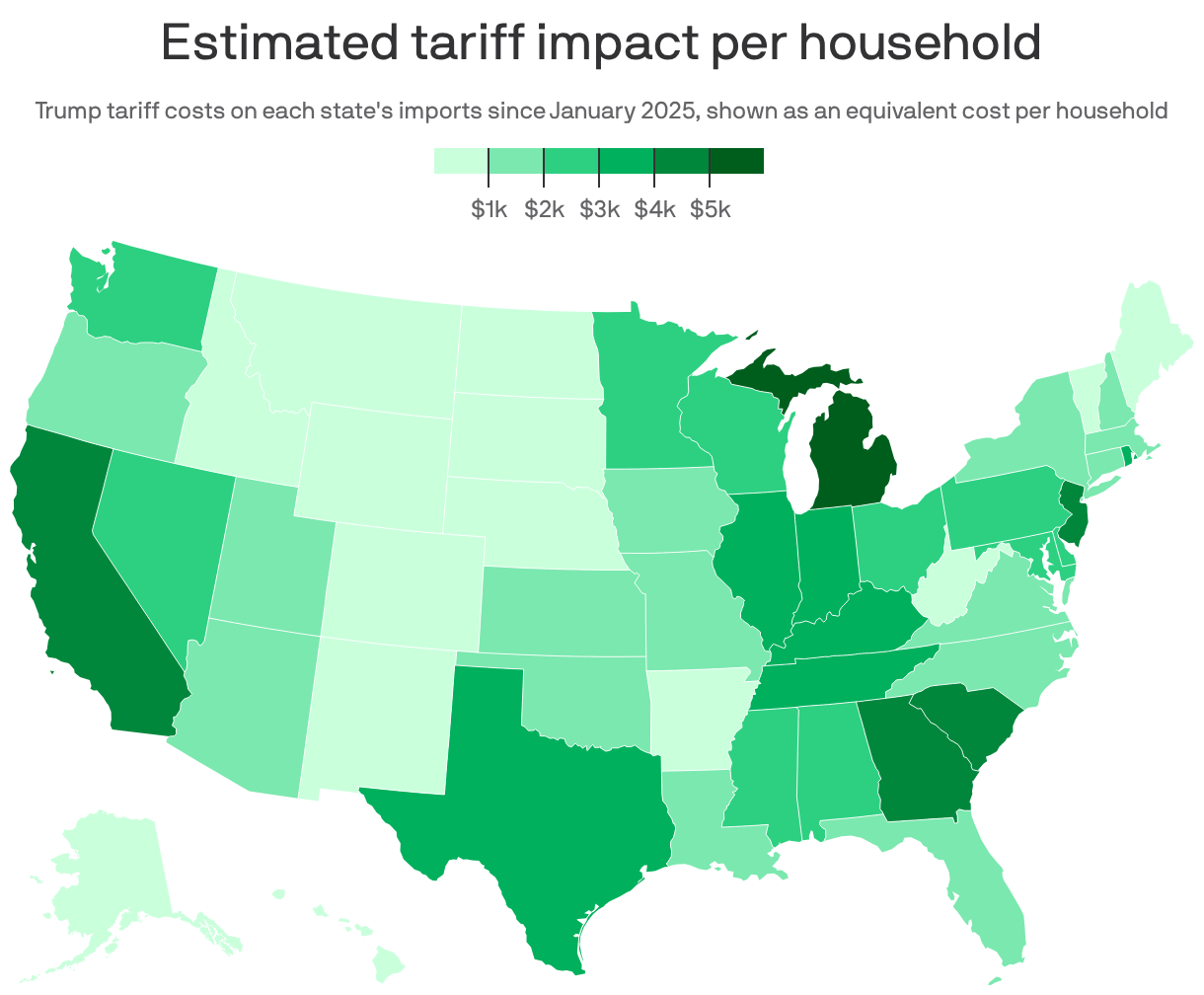
Zoom out: Local industries dictate how and how hard communities have been hit. As a result, states bear wildly different estimated tariff burdens.
For example, California has absorbed the biggest chunk of the overall $342 billion estimated tab, with a $62.8 billion hit, while Wyoming sustained just $107 million.
- Michigan's $23.2 billion tab was smaller than California's, but amounts to an estimated equivalent of $5,619 per household, the highest in the nation.
Reality check: The Supreme Court struck down Trump's sweeping emergency-power tariffs in February, and importers are now seeking refunds for billions of dollars in duties already paid.
- The data reflects tariffs collected through June 2026, including some costs that could ultimately be refunded, even as the administration explores alternative tariff approaches.
What we're watching: Trump's renewed trade tiff with Canada could make the tariff issue a bigger flash point in the governor's race.
- DFL gubernatorial candidate Amy Klobuchar warned that the new 50% tariffs on Canadian goods will further drive up prices and make it harder for businesses and farmers to compete.
- GOP nominee Lisa Demuth declined to criticize the policy when rolling out her own economic plan last week.