What becomes of Target Center if the Wolves move?

Add Axios as your preferred source to
see more of our stories on Google.
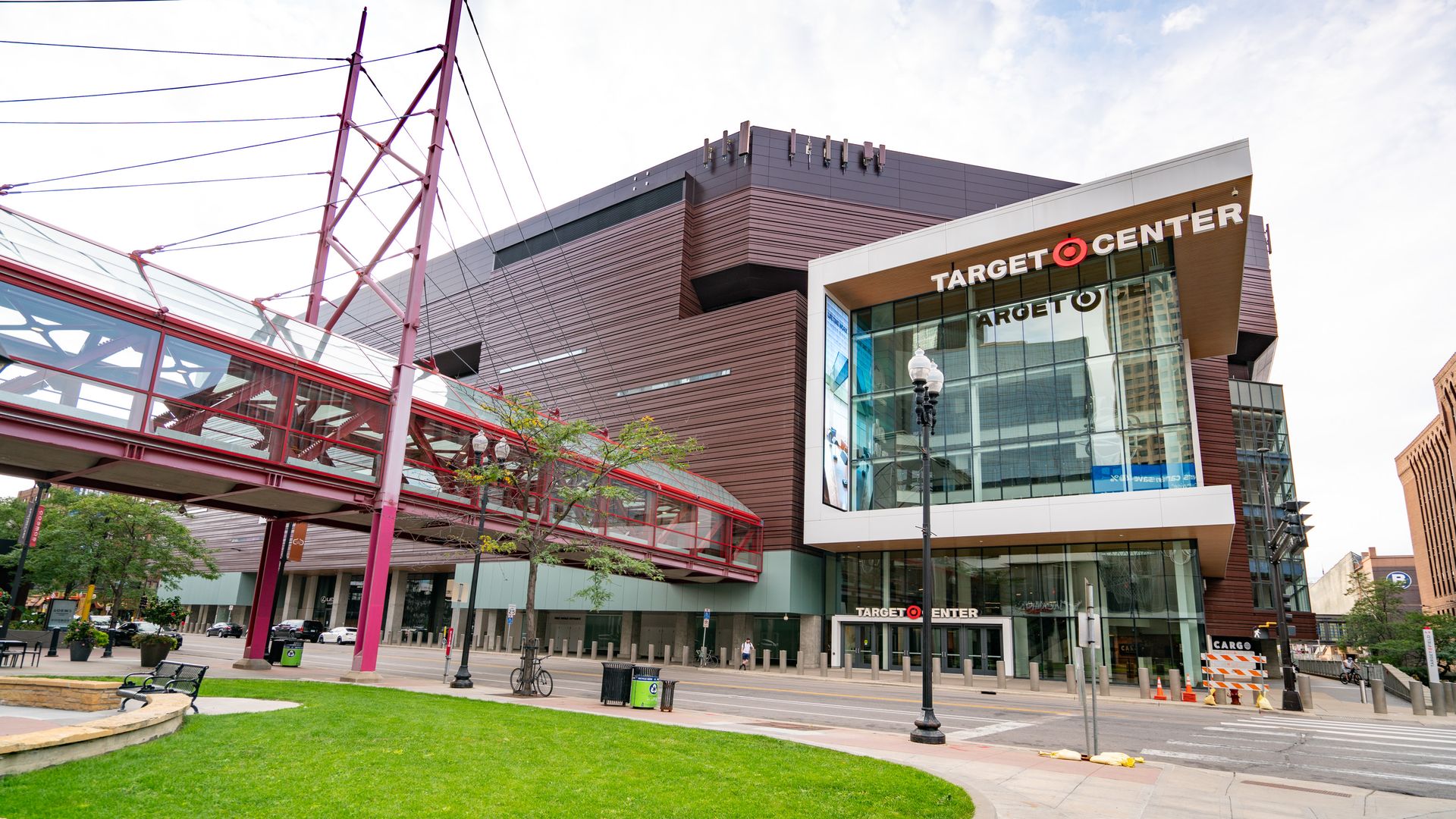
Target Center in 2020. Photo: AaronP/Bauer-Griffin/GC Images
As the Timberwolves/Lynx search for a new home, the debate will soon heat up over what to do with the Target Center and its $53.5 million debt balance.
Why it matters: This is a big and important piece of downtown real estate, and what to do with it should have developers, elected officials and urbanists dreaming.
- It will also become a key piece in the negotiations between the city of Minneapolis and team owners if they work out a deal for a new downtown arena.
Here are some of the big questions readers have asked about the 36-year-old arena.
What could you do with Target Center after the teams leave?
Target Center sits on 3.5 acres of land in the Warehouse District.
🏗️ It would cost millions to demolish, but it would open up a huge chunk of land for development.
- If Mayor Jacob Frey succeeds in persuading the Wolves to build on the nearby City Center site, the old arena site could become a sports-and-entertainment district connecting Target Field to Mayo Clinic Square and a new arena.
- Think open space, hotels, restaurants and apartments, as team owners Marc Lore and Alex Rodriguez have said they want as part of a new arena district.
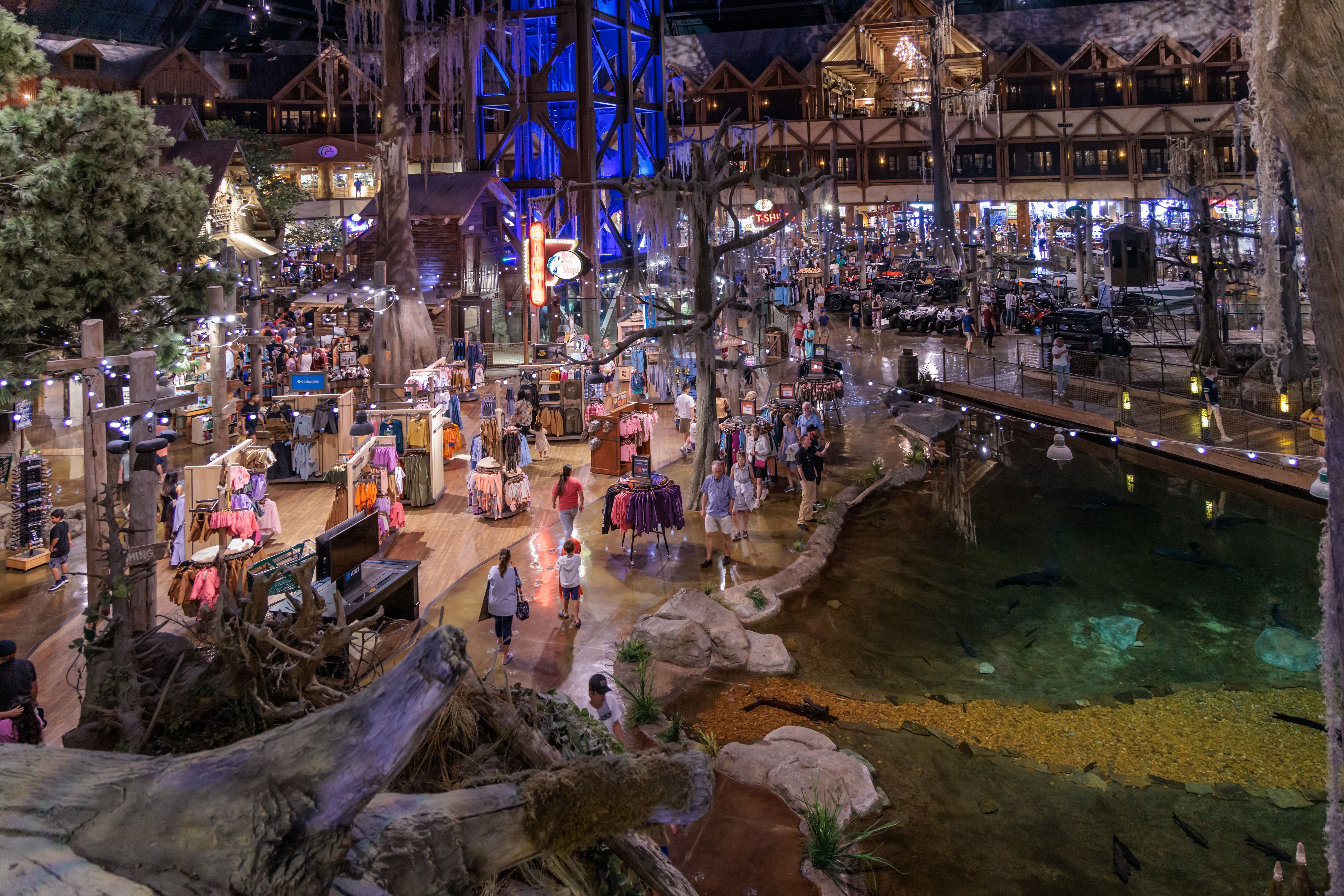
🎣 A few real estate sources have told Axios that officials should consider what Memphis did when the Grizzlies left the Memphis Pyramid in 2005.
- Instead of tearing down the NBA arena, it was redeveloped with help from $105 million in city subsidies.
- Developers made it into a massive Bass Pro Shops store with a gigantic aquarium, bowling alley, shooting range, restaurants and hotel, which has rooms on the former suite level overlooking the store.
- In its first year, 2016, more than 3 million people visited and the outdoor retailer did $56 million in sales.
Back up a second. What's wrong with Target Center? Why do we need to replace it?
From a typical fan's perspective, Target Center is fine. But the arena, the second-oldest in the NBA, has quirks that have frustrated team officials hoping to maximize revenues, dating back to Glen Taylor's days at the helm and now with new owners Rodriguez and Lore.
- Its small footprint doesn't allow for as many clubs and lounges as modern arenas have.
- Its second-level concourses are so narrow that the team has limited seat sales at times because they become too crowded.
- There are more seats on the upper level than on the lower level. Fans pay more to sit in the lower bowl.
Why should the public pay for it?
Rodriguez has previously said he's prepared to privately finance a new arena, but that doesn't mean the team won't ask for public subsidies.
- It will be a question for city — and maybe state — officials to consider.
- There are many ways to subsidize a new arena, from simply making it property tax-exempt, as Minnesota United FC did in St. Paul, to more generous and direct handouts, as we've seen with U.S. Bank Stadium and Target Field.
Didn't the public just help pay for a renovation of Target Center?
Yes! In 2015, the city struck a deal to provide $74 million toward what became a $140 million public-private renovation.
- The city — through sales tax revenues — is still paying off debt for that renovation. It owes $53.5 million and will make annual bond payments through 2035.
Wolves CEO Matt Caldwell told reporters earlier this year that the best-case scenario would have a new arena opening in five years, but he noted that six or seven years is more likely.
- If, for example, the new arena opened in 2032, there would only be $9.1 million in debt remaining from the renovation.
- As part of the renovation deal, the Wolves/Lynx signed a lease through June 2035. If they leave early, there's the potential for a $50 million penalty, but getting out a couple of years early would likely be a small piece of a broader negotiation of a likely $1 billion larger arena deal.
The bottom line: This is all still a long way out, but now is the time to start dreaming.