Minneapolis council faces another difficult George Floyd Square vote

Add Axios as your preferred source to
see more of our stories on Google.
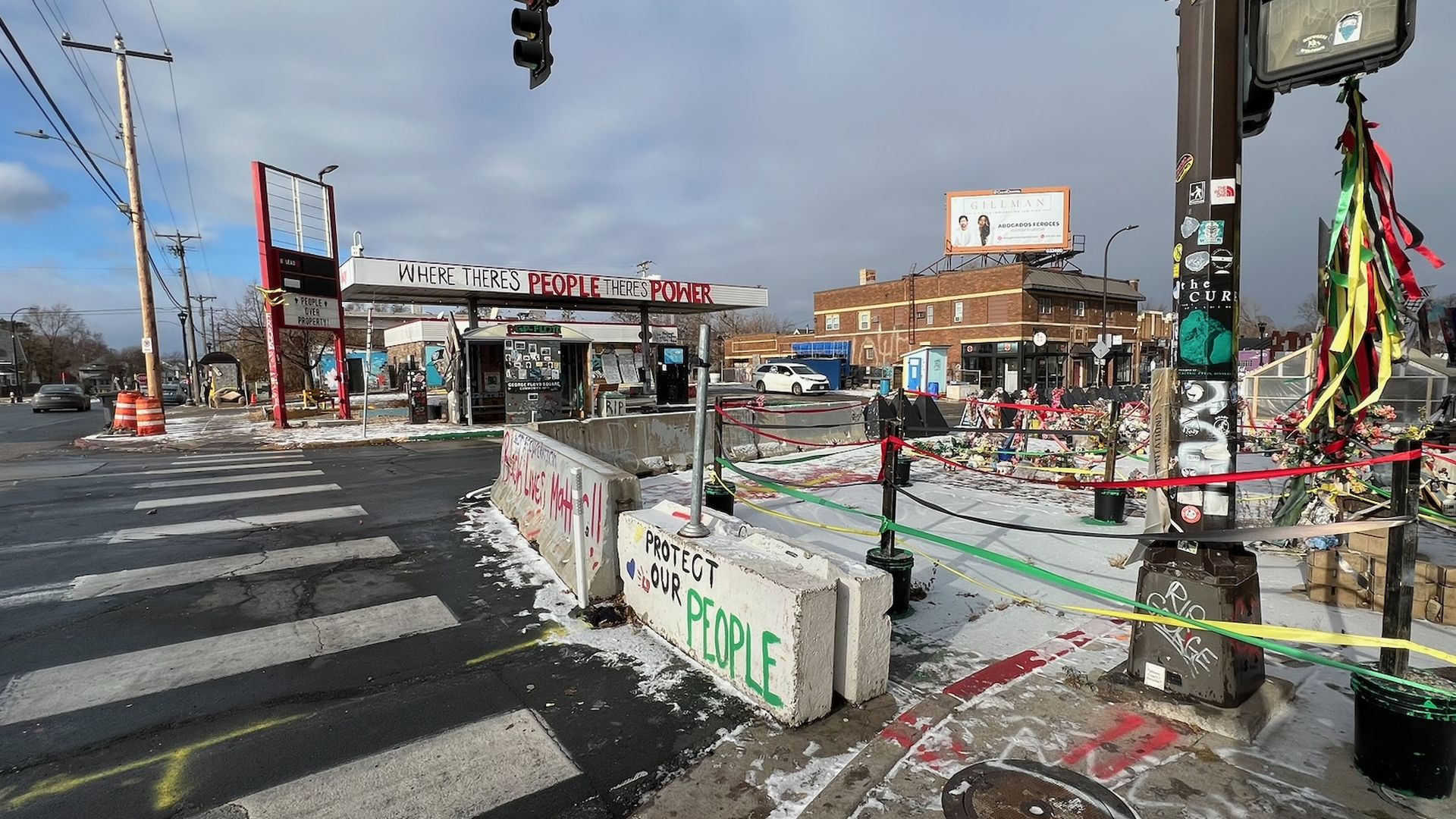
The People's Way, a former gas station, sits across the intersection of 38th and Chicago, where George Floyd was murdered in 2020. Photo: Kyle Stokes/Axios
The Minneapolis City Council faces a tough choice this week: Approve a controversial plan to redevelop the former gas station at George Floyd Square or send an already delayed project back to the drawing board.
Why it matters: The drawn-out search for a developer at the site — known as "The People's Way" — has shown how private investors are still leery of funding revitalization projects at a struggling intersection.
"If there's not significant public funding, nobody's going to be able to do that project," P.J. Hill, who owns the building next door, tells Axios.
Catch up quick: In 2023, the city bought the abandoned Speedway store, and in 2024, it opened an application process to find a developer.
- Last month, city officials chose the Minnesota Agape Movement, which had initially pitched a $20-plus million project: a six-story building with a café, museum, meeting spaces and more.
- The runner-up was Rise and Remember, the organization led by Floyd's aunt and cousin, which pitched a more modest $2.5 million concept for a memorial garden and art museum.
The latest: A city survey showed most neighbors preferred Rise and Remember's pitch — the primary reason why a City Council committee voted 4-2 last week to recommend rejecting Agape's selection.
- Plus: Council Member Soren Stevenson, whose ward includes The People's Way, said Rise and Remember's concept was "much more reasonable in scope."
Reality check: Neither organization has in-house development experience and both would rely on outside partners.
- "Is it the best that we would have liked to see? No," city official Miles Mercer told the council. "But … we deal with the applications that we received."
- Agape's team knows its six-story proposal likely isn't feasible and is "scaling back," Mercer said.
Between the lines: Even a modest project would demand a lot of an organization without a development track record.
- Hill was signed on as co-developer on the Urban League Twin Cities' application for the site — but he says they dropped out after he talked the organization's leaders through the lengthy checklist they'd need to complete to execute the project and operate the site long term.
- Ultimately, Hill believes public dollars will be needed to fund at least half of any project — which would still require convincing a government that it's a worthy investment.
What's next: The full City Council may discuss the issue Tuesday and is due to take a final vote Thursday on Agape's application.