What the Twin Cities were like in the 1990s

Add Axios as your preferred source to
see more of our stories on Google.
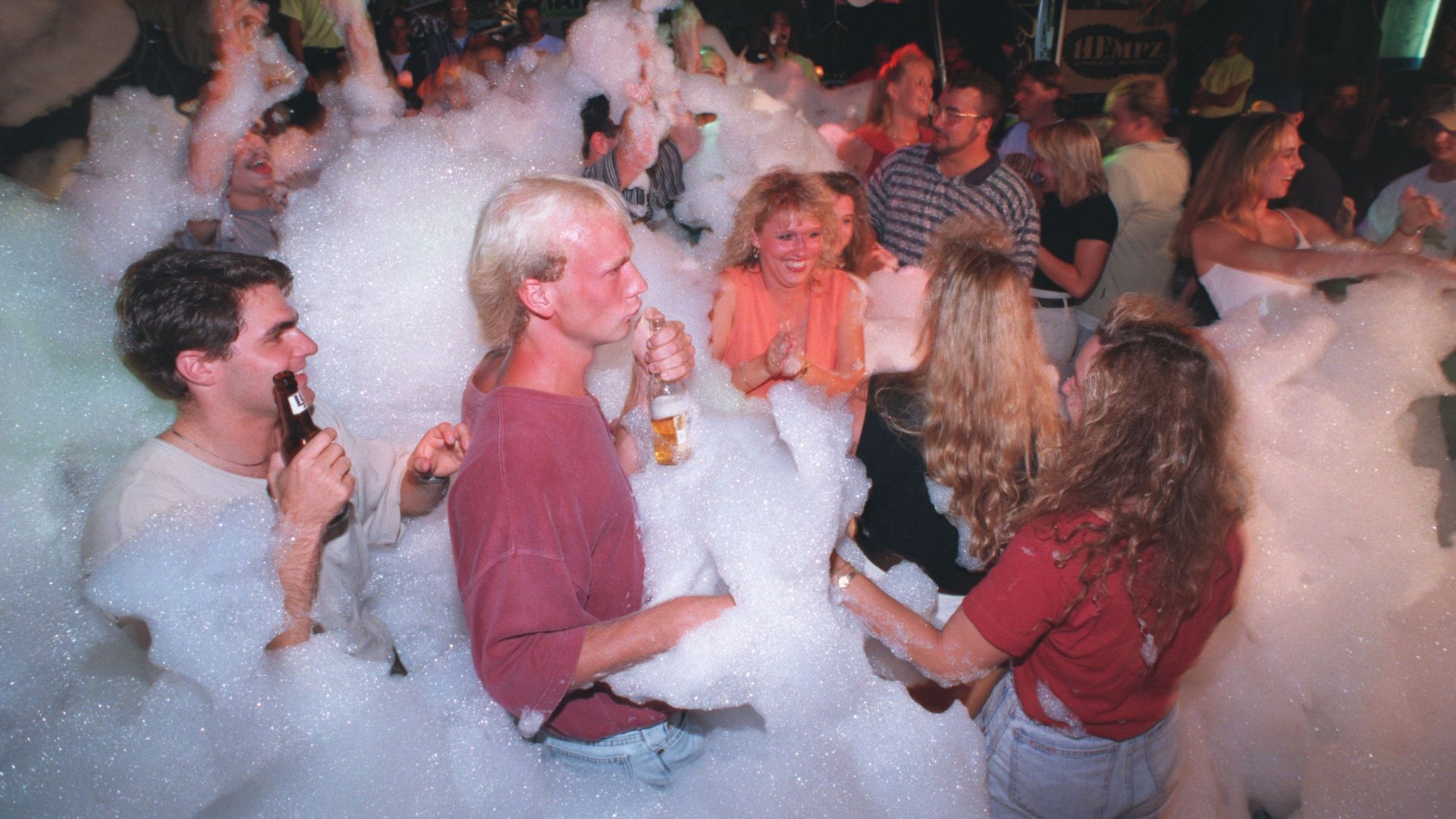
Patrons of Tropix in downtown Minneapolis tried out the newest craze in 1995: foam dancing. Photo: Duane Braley/Star Tribune via Getty Images
Nostalgia for the 1990s is all the rage on social media these days as celebrities, athletes and influencers post photos of what they looked like back then.
What were the Twin Cities like in the 1990s? If you saw only the glamour shots, you'd think of a bustling Nicollet Mall, a vibrant Uptown dining scene, a World Series parade, and the ribbon cutting for Mall of America.
But history repeats itself, and some of the challenges from that decade have returned in the 2020s.
Let's take a trip down memory lane ...
"Murderapolis" and downtown doom
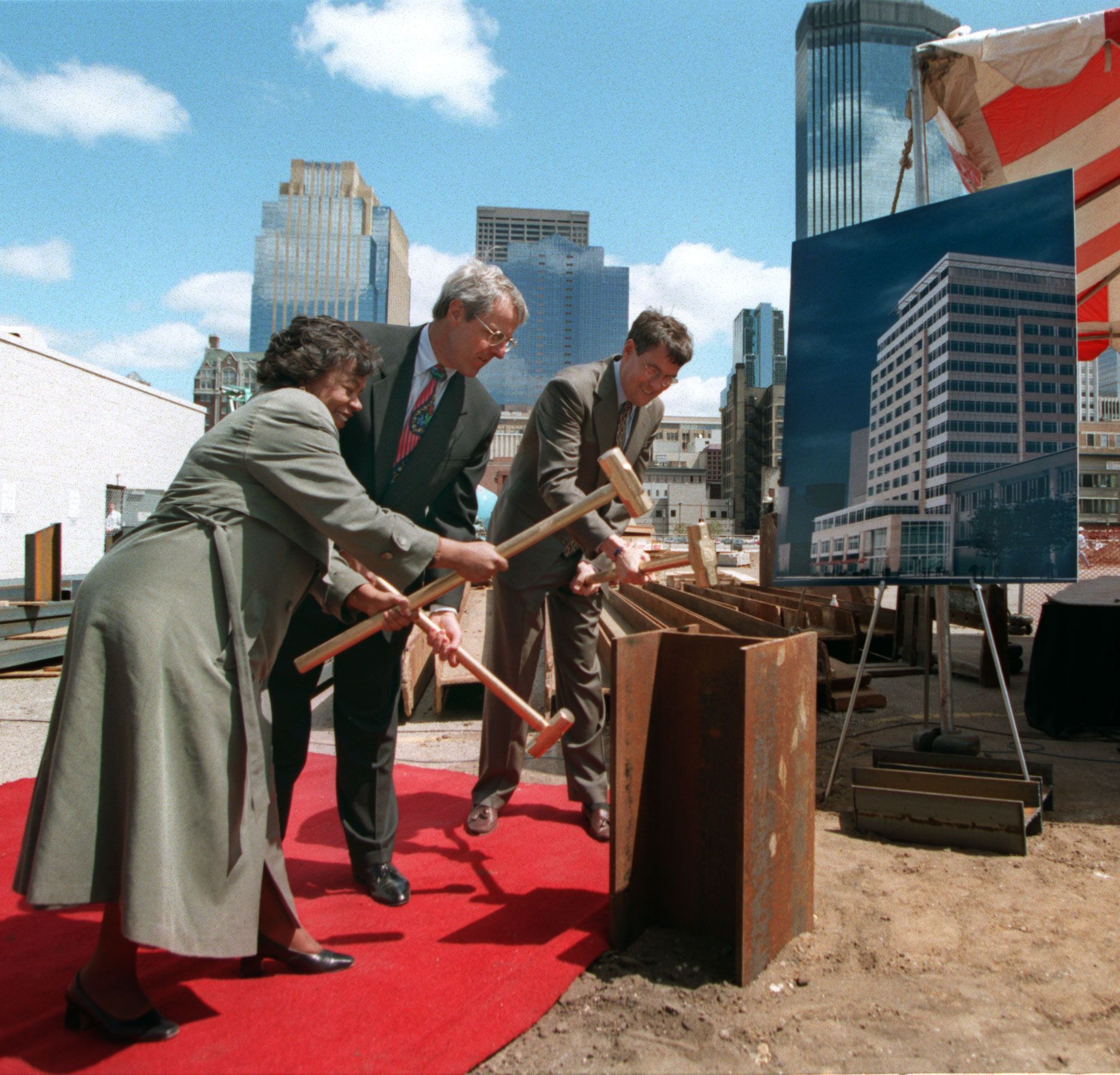
With the construction of Mall of America in the early 1990s, Minneapolis leaders were worried what the Bloomington megamall would do to their downtown.
A $22 million renovation of Nicollet Mall opened in 1991 to harsh reviews, with Star Tribune columnist Barbara Flanagan deeming it "bland and boring," according to Iric Nathanson's "Minneapolis in the Twentieth Century."
- Then, a few years later, the city got the moniker of "Murderapolis" because of a crime surge.
With uncertainty high, then-Mayor Sharon Sayles Belton and City Council President Jackie Cherryhomes ushered in an era of public subsidies for downtown, helping spur the Block E redevelopment on Hennepin Avenue and a new Target store and office building on Nicollet Mall.
- A wave of national chains came to downtown, including Hooters, Hard Rock Cafe, Borders Books and GameWorks.
- Leaders also launched the Holidazzle parade in 1992 in an effort to bring people to the city to shop.
What they remember: R.T. Rybak, who served as mayor starting in 2002, had traveled to Edmonton as a Star Tribune reporter in the 1980s and had seen how the West Edmonton Mall turned that city's downtown into a "ghost town."
- This prompted Rybak to switch careers and, looking back now, he tells Axios that Mall of America indeed hurt both downtowns.
The other side: Former City Council member and Downtown Council CEO Steve Cramer, has said that Mall of America forced Minneapolis to up its game.
- The city added new parks and amenities, and he said those efforts led to a revival over the next 25 years, which included a housing boom and an influx of suburban companies moving downtown.
Despite all the challenges, Nicollet Mall was a bustling street, filled with people and vibrant storefronts.
Reality check: As Rybak points out, commercial activity was concentrated heavily in the middle of downtown and in Uptown, whereas now the city has a thriving North Loop, Mill District, and culinary corridors like Nicollet and Central avenues.
- "I actually think the '90s was the end of the idea that there could be mega control over economic development by putting dollars and resources into national chains and beginning to realize that the local, indigenous, one-of-a-kind, entrepreneurial businesses were really the way to go."
Flash forward: The 2020s have brought similar challenges, as a $50 million redo of Nicollet Mall (in 2017) has also been criticized and the city saw another crime surge.
- Mayor Jacob Frey said last month he's open to using more subsidies to help revive downtown.
St. Paul is "deader than downtown Atlantis"
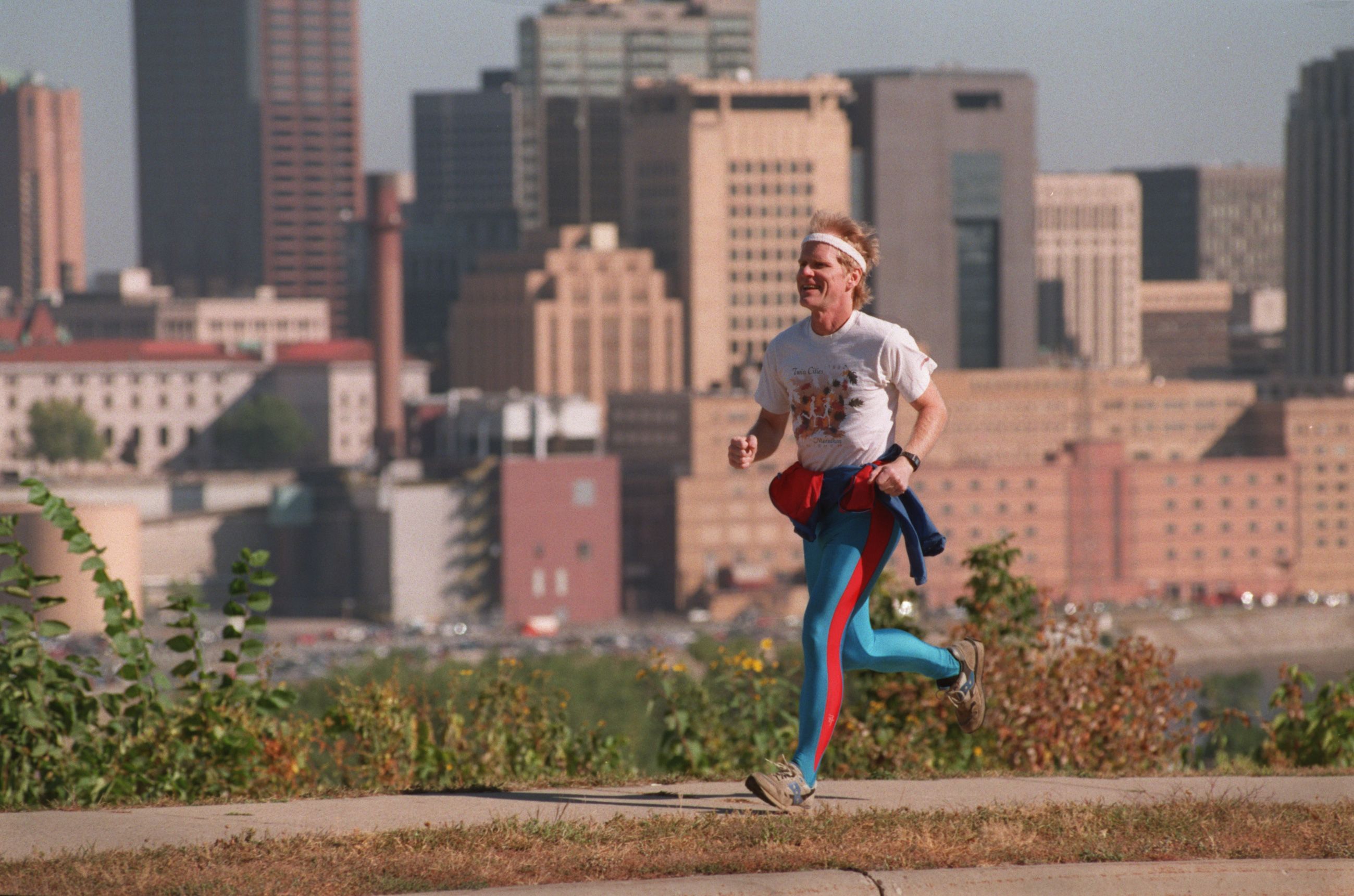
St. Paul's concerns in the '90s went beyond retail. In 1992, it lost a huge employer, West Publishing, which relocated 2,100 employees to Eagan (and later became Thomson Reuters).
What they said: "Downtown St. Paul is deader than downtown Atlantis," the late Pioneer Press columnist Nick Coleman wrote at the time of West Publishing's June 1990 announcement, per a look back in the paper.
- "I felt like a guy in a 'Twilight Zone' episode who wakes up to find himself alone in a vacant city: Where is everybody?" he wrote.
Yes, but: Norm Coleman (no relation to Nick) took over as mayor in 1994. He helped the city lure Lawson Software's 400 employees from Minneapolis, coordinated the Science Museum's move to the downtown riverfront and landed the expansion Minnesota Wild by building the Xcel Energy Center.
Flash forward: There are echoes today as St. Paul has seen another wave of office tenants leaving the city.
- While not at the same economic scale, the closure of Lunds & Byerlys — downtown's only grocer — provided a similar wakeup call to leaders.
- Mayor Kaohly Her and Ramsey County officials have promised significant investments in downtown, including a renovation of the hockey arena and hundreds of millions for the riverfront.
Culture in the '90s: Prince, Jesse the Body and the blizzard
🚐 Politics: Two big upsets happened in the 1990s: Underdog Democrat Paul Wellstone beat Republican Rudy Boschwitz in the U.S. Senate race of 1990 and Jesse Ventura "shocked the world" in 1998 when the former pro wrestler won the governor's race.
👖 Fashion: Minnesota's big contribution to style in the decade was the patterned and comfy Zubaz pants, started by four Minnesotans, including professional wrestlers Michael Hegstrand and Joseph Laurinaitis (the Road Warriors tag team).
🇸🇴 Demographics: Thousands of Somali refugees began arriving in Minnesota in the early '90s, fleeing a civil war in their home country.
🎥 Movies: Thanks in part to some generous tax credits, Minnesota became a mini hotspot for movie filming, with "Fargo," "Grumpy Old Men," "Mighty Ducks," "Mallrats," "Jingle All the Way," "Drop Dead Gorgeous" and "Little Big League" shot here, among others.
⚾️ A trio of sports icons: Kirby Puckett (World Series hero in 1991), Kevin Garnett (drafted in 1995) and Randy Moss (1998 draft) became larger-than-life sports figures in the Twin Cities and well beyond.
❄️ The fall of 1991 was just nuts: Two days after the Twins World Series parade, the state was hit with the epic Halloween Blizzard, which dumped 28 inches on the Twin Cities — a record snowfall that still stands.
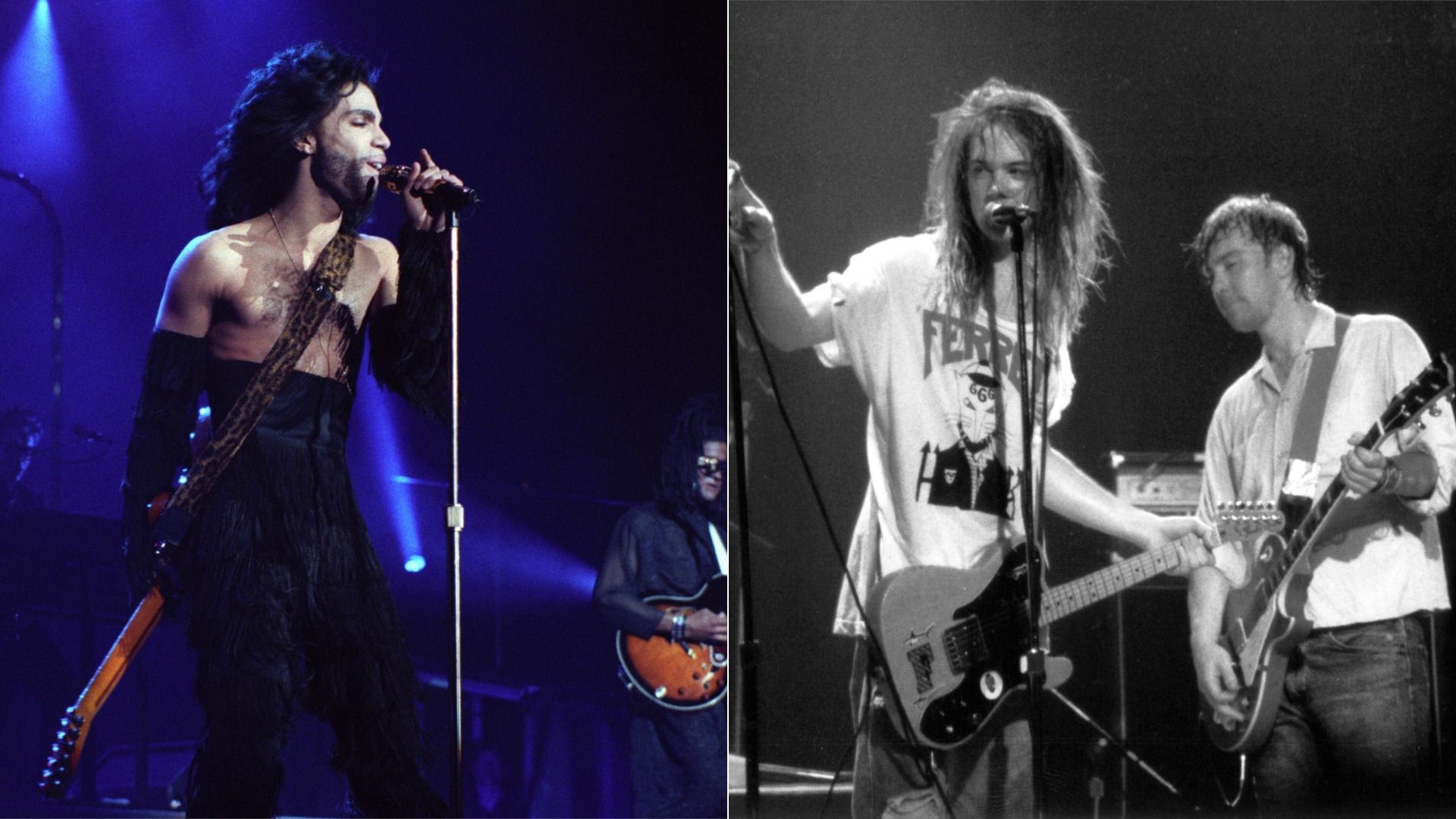
🎶 Music: The Twin Cities had a rich music scene, headlined by the later part of Prince's peak.
- 🛤️ Soul Asylum released the hit "Runaway Train" in 1993.
- 🍻 Semisonic in 1998 put out one of the all-time great songs to end a night, "Closing Time."
- 🎉 Prince's "1999," while released in 1982, became the song to close the decade — a must-play at every New Year's Eve party before Y2K.
Editor's note: This story has been corrected to note the Science Museum moved to the downtown riverfront (not a former West Publishing building).