ICE surge hurt retail and restaurants — but overall sales tax receipts were up

Add Axios as your preferred source to
see more of our stories on Google.
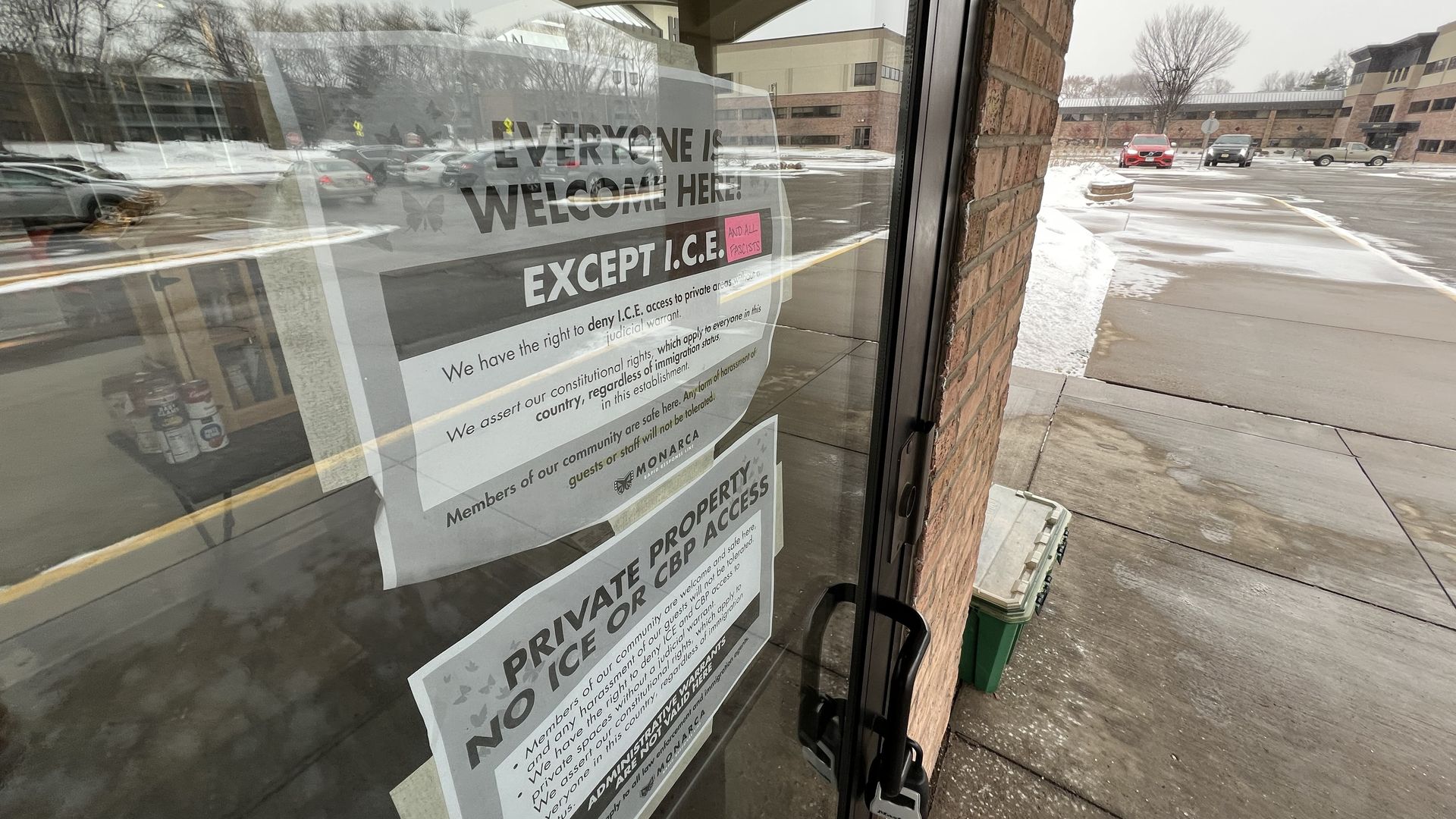
A sign in the window of a Roseville coffee shop in January. Photo: Kyle Stokes/Axios
Year-over-year sales tax collections decreased at Twin Cities retailers and restaurants during the peak of Operation Metro Surge, even as statewide revenues held steady, according to preliminary state data shared with Axios.
Why it matters: The Department of Revenue report is among of the first to put a hard number on the damage sustained by many metro businesses during the ICE enforcement blitz.
Yes, but: The numbers paint a nuanced picture, suggesting certain sectors and communities thrived while others struggled.
- Even in the metro core, overall sales tax revenues increased year-over-year in December and January. In Minneapolis, collections from all industries rose 21.8% in February.
The retail, food service and hospitality industries in the metro core all took hits, the state's data show.
- After a mixed December and January, year-over-year sales tax collections in February dropped in all three sectors in the four jurisdictions studied: Minneapolis, St. Paul and Hennepin and Ramsey counties.


Zoom in: Nowhere were these drop-offs more acutely felt than in immigrant corridors, where foot traffic slowed to a trickle and grocers scrambled to make deliveries while customers stayed home.
Case in point: Richfield revenues from a citywide parks sales tax were 20% below their expectations in January and February, per data officials shared with Axios.
- This miss owes almost entirely to a huge decline in sales at Latino-owned businesses, city economic development manager Jan Youngquist tells Axios. (Latinos constitute 18% of Richfield's population.)
- "At one point, all of our Mexican restaurants were closed. The little markets were open, but the doors were locked."
Threat level: The city can absorb the revenue loss — but the estimated $11.6 million in revenue lost in February alone represents a "big blow" to small businesses, Richfield city manager Katie Rodriguez tells Axios.
Zoom out: It's not clear whether other metro communities saw similar sales tax collection drops.
- Data from Bloomington, Chanhassen, Edina, Golden Valley and Roseville were either inconclusive or showed little change, according to the Coalition for Safe and Stable Communities — 33 cities that banded together in the wake of the surge.
Between the lines: While state lawmakers debated passing aid for small businesses affected by Operation Metro Surge, the package failed to pass the evenly divided House.
- Republican critics questioned taking money from a broader economic development program to fund the package. They also expressed doubt state officials could ensure the money got into the right hands — or prevent fraudsters from using it.
"It's a missed opportunity," Rodriguez says, adding the aid would have prevented the "cascading effects" on struggling businesses after months without sales.