ICE surge boosts Twin Cities hotels, but owners warn of long-term damage

Add Axios as your preferred source to
see more of our stories on Google.
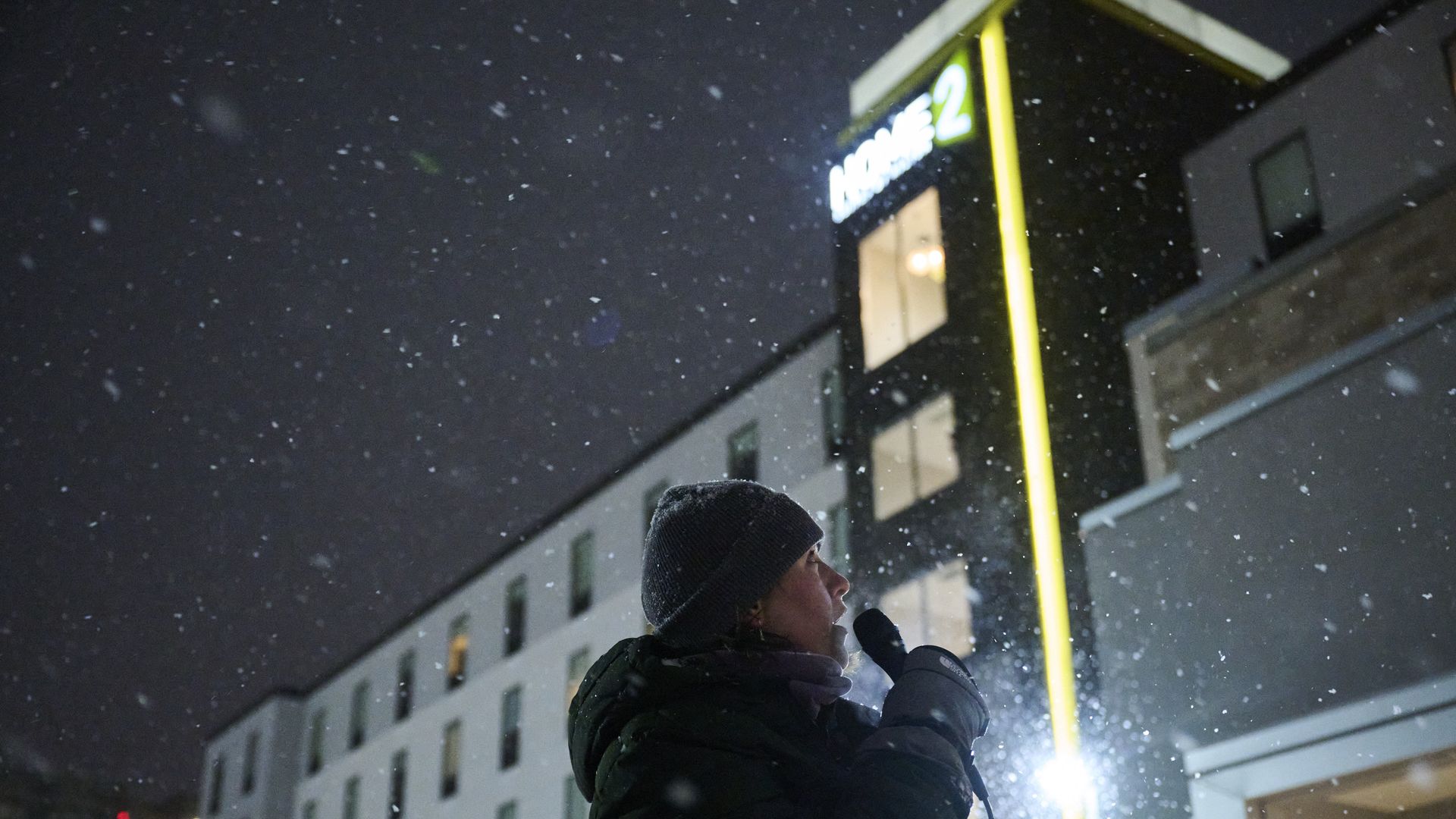
A protest outside a Bloomington hotel on Jan. 16. Photo: Bridget Bennett for The Washington Post via Getty Images
With thousands of federal agents descending on the Twin Cities, the region's hotels reported an unusually strong January for bookings and sales, but some owners say this could be catastrophic for business.
Why it matters: The presence of 3,000 to 4,000 immigration agents in hotels has triggered protests, scared workers from showing up and derailed events.
By the numbers: Year-over-year hotel occupancy for the weeks ending Jan. 17 and 24 increased 12% and 17%, respectively, according to CoStar. Revenue was also up 17% and 27% those weeks.
- Those were the biggest increases of the top 25 metro areas, according to the real estate analytics service.
Context: There are 46,000 hotel rooms in the Twin Cities, which means the agent bookings, along with the influx of national media and social media influencers, had a big impact during what is usually the slowest time of the year for tourism.
Yes, but: Hospitality leaders say the past two months could threaten the financial survival of local hotels.
- "From cancelled events to stalled business travel, Minnesota's hospitality industry has been dealt another major blow," Hospitality Minnesota said in a statement to Axios.
The big picture: It's not just hotels; this ICE surge has hammered the local economy broadly, especially in the two big cities and immigrant-heavy neighborhoods.
- Around 80% of Minneapolis businesses surveyed by Meet Minneapolis reported canceled, postponed or reduced bookings or sales and 72% said they've struggled with staffing absenteeism.
What they're saying: The corporate staff at Morrissey Hospitality has been providing rides for workers at The Saint Paul Hotel who are too afraid to take transit.
- It's also offered free rooms to those afraid to go home after a shift, said company president Richard Dobransky. Even though all of the hotel's staff are here legally, some remain too afraid to come in, he said.
Between the lines: It's been a strong month for The Saint Paul Hotel in part because it's getting reservations from guests who would have stayed at two other downtown properties — The DoubleTree and Intercontinental — which have been closed since. Jan. 18.
- The owner, Mille Lacs Corporate Ventures, closed the hotels after tribe members protested outside its headquarters over suspicions that ICE agents were staying in the hotels.
Other hotels serving federal agents have remained open, but dealt with noisy late-night protests and, in a few cases, vandalism.
- One hotel, a Hampton Inn in Lakeville, was removed from the Hilton system after staff rejected bookings for federal agents, and DHS blasted Hilton on social media.
State of play: There's a looming concern that, after the surge ends, the Twin Cities will face another perception blow similar to the post-George Floyd unrest.
- People across the world have watched violence, protests and clashes play out on TV, which makes Dobransky worried that the Twin Cities' slow slog to get tourism back will be unwound.
The other side: This time around, there's been no widespread arson, damage or looting and there's also been adoration of the people of Minnesota for standing up to President Trump's increasingly unpopular immigration crackdown.
What they're saying: Hospitality Minnesota said it wants the region to move quickly on a strategy that "will help our industry recover, provide new energy, and highlight our welcoming reputation as a world-class destination for sports, arts, food, and culture."