Aimee Bock faces sentencing in Feeding Our Future fraud case

Add Axios as your preferred source to
see more of our stories on Google.
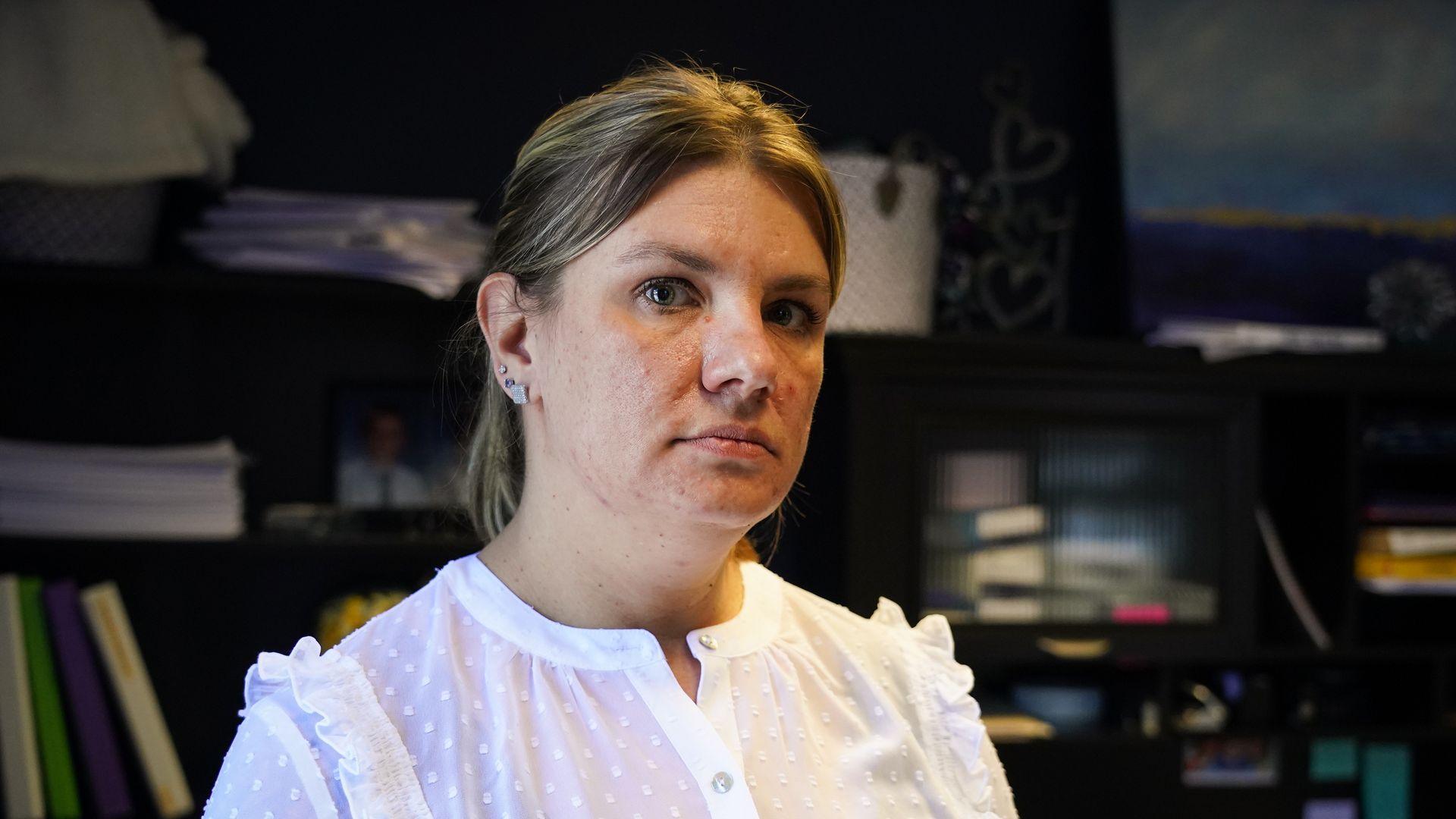
Photo: Shari L. Gross/Star Tribune via Getty Images
Former Feeding Our Future executive director Aimee Bock will learn on Thursday how much time she'll serve for her role in what prosecutors say was the country's largest pandemic fraud case.
The big picture: Bock's sentencing could reignite debates over whether the penalties handed down in response to the "brazen" scheme to bilk the government of over $240 million are harsh enough.
Driving the news: Federal prosecutors asked the judge for a 50-year sentence to reflect the seriousness of the crimes targeting a federally funded child nutrition program and deter future abuse.
- "Stealing funds intended to feed children is a profound breach of trust that demands accountability," U.S. Attorney Daniel Rosen said in a filing.
- He argued that she "unquestionably led the scheme," and yet has "never accepted any responsibility of shown any remorse."
Bock's lawyer made the case in a separate filing that she should get a maximum of closer to three years, saying she was duped by two employees who were the true "masterminds" and that the government has overstated the true amount of the fraud.
- His filing said she had no history of financial crimes and that her "personal gain" — estimated to be between $400,000 and $1.2 million — was only a small fraction of the hundreds of millions the government alleges was stolen.
Zoom in: Bock, whose organization sponsored the purported fake meal sites, was convicted in March 2025 of wire fraud, bribery and conspiracy.
- Prosecutors say she and her co-conspirators submitted false documentation with inflated meal counts and fake rosters for reimbursements, created shell companies for new sites and received bribes and "kickbacks" that were disguised as "consulting fees."
The other side: Bock has said that she "didn't have a clue" about the scheme and provided investigators with records that were used to build the case.
- She's repeatedly said colleagues, sham food site operators and the Minnesota Department of Education carry more responsibility.
"There was no intentional bad acting on my part," Bock, who recently landed in hot water for distributing sensitive court documents to the press, told Sahan Journal in an interview from the Sherburne County jail. "I really, really genuinely thought we were doing good work."
How it works: Judges weigh federal sentencing guidelines, criminal history and prison time for similar cases nationwide when determining punishments, University of Minnesota law professor Sam J. Merchant told Axios.
- Factors like the amount stolen and whether a defendant cooperated with investigators can also influence the outcome — especially for those who pleaded guilty to lower-level crimes.
Between the lines: Under the federal sentencing guidelines, 45-year-old Bock could be ordered to serve the rest of her life in prison.
Yes, but: Merchant, an expert in federal sentencing, said he'd expect the judge to land "a bit below" prosecutors' request possibly in the 40- to 50-year range, based on how she's handled other major Feeding Our Future cases.
Worth noting: Bock will be able to appeal the sentence as part of her trial appeal, Merchant said.
Zoom out: Where the other cases stand
Prosecutors have charged at least 78 people tied to Feeding Our Future.
- Sixty-five have pleaded guilty or been convicted at trial.
By the numbers: 15 of those people have received sentences ranging from 1 year of probation to 28 years behind bars.
- The average prison sentence so far is about 5.5 years, according to an Axios analysis.
Plus: Many have been ordered to pay restitution, in amounts as high as $48 million.
Friction point: Some of the lower sentences have attracted questions and criticism online, with some on social media arguing that a few months or years of probation or jail isn't harsh enough to deter future crimes.
Yes, but: Merchant, who reviewed sentencing data compiled by Axios, said the outcomes weren't surprising and that the prison time for the more serious cases is actually "harsher than what we would expect to see" based on similar cases.
- "If anyone's thinking that this judge is light on these offenders, the data doesn't bear that out," he said.
Case in point: Mukhtar Mohamed Shariff, one of five defendants found guilty of stealing $49 million in food aid, got 17 years behind bars.
- A typical sentence, based on his conviction and criminal history, would have been closer to 12 years, Merchant said.
Between the lines: It's not unusual for a judge to issue a "downward" sentence that's near the bottom or even below the guidelines in white-collar fraud cases.
- Merchant estimates that 50% to 70% of such offenders nationwide get a "below-guideline sentence," in part because the range of possible prison time under the formula is so large.
The intrigue: Bock's lawyer said in their side's filing that the median sentence for a defendant with a similar profile is roughly 10 years in prison.
- About 80% of individuals convicted of similar fraud crimes received a sentence below the guidelines, the lawyer wrote.
What we're watching: Federal cases tend to move slowly, so it could take years for the remaining defendants to be tried and, where applicable, sentenced.
- But Merchant said the pace of sentencing for those who have already pleaded guilty could pick up, since the first wave of cases set the groundwork and precedent for others.