What to do with the distressed Dayton's Project

Add Axios as your preferred source to
see more of our stories on Google.
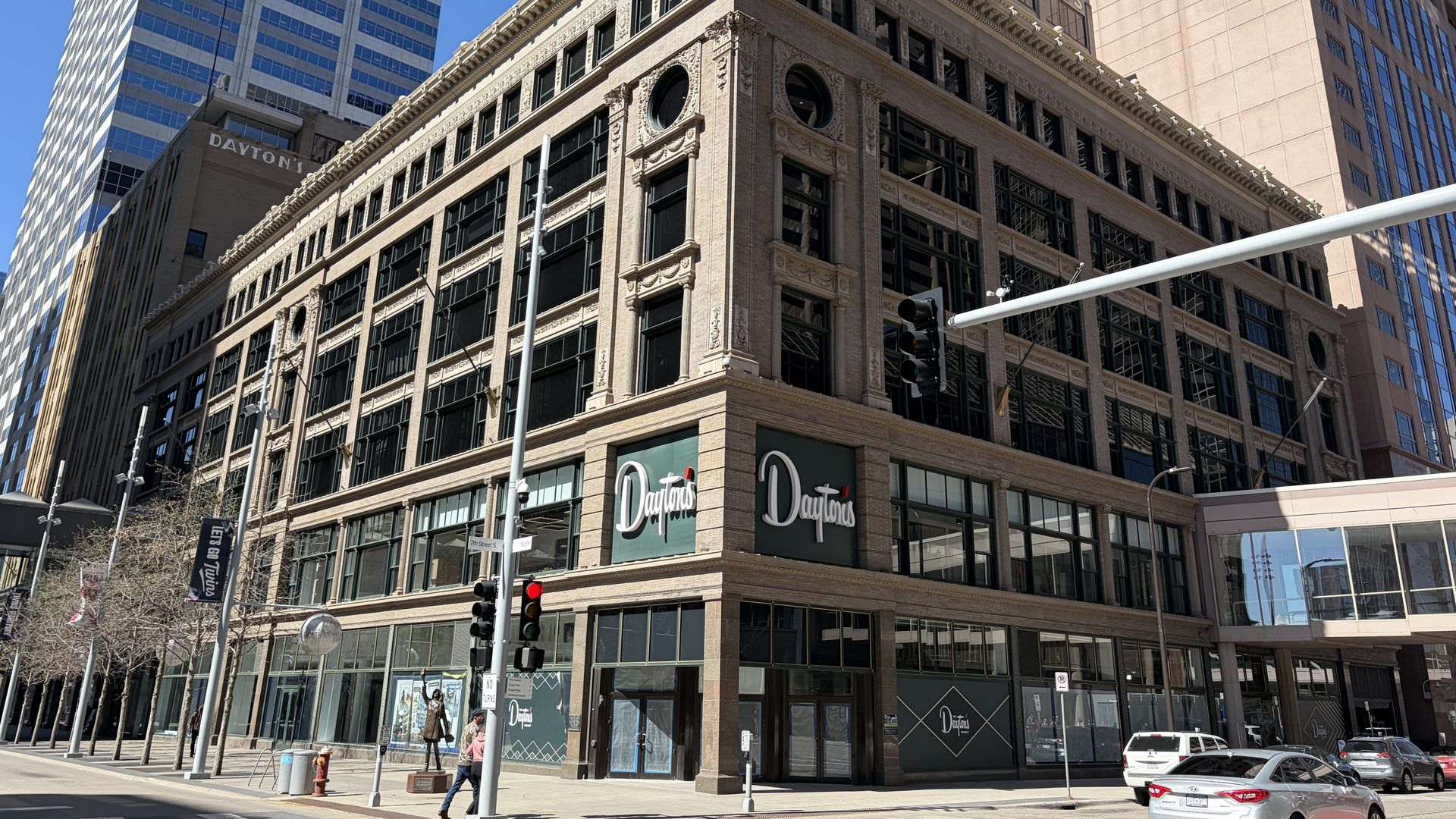
Photo: Nick Halter/Axios
A judge's recent ruling approving the potential foreclosure of the Dayton's Project sets up a thorny question: What's going to happen to one of the biggest — and emptiest — buildings in downtown Minneapolis?
Why it matters: If some creative developer can't figure it out, there's a risk that one of the city's largest properties, in the heart of Nicollet Mall, could remain hollow and fall into neglect.
Catch up quick: New York developer 601W's $350 million redevelopment of the former Dayton's department store turned out to be a flop after a buzzy 2017 kickoff that included plans for an Andrew Zimmern-curated food hall.
- The 1.2 million-square-foot property struggled to land tenants right away, even before the pandemic. It once reached 28% occupancy but it's losing its biggest tenant, the accounting firm EY, and the food hall has been scuttled.
- 601W owes lender Fortress Investment Group $220 million in unpaid principal, interest and fees, while the building's city-assessed value is around $27 million.
An attorney for Fortress laid out the issue during a January court hearing.
- "If they foreclose on this, they're going to get the privilege of owning an empty building that is going to require significant operating costs."
Possibilities for the building
Fortress declined to comment on its plans for the property, so it's not clear how much appetite it has for keeping the building versus selling it.
Between the lines: Even if you could buy the Dayton's Project for $1, a building of its size will cost millions per year in property taxes, heating and cooling, security and maintenance.
- To cover those expenses, a landlord would need to find tenants in a city where about a third of all office space is vacant and other landlords are practically giving away retail space.
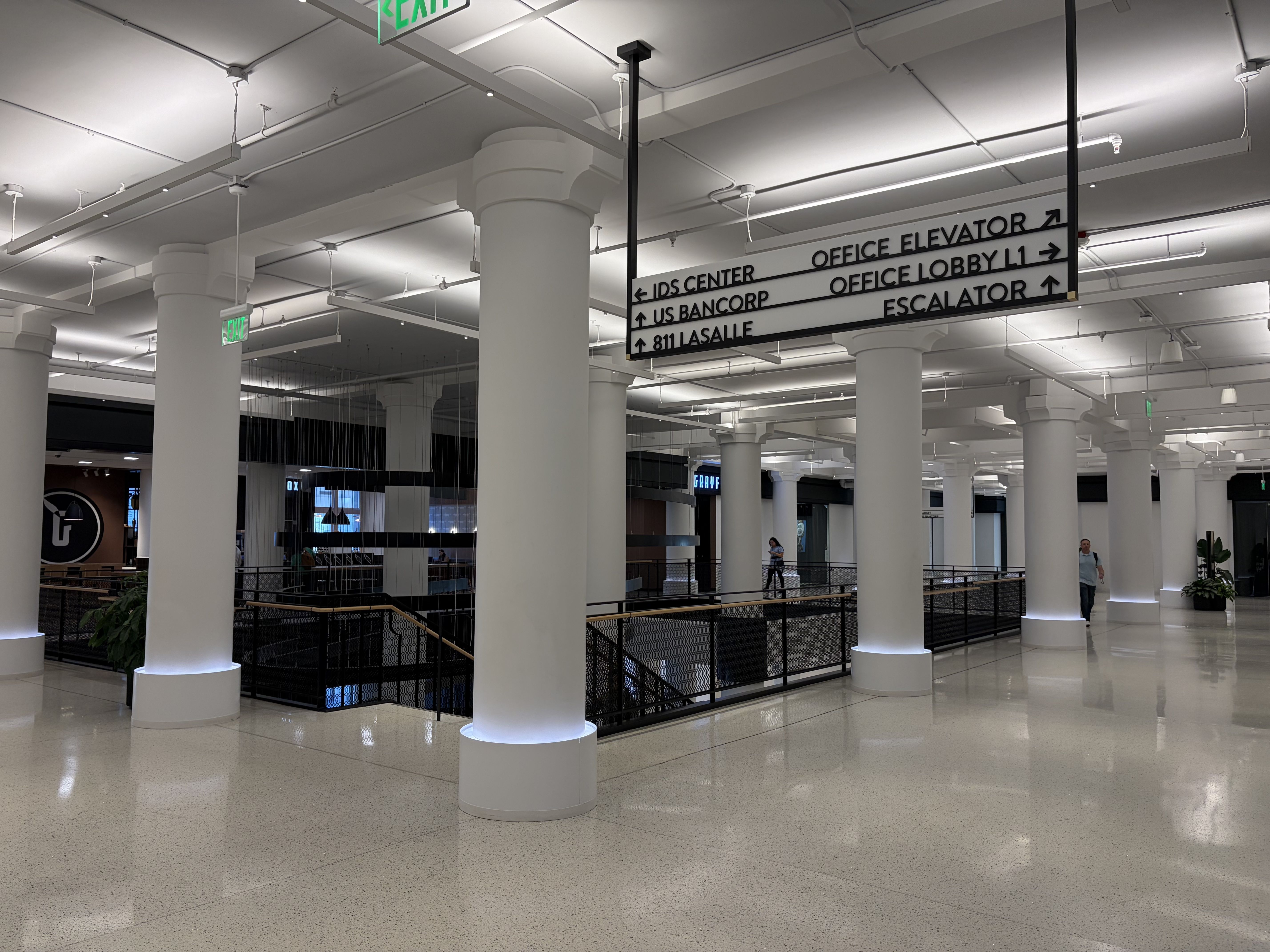
- The good news: The recent renovation upgraded all of the building's mechanicals, elevators and added high-end tenant amenities, so it's really just a matter of building out office space.
- Some of that office space has been finished, but the bulk of it will need to be built out, and court filings indicate that would cost around $110 per square foot.
The other side: Why not just turn it into apartments, which are still in demand? The problem is that the building has floors nearly the size of two football fields, so most of the space is too far from natural light to be suitable for residential use.
- Previous developers who were interested in buying the building in 2017, when Macy's closed its store, had proposed cutting out the middle section to create smaller floors with more natural light.
- But that would be very expensive and because the project got historic tax credits, it may be a tough sell to state administrators that doing so wouldn't ruin the historic character of a former department store.
The big picture: A buyer would have a good chance at qualifying for state and federal historic tax credits to offset 40% of the costs of more redevelopment, according to Meghan Elliott, who is the Twin Cities' go-to consultant for these types of projects.
- The building has already received 10s of millions of dollars in these credits.
Elliott told Axios that there are some complicating factors. Since the building's office floors were not put into service until 2025, a sale would put the previous federal tax credits at risk of recapture by the IRS, as they must be held by the owner for five years before a sale.
- But there's a workaround in which someone could buy the partnership that owns the building, rather than the building itself, she said.
- Elliott also noted that, since the office space is on the upper floors, there might be a case to be made that removing a light well wouldn't disturb the historic character.
What we're watching: There's no date yet on when an auction might happen, and it's not clear whether 601W will appeal, as the firm's attorney did not respond to a request for comment.