The once-heralded Dayton's Project is sent to receivership

Add Axios as your preferred source to
see more of our stories on Google.
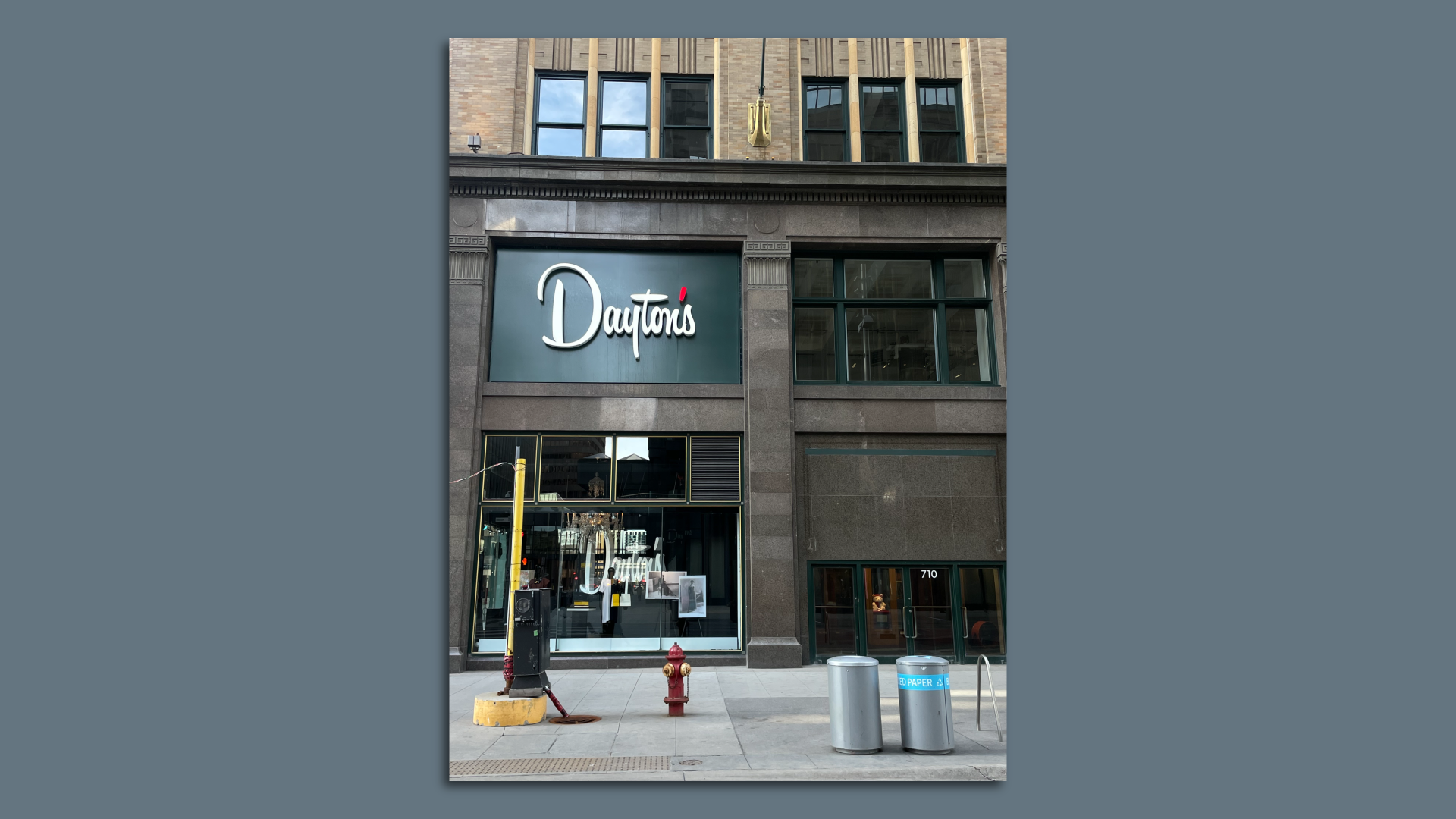
Photo: Audrey Kennedy/Axios
The developer that turned the old downtown Dayton's department store into a massive office and retail complex is in jeopardy of losing the building as its lender attempts to foreclose on the property.
Why it matter: The $350 million redevelopment on Nicollet Mall was once the most exciting project in the city, but its struggles over the past five years have left the building mostly empty.
State of play: A Hennepin County judge on Sept. 23 put The Dayton's Project in receivership, stripping away management and operations from owner 601W Cos. of New York, according to court documents first reported by Twin Cities Business. A local turnaround company has taken over management temporarily.
- The lender for the project, New York-based Fortress Credit Corp., said in the documents that it had to put up nearly $4 million to avoid the "termination of various utilities and essential services."
- Fortress said in a complaint that 601W Cos. and its partner, Hightower Initiatives, have missed mortgage payments and owe $177 million in principal, interest and advances.
- An attorney for 601W Cos. declined to comment. An attorney for Fortress Credit Corp. did not respond to a request.
What we're watching: What Fortress wants to do long term with the building — keep it or try to sell it.
- Downtown real estate values have tanked since the pandemic. The city assessed the property at just $51.4 million this year — a fraction of the development cost.
- The office space is only about 20% leased and despite plans for an Andrew Zimmern-curated food hall, it's landed just one permanent retail tenant: Gray Fox Coffee.
The bottom line: The Dayton's Project was doomed by the combination of a tricky layout and bad timing, as the building was supposed to open around the time the pandemic hit.
- Local real estate professionals expressed skepticism early on that companies wouldn't pay top dollar for offices on floor plates that are two or three times the size of a typical office building.
- Large floors mean employees working in the middle of an office are far from natural light.