Some Minnesota students are missing school because they fear ICE

Add Axios as your preferred source to
see more of our stories on Google.
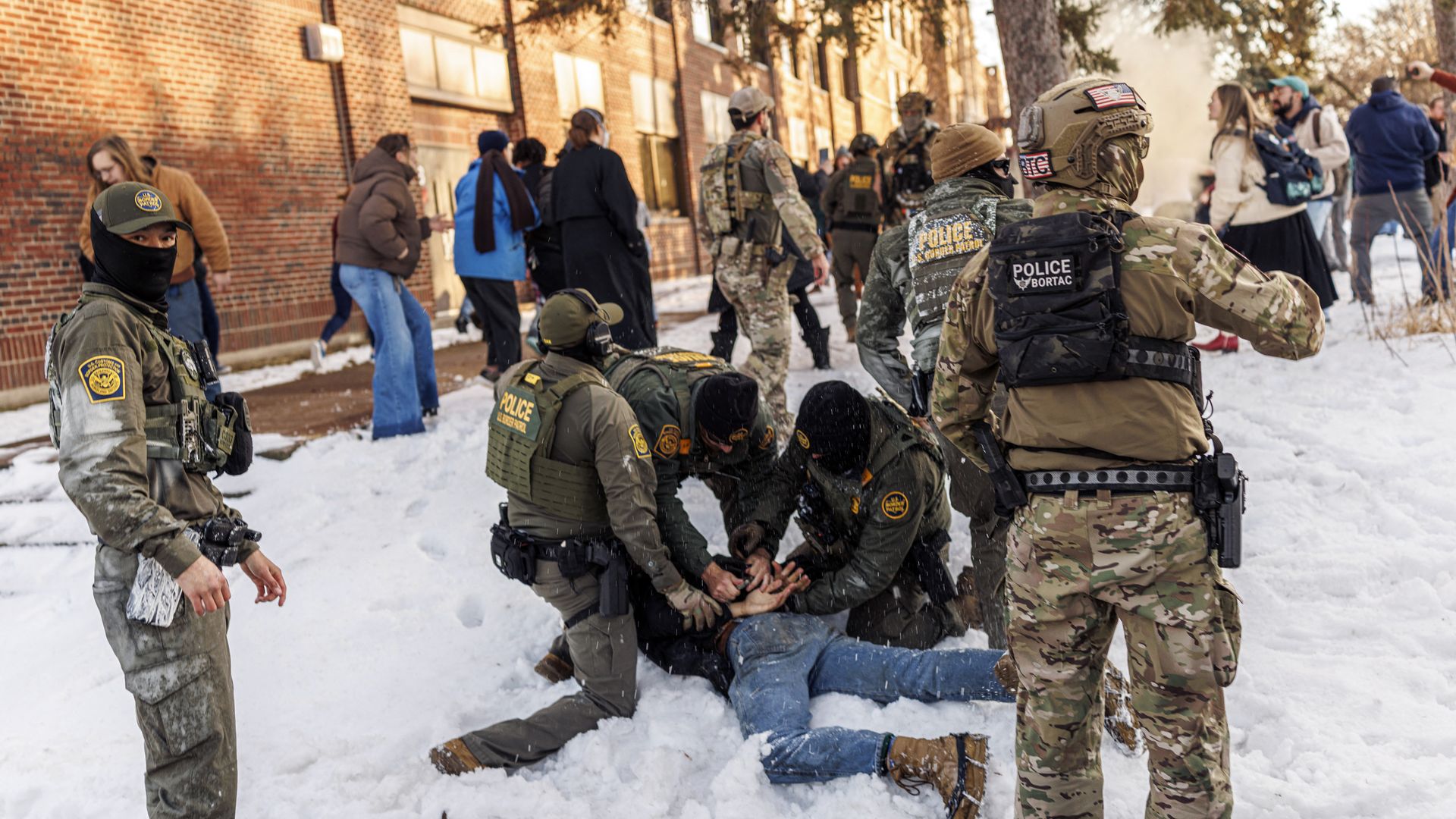
On Jan. 7, U.S. Border Patrol agents detained someone near Minneapolis' Roosevelt High School shortly after dismissal. Photo: Kerem Yücel/AFP via Getty Images
Several Twin Cities schools have seen an uptick in absenteeism as some students and parents fear immigration officers might detain them on their way to or from school, advocates and district officials say.
Why it matters: Districts like Minneapolis are adjusting by dusting off pandemic-era distance learning plans that were far from ideal for student learning — but may be a better alternative now for students who otherwise wouldn't be in class at all.
What they're saying: "No one wants to be doing virtual learning," said Amanda Otero, an MPS parent and co-executive director of TakeAction Minnesota, "but at this time, it is really critical to have that option for families who do not feel safe going out of their homes."
- In Crystal yesterday, ICE detained a parent while waiting for the school bus with their child, KSTP reported.
The latest: St. Paul Public Schools will cancel two days of classes next week so each campus can set up its own temporary virtual academy, officials announced yesterday.
Stunning stats: In St. Paul, at least one-quarter of students from Spanish-speaking households have been absent every school day since Dec. 12, according to preliminary district data shared with Axios.
- Between Dec. 1 and Jan. 6, the total number of absences increased 13% among Spanish-speakers, 8% among Karen-speakers, and 6% among Hmong-speakers compared to the same period last school year.
- District-wide, absenteeism is up only slightly from last year. The number of absent English-speakers increased by just 2%.
St. Paul isn't alone. On the day of Renee Good's shooting, 85% of Latino students in North St. Paul-Maplewood-Oakdale schools were in class — already lower than the same day last year.
- Two days later, Latino attendance was down to 73% amid fears of "racial profiling" even among U.S. citizen parents, superintendent Christine Tucci Osorio told Axios.
- Absenteeism is "exponentially higher" than normal in Fridley schools, superintendent Brenda Lewis told Axios, saying one-third of students are regularly out.
Between the lines: Multiple studies illustrate the grave risks of missing lots of school.
- Chronic absenteeism — missing 18 days or more in a year — is a powerful predictor of a student's likelihood to miss key developmental milestones, fail courses or drop out.
State of play: This week, Minneapolis began allowing students to switch to all-virtual instruction through Feb. 12. (A spokesperson did not have recent MPS attendance figures available.)
- Fridley plans to follow suit soon with its own virtual option, Lewis said.
- Before announcing its temporary virtual plan, St. Paul officials had been directing concerned students to the district's existing, decentralized online program — which involves switching schools and teachers. As of Tuesday, 183 students had made that switch, a spokesperson told Axios.
Zoom in: "I'm glad the district is offering" virtual classes, said tenant rights advocate Jennifer Arnold, who organized fellow Minneapolis parents to offer rides to kids whose families fear ICE.
- High school students — many of whom walk or take public transit to school — may feel going virtual is their safest option, Arnold said.
- But Arnold is encouraging scared families with younger kids to stay on campus: "It feels really important for elementary students to be in school."