What Minnesota can learn from Japan about street safety

Add Axios as your preferred source to
see more of our stories on Google.
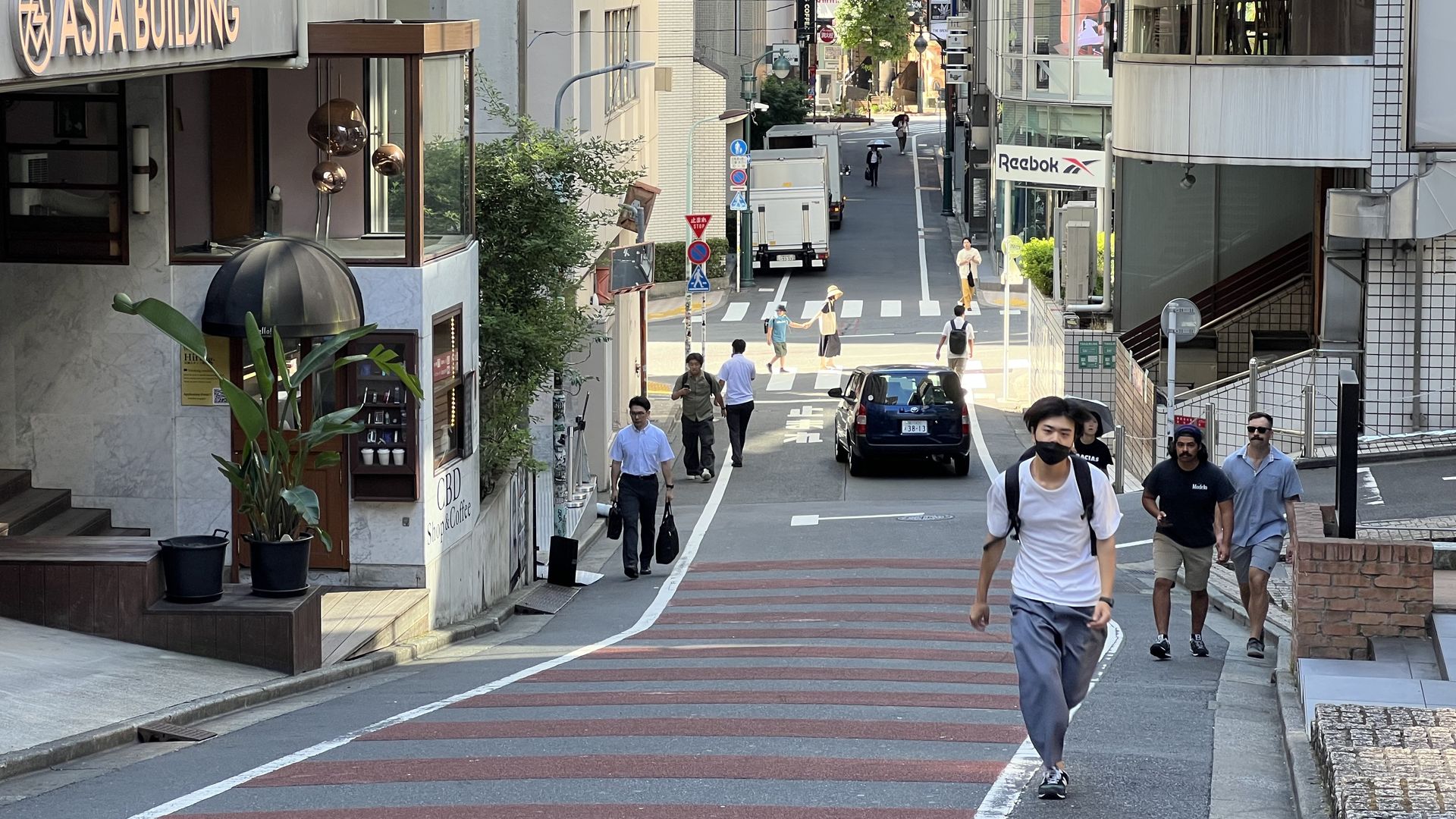
While wandering the streets of Tokyo, Kyle wondered: How do these narrow streets feel so safe? Photo: Kyle Stokes/Axios
I recently returned from vacation in Tokyo, Japan, where I was excited to try the nation's legendarily efficient train system.
- I left wowed by another mode of transit: its surprisingly safe streets.
Why it matters: Most major U.S. cities — including Minneapolis — have struggled to reduce traffic deaths. Japan has all but eliminated them.
- And it's done so despite many neighborhood streets feeling barely wider than the average Twin Cities alleyway, with walkers, bikers and cars often sharing the same pavement.
Stunning stats: Central Tokyo is home to nearly 10 million people — but recorded just 69 traffic fatalities in 2022.
- By comparison, Minneapolis (population: 428,000) saw 23 deaths that year, and 16 last year — and this past weekend alone, three pedestrians were killed in separate incidents in both Minneapolis and St. Paul.
Flashback: It wasn't always this way. Japan's traffic fatalities peaked in 1970 at levels more comparable to the U.S.
- But those figures have fallen steadily as the nation's extensive, reliable transit network has grown — taking cars off the road, as Bloomberg notes.
What's happening: Japanese people drive smaller cars that pose less of a risk to pedestrians and cyclists.
- I also noticed on-street parking was rare in Tokyo, eliminating many blind spots. (Japanese law requires motorists to prove they have an off-street parking space before they can register a car.)
Between the lines: In the Twin Cities today, 25% of car trips could be completed in a similar amount of time on foot, transit or bike — and the Metropolitan Council believes that figure could double with the right investments.
- Kyle Shelton, who directs the U of M's Center for Transportation Studies, pointed to "promising" work already underway, including Metro Transit's expansion of a bus rapid transit (BRT) network.
- A new metro-wide sales tax also makes the Twin Cities "one of the only places in the U.S. investing in growing [transit] frequency," he said.
Plus: The metro's bike infrastructure is "fantastic," Shelton added.
Yes, but: Minnesota has a long way to go. "We've been trying to retrofit a system that prioritizes speed over safety — and that's just a big task," Shelton said.
- Metro Transit ridership is in decline — and even in the metro's most bikeable and transit-connected neighborhood (downtown Minneapolis), automobile drivers have access to more than six times as many jobs within a 30-minute commute than a biker or transit rider, according Shelton's center's research.
The bottom line: "The challenge in the United States is the vast majority of households are drivers," Shelton said. "The squeaky wheel gets the grease, right?"