The notoriously slow 21 bus is finally being replaced

Add Axios as your preferred source to
see more of our stories on Google.
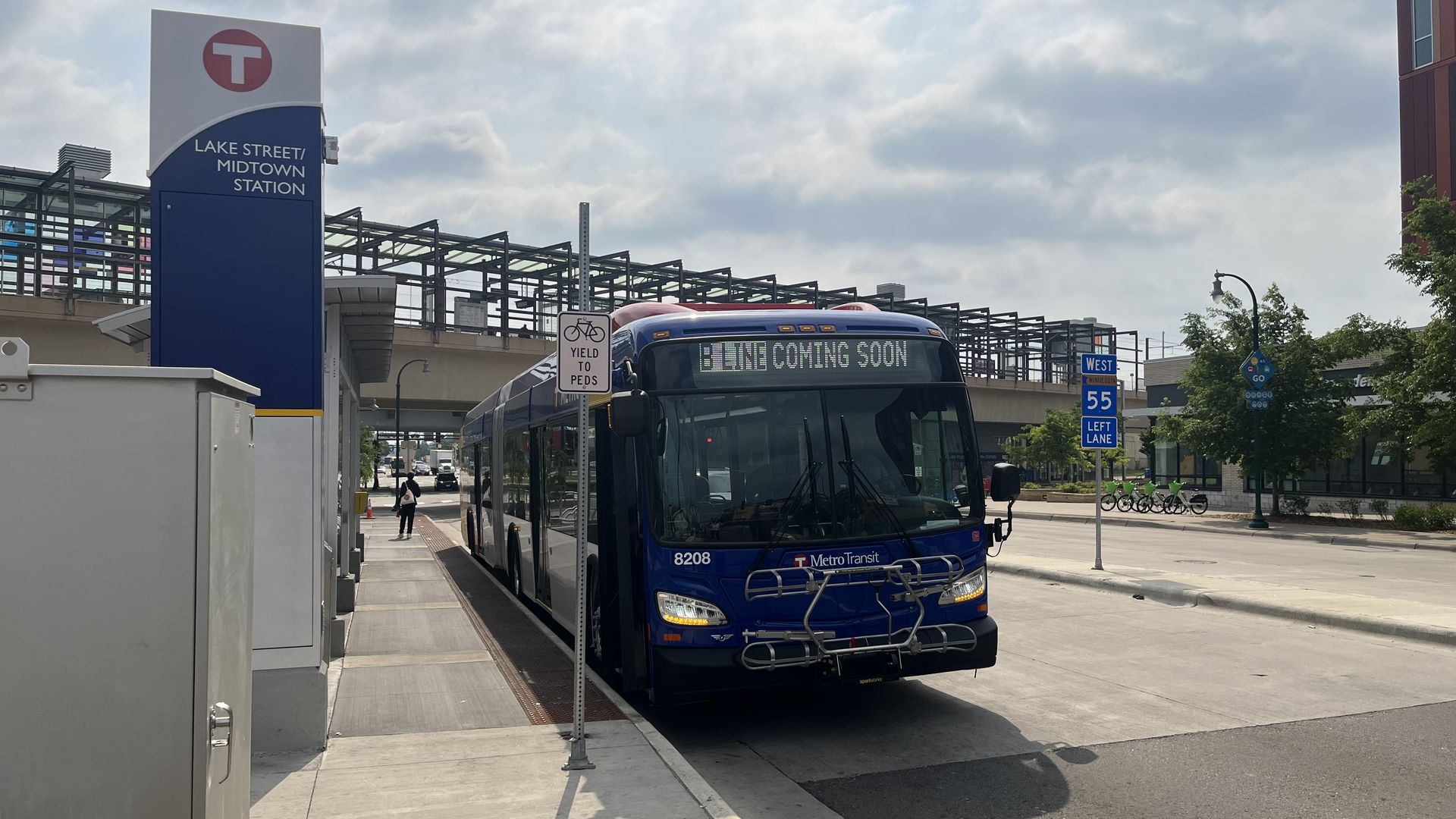
Photo: Nick Halter/Axios
The slower-than-molasses 21 bus route that runs from downtown St. Paul through Uptown Minneapolis is about to be replaced with faster service.
Why it matters: Saturday's opening of the B Line along Marshall Avenue and Lake Street marks the near-midway point of Metro Transit's plan to have 15 bus-rapid-transit lines in operation by 2035.
How it works: A third of the 13-mile route has red-painted lanes for buses (as well as bikes and vehicles turning right), plus pre-pay boarding stations, fewer stops and priority at traffic lights.
- Metro Transit expects those enhancements will speed up service by 20%.
- The 21 is the slowest local bus route in the metro. With an average speed of 8 mph, 5K runners often top that pace, Katie Roth, director of arterial bus rapid transit, said.
Follow the money: The two-year project cost $74 million, with roughly $43 million coming from the state, $16 million from the Federal Transit Administration and $16 million from local and regional sources.
- Parking loss was minimal as previous Lake Street redesigns removed on-street spaces, Roth said.
- The project also removed general traffic lanes on some of the busiest streets in the metro.
Zoom out: This is Metro Transit's seventh BRT route and it replaces the system's busiest local route, with 7,000 average daily riders.
- In December, the E Line will replace the 6 route from Southdale Center to the University of Minnesota on France Avenue, Hennepin Avenue and University Avenue.
What they're saying: The B Line will not only connect to the E Line, but eight other bus rapid transit or light rail lines, including the new Green Line extension in 2027, Metro Transit general manager Lesley Kandaras said.
- "So it's not just about opening the B line itself, but improving connectivity throughout our transit system," she said.
What we're watching: How much the only slightly speedier service lures more riders, as Metro Transit is still nowhere near its pre-pandemic ridership levels.
- BRT has been a bright spot for the agency, though this will be its slowest of the seven lines in operation.