Mapped: How Trump's tax spending bill affects Minnesotans' taxes


Add Axios as your preferred source to
see more of our stories on Google.
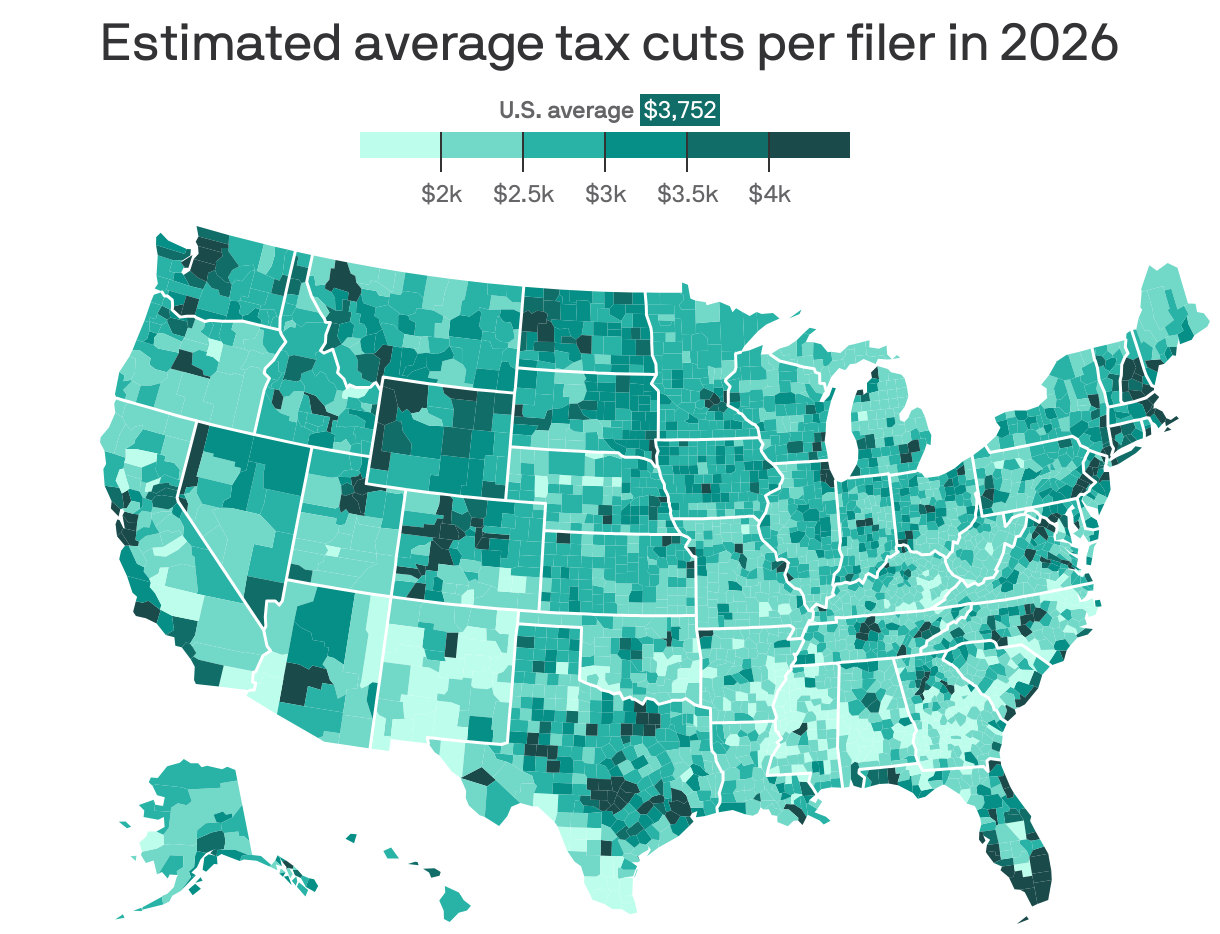
Twin Cities metro residents could see more federal tax savings than their rural neighbors under President Trump's "big, beautiful bill," per a new analysis.
The big picture: Americans dodged a big tax hike when Congress passed the "big, beautiful bill," making the tax cuts of President Trump's first term permanent — and adding on a bunch more, Axios' Emily Peck reports.
By the numbers: On average, Minnesotans will receive a tax cut of $3,519 next year, a tick below the national average of about $3,750, according to the Tax Foundation, a group that generally favors lower taxes.
Yes, but: The projected savings will vary significantly across the state.
Case in point: Hennepin County residents will see an average federal tax cut of $4,710 — double the $2,300 for those who live in Pine County.
The intrigue: Some taxpayers might not notice much of a change. That's because the savings in the report are based in part on how the tax rate in 2026 compares with what it would've been had the 2017 tax cuts expired as planned.
Zoom in: Business owners will get some of the biggest cuts — thanks, in part, to tax cuts being made permanent for research and development expenses and other provisions.
- Those in high-tax coastal regions will also get big breaks, thanks to the increased cap on state and local tax deductions (known as SALT) that go through 2029.
Zoom out: The largest average tax cuts nationwide are happening in mountain resort towns where high-earners and business owners live. The smallest tax cuts are in rural counties.
Reality check: The bill also made some steep cuts to social spending on food benefits and Medicaid, but those mostly don't kick in until 2027 and 2028.
- For many lower-income Americans, those cuts — along with potential increases to energy costs and health care premiums tied to other provisions — will outweigh any benefits of these tax breaks.
Between the lines: The results of the crucial 2026 midterms in Minnesota and beyond could come down in part to whether voters think they'll gain — or lose — more under the president's agenda.
What we're watching: State lawmakers at the divided Legislature will have to act next year on aligning state tax code with the federal law.