Protecting the "people's house": Minnesota panel confronts security concerns

Add Axios as your preferred source to
see more of our stories on Google.

Illustration: Brendan Lynch/Axios
A state panel tasked with making security recommendations for the Minnesota Capitol meets Wednesday for the first time since two state lawmakers were shot in their homes.
The big picture: The June 14 attacks, which left Speaker Emerita Melissa Hortman and her husband dead and Sen. John Hoffman and his wife seriously injured, put a somber spotlight on the threats and safety risks politicians face.
- The shootings also revived a debate over balancing public access and security concerns at the historic state Capitol.
What to expect: The bipartisan Advisory Committee on Capitol Area Security doesn't have the power to make sweeping changes on its own.
- But comments by its legislative members and Department of Public Safety leaders could signal what changes may be on the table heading into next year's session.
State of security: The 300,000-square-foot Capitol — often called the "people's house" — was one of 14 nationwide that didn't have metal detectors as of 2021, per the nonpartisan Council of State Governments.
- Advocates of keeping its entries free of security checkpoints have long argued such a change could make the building less welcoming and lead to lines for the hundreds of thousands of people who attend rallies, tours and public meetings there.
Yes, but: Several prominent lawmakers, including Gov. Tim Walz, have expressed openness to adding metal detectors or other security enhancements in the wake of what authorities have called "politically motivated" attacks.
What they're saying: DFL state Rep. Zack Stephenson, who had known Hortman since her early days in the Legislature, told Axios days after her slaying that lawmakers needed to "take a hard look" at bringing the Capitol in line with courthouses and other public places with more robust security.
- "This building was built as a place for people to come and watch their government in action," the Coon Rapids Democrat said. "But people can't come here and watch their government in action if they're not safe."
Longtime Sen. Jim Abeler (R-Anoka) also told the Star Tribune in June that security upgrades now seem "inevitable and necessary."
- "I think the time of [an] extremely open Capitol is probably done," he said.
Friction point: Less clear is whether there will be support for banning guns, as over 60% of state Capitols do.
- Such a change could face a tough road in the narrowly divided Legislature, especially given opposition from an influential gun rights group.
Plus: Installing and staffing metal detectors could be costly, and any additional funding outside the Department of Public Safety's current budget would require legislative sign-off.
- Even before the attacks, the commission said that more funding was needed to meet the complex's security needs.
Threat level: An unrelated breach involving a man, who was experiencing apparent mental health issues, being discovered naked in the Senate chamber on a Friday night in late July heightened security tensions and prompted calls for an independent audit.
- DPS reduced the number of doors open to the public from 14 to four following that incident.
- A spokesperson said the department will announce the selection of a firm to conduct an outside review of the incident at today's meeting.
Zoom out: Other changes to strengthen security, including at lawmakers' homes, are already in the works:
📹 Both the House and the Senate changed internal policies in July to pick up part of the tab for enhanced home security systems after the attacks.
- That funding is on top of money lawmakers can spend from their campaign accounts.
📍 Lawmakers' cities of residence and addresses were wiped from several public sites, including their legislative bios and campaign filings, over concerns that more could be targeted in their homes.
- Secretary of State Steve Simon told Axios this summer that officials must aim for a "sensible blend of accessibility and privacy," noting that data that's not online can still be requested for those looking to confirm that a legislator lives in their district.
📱 Ramsey County Sheriff Bob Fletcher has argued the state needs a better system for notifying lawmakers of imminent threats.
- He's testing a new system that relies on software already in use.
The bottom line: GOP Rep. Jim Nash, who serves on the commission, told Axios yesterday that any major security shifts will likely require more time and input from more legislators.
- "This is a decision that really is a weighty one," he said, noting that changes would impact buildings and workers across the entire Capitol complex. "We want to get it right."
Zoom out: What Minnesota can learn from Michigan
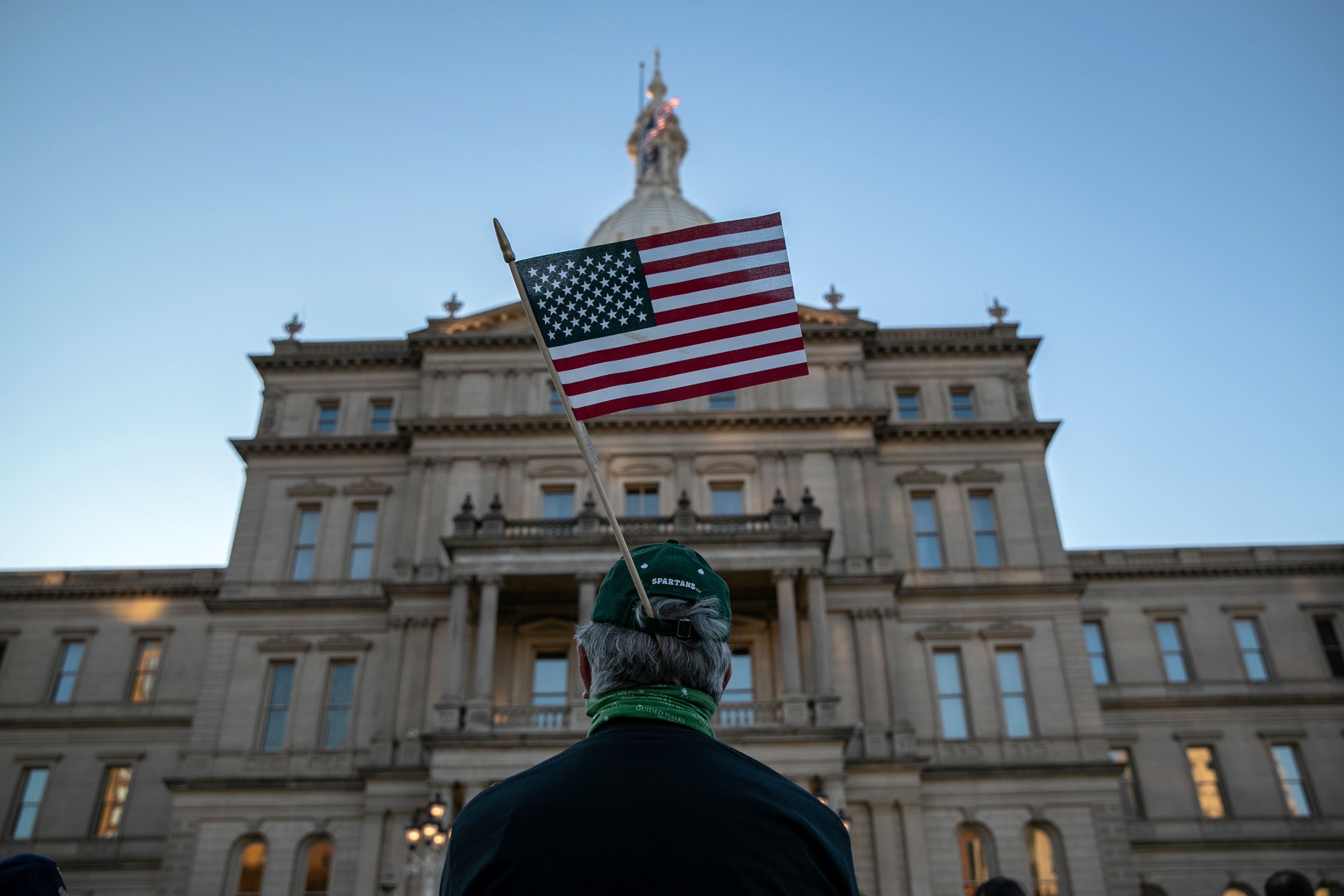
Minnesota lawmakers and officials weighing their options may be able to look to another upper-Midwestern state for guidance.
State of play: Michigan became one of the latest states to upgrade Capitol security in recent years, implementing a gun ban, pass-through weapons detectors, and new video surveillance systems.
Flashback: Michigan's State Capitol Commission, which has more power to make changes due to a recent opinion by the state's attorney general, moved to prohibit open carry under its historic dome in early 2021 in response to concerns about armed protesters and the insurrection at the U.S. Capitol.
- In 2023, the commission voted to ban concealed guns as well, though lawmakers remained exempt. Weapons detection systems were installed weeks later.
What we're hearing: Commission chair William Kandler told Axios they "haven't really had a problem" with long lines or delays for visitors, noting that the pass-through systems they opted for are similar to ones used at sports arenas that can scan multiple people at once.
- Installing the leased equipment in the historic building was also easier than expected, he said, thanks to the portable nature of newer technology.
Initial protests and complaints over the changes quieted "relatively quickly," he said.
- "I'm actually pleasantly surprised about how well it's worked," he said. "I think people are accustomed to being examined for weapons .... At any sports event, museum, anywhere you go, people are checked."
Follow the money: Kandler told Axios this summer that they spent about $1 million on equipment and had to "add quite a few people" to staff the entrances.
Reality check: Even with new AI-assisted technology, Michigan's system isn't foolproof. Musician Ted Nugent was able to bring a gun into a hearing last month after a trooper saw an alert of a weapon detection too late, raising questions about its efficacy.
- A GOP lawmaker in Michigan recently proposed allowing people with concealed-carry licenses to bring firearms into the building again, arguing people should be able to defend themselves.