Minnesota shootings spotlight growing safety risks facing lawmakers

Add Axios as your preferred source to
see more of our stories on Google.
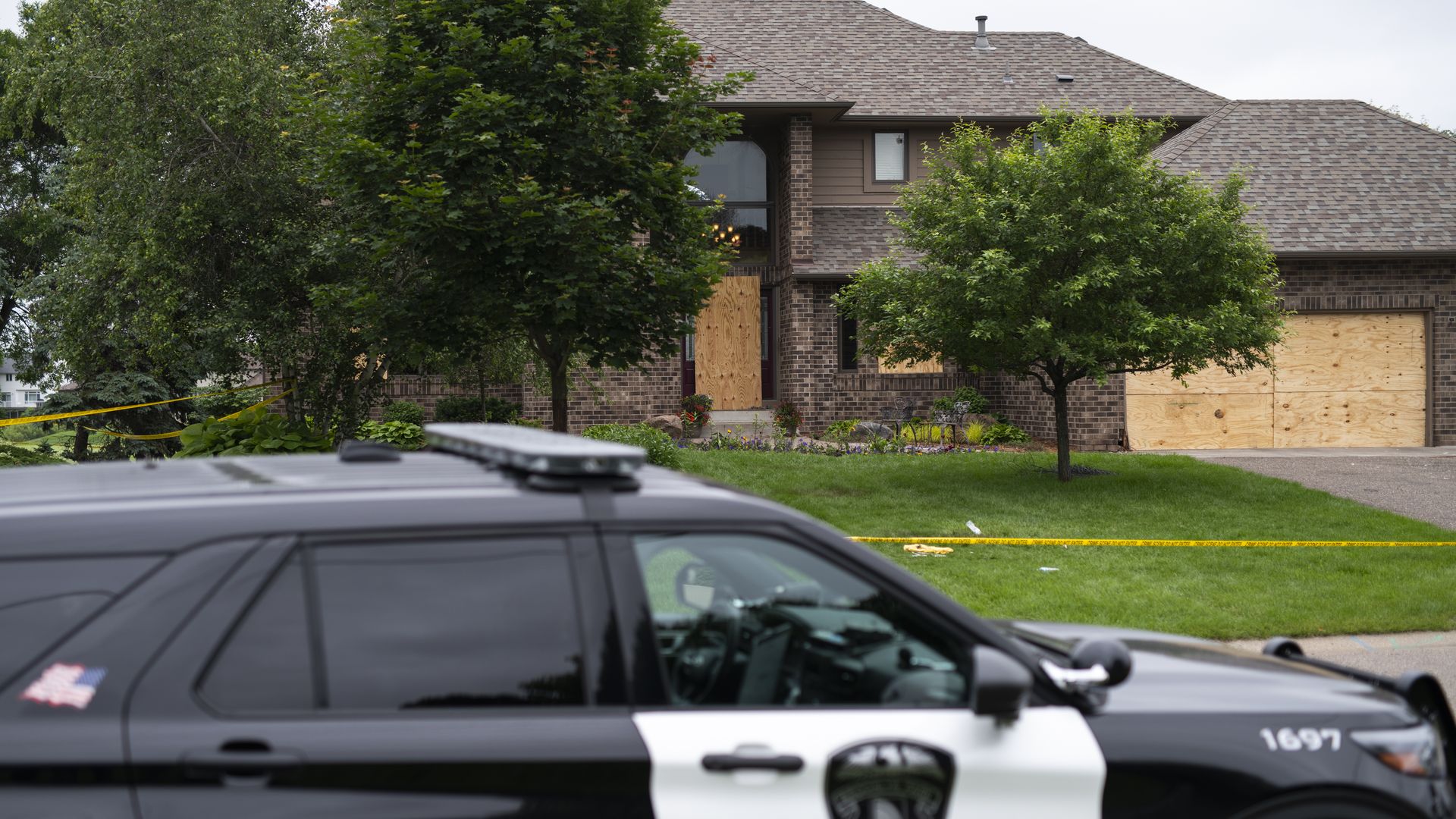
A Brooklyn Park police squad was stationed outside the home of DFL State Rep. Melissa Hortman on Sunday. Photo: Stephen Maturen/Getty Images
The targeted shootings of two Minnesota state lawmakers this weekend underscore a grim trend: An increasingly volatile political climate has left state and local officials more exposed than ever to threats and harassment.
The latest: Federal prosecutors filed charges Monday accusing Vance Luther Boelter of assassinating House Democratic Leader Melissa Hortman and her husband, and wounding DFL state Sen. John Hoffman and his wife.
- Authorities say Boelter kept a list of names and addresses that, according to an official who saw it, included abortion providers and Democratic politicians who supported abortion rights.
The big picture: The shootings have drawn national, bipartisan condemnation — but most of the abuse elected state officials endure still flies under the radar, even as signs mount that the problem has grown worse, particularly since 2020, experts say.
By the numbers: Nationally, 43% of state lawmakers reported facing threats during their most recent term in office and the preceding campaign, according to a 2024 survey published by the Brennan Center for Justice.
- Nearly half of the women lawmakers said the abuse lessened their desire to seek reelection or higher office.
- Two in five women lawmakers of color said they'd experienced hostility that was sexual.
The intrigue: Republican lawmakers were more likely than Democrats to report that abuse had gotten more frequent since they took office.
- Many GOP reps experienced greater pressure from within their party to take hardline stances, Gowri Ramachandran, the Brennan Center's director of elections and security, told Axios.
Friction point: It's a "massive concern" among lawmakers that such risks and toxicity could discourage people from seeking political office, Ramachandran said.
- Lawmakers told Ramachandran that they welcome "vigorous dissent," but fear that discourse has degraded so far that both their supporters and critics might "feel like they have to fear for their lives in order to participate."
Threat level: The public nature of the job and desire to balance access and transparency with safety concerns can heighten the risk.
- Until shortly after the shooting, some Minnesota lawmakers' home addresses were listed on their easily-searchable legislative bio pages — and they can still be found in other public filings.
- The state Campaign Finance and Public Disclosure Board confirmed to Axios that it removed street addresses from documents on its site Saturday in response to requests from lawmakers.
Case in point: After shooting the Hoffmans Saturday morning, Boelter also attempted to visit the homes of two other state lawmakers — one in Maple Grove, then another in New Hope — Acting U.S. Attorney Joseph Thompson told reporters.
- The state representative in Maple Grove was on vacation.
- New Hope police officers sent to check on the state senator encountered Boelter in his SUV. An officer attempted to speak with him, but he didn't respond.
- Boelter then went to the Hortmans' home in Brooklyn Park, Thompson said.
Zoom out: In the nation's capital, the Minnesota shootings have prompted many rank-and-file members of Congress — many of whom don't have personal security details — to demand stepped-up protection, Axios' Andrew Solender reported.
- Threats against members, their families and staff more than doubled between 2017 and 2020, according to U.S. Capitol Police, and the numbers have grown since.
What they're saying: Ramachandran told Axios that other states offer potential solutions.
- Delaware and California have address confidentiality programs that "balance" the need for transparency under campaign finance laws with the need to ensure lawmakers' security.
- Ramachandran urged states to train lawmakers on making their offices more secure without making constituents feel unwelcome or like they're "on lockdown."
What we're watching: Whether security policies change at the State Capitol, where visitors currently do not need to pass through metal detectors.
- Some lawmakers publicly requested a further examination of weapon detection systems in January 2024.
- GOP State Sen. Jim Abeler told the Star Tribune after this weekend's shooting that "the times of [an] extremely open Capitol is probably done."
The fine print: Bryan Pierick, assistant sergeant at arms for the Minnesota Senate, declined to comment Sunday on any current or planned changes to security protocols, citing an active investigation.
- Officials with the Minnesota State Patrol, which handles Capitol security, stressed to lawmakers in 2024 that it was ready with "plans, equipment, and training" should an armed attack ever take place on campus.
Torey Van Oot contributed reporting.
Editor's note: This story has been updated with news of federal charges against Boelter and comment from state campaign finance officials.