Canada won't play Minnesota's wildfire smoke blame game

Add Axios as your preferred source to
see more of our stories on Google.
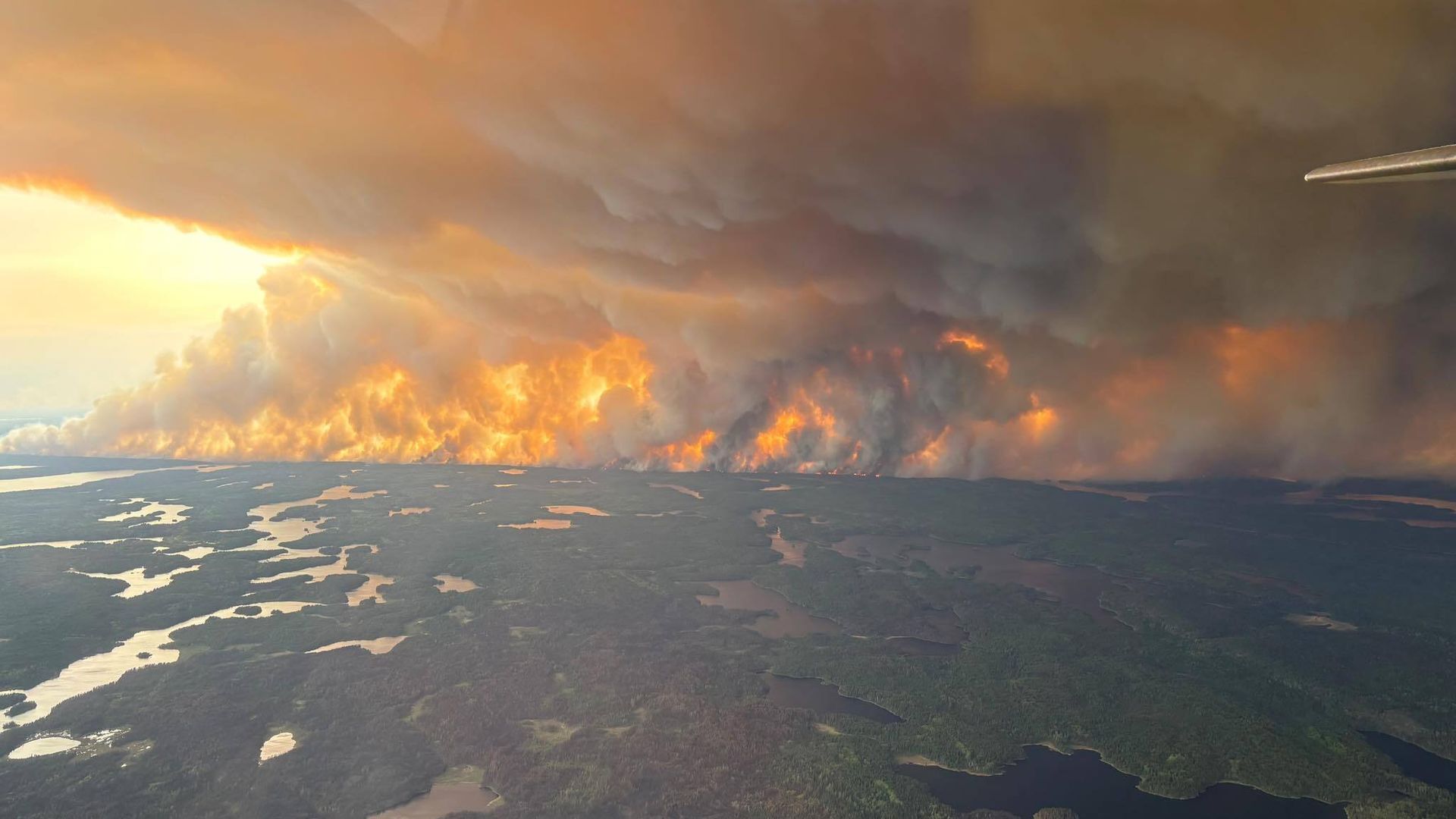
Smoke billows from a wildfire in northwestern Manitoba in May. Photo: Government of Manitoba/Handout/Anadolu via Getty Images
Minnesotans are inhaling another plume of smoke from Canada this week, and an attempt to blame Canada's handling of wildfires is being met with eye-rolls north of the border.
Why it matters: Experts say smoky summers are likely the new normal in Minnesota and many parts of North America unaccustomed to dealing with the haze as climate change turns the continent's forests into tinderboxes.
- "We need to learn to live with fire and, unfortunately, learn to live with smoke," Ed Struzik, a Canadian environmental journalist and wildfire expert, told Axios.
Driving the news: Earlier this month, Minnesota's Republican Congressional delegation demanded the Canadian government deploy new technology and share its plans for mitigating wildfires and smoke.
- "Canada must take stronger action to manage its forests," U.S. Rep. Pete Stauber wrote on X.
The letter didn't go over well in Canada. Manitoba Premier Wab Kinew called the letter's congressional authors "ambulance chasers."
The big picture: Even if Canada's national government were to devote more time and money to wildfire prevention and response — as some of the country's fire chiefs recently demanded after a record-setting 2023 fire season — Canadian experts say the measures would probably not stop smoke from billowing over the U.S. border.
- Many of the lawmakers' critiques would be equally valid in the U.S., which has deployed a number of the same responses and a comparable amount of resources toward wildfire prevention, Struzik said.
Between the lines: Fire is a healthy part of many ecosystems' life cycles, and a century of extinguishing even the smallest blazes in both countries means there is plenty of fuel on the ground ready to ignite, University of British Columbia forest ecologist Lori Daniels told Axios.
- Thanks to climate change, these lands are also rapidly becoming hotter and drier.
Reality check: The Minnesota GOP delegation's letter identified arson as a key cause, but Struzik noted lightning starts the vast majority of all Canadian wildfires.
- "There's nothing you can do about lightning," Struzik said, especially when it lights a remote area that burns out of control — and belches a lot of smoke.
Yes, but: Canada has been slower than the U.S. to embrace prescribed burns — one of the most effective ways to protect against future wildfires, University of British Columbia assistant professor Mathieu Bourbonnais told Axios.
- These strategically set, carefully managed fires thin forests that are likely to burn. North America's Indigenous peoples used these burns for generations to maintain forest health.
- Canada does fewer burns because more land there is publicly owned, and it's trickier to set such fires on public land, said Bourbonnais. (He's now helping create a prescribed burn training program.)
The bottom line: "Like other places in the world," Daniels said, "we're on the steep part of the learning curve."