City Council seeks to bring back MPD reforms killed by Trump

Add Axios as your preferred source to
see more of our stories on Google.
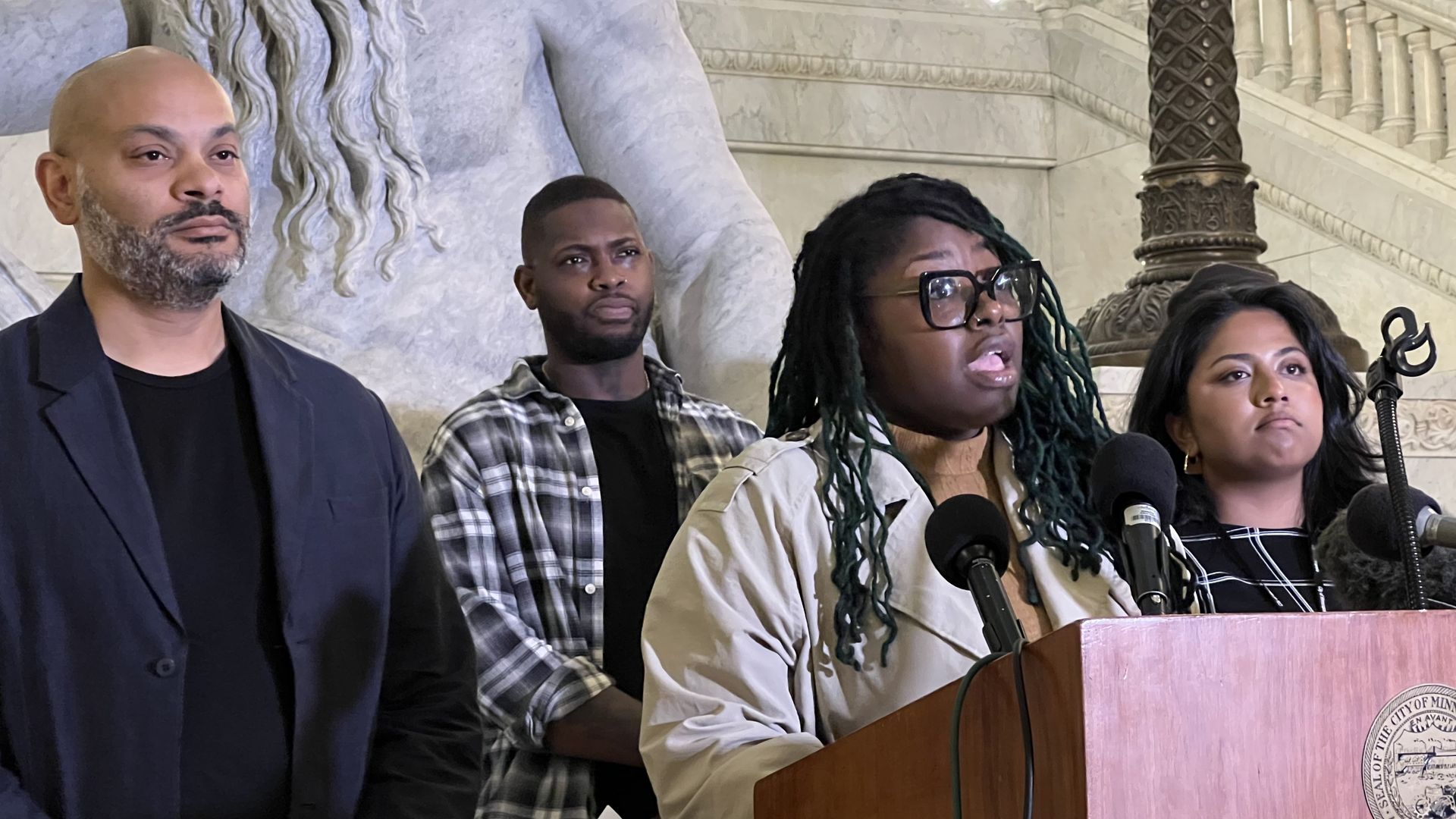
Minneapolis City Council members Elliott Payne, Robin Wonsley and Aurin Chowdhury are behind the proposal to revisit the state's police reform plan. Photo: Kyle Stokes.
Some Minneapolis City Council members want to revive parts of the federal police reform plan that the Trump administration recently quashed.
Why it matters: The Minneapolis Police Department is still under state court orders to reform, but that settlement with the Minnesota Department of Human Rights doesn't go as far as the federal consent decree would have to rein in police misconduct.
- Though there's a lot of overlap between the two documents, the consent decree outlined specific protections for minors, protesters and people with mental health challenges that aren't in the state agreement.
Catch up quick: Mayor Jacob Frey has already said MPD would follow the federal consent decree's terms anyway and has asked the independent monitor to track the city's compliance with them — but those promises have no legal force.
Driving the news: Three Minneapolis council members are backing a plan to hold a vote directing the city attorney to at least try to add "all proposed federal provisions" to the state's settlement agreement.
What they're saying: "We're not just going to make commitments with words," City Council President Elliott Payne told reporters last week.
- It's important to legally bind future mayors and councils to those promises because police reform settlements usually take many years to resolve, Payne added.
Plus: The Minnesota Department of Human Rights "has expressed to the city its openness" to folding the "unique," non-duplicative portions of the consent decree into the state-level agreement, Commissioner Rebecca Lucero told Axios in a statement.
- "There is a tremendous amount of work that lies ahead for the City and MPD to fully embrace the core tenets of the state court enforceable agreement: humanity, dignity, and civil rights," Lucero added.
Between the lines: The council's plan sounds like a longshot to University of St. Thomas law professor Rachel Moran — though she noted that "this is all uncharted territory."
- The Minnesota Department of Human Rights doesn't have the authority to enforce the underlying federal laws, Moran told Axios, raising questions about whether the city has a legally viable outside party with whom to renegotiate the terms.
- She also thinks it unlikely a judge would wade into the case based solely on the city's ask; a judge could see that request as procedurally "bizarre."
Reality check: History suggests court-administered overhauls of police departments don't always work, Moran said.
- "The cynical take on these consent decrees is that they're incredibly costly and inefficient, and that they take forever to maybe, or maybe not, achieve change," Moran said.
The other side: The Minneapolis City Attorney's Office wrote a memo advising council members against the move, motion author Council Member Robin Wonsley said — though the document hasn't been publicly released.
- When Axios asked for a copy and further comment from the attorney's office, a spokesperson responded with a general statement reiterating the city's commitment to reform: "We are exploring options."
What's next: The council could take up the proposal on Monday.