How Minneapolis' federal police reform plan differs from the state's

Add Axios as your preferred source to
see more of our stories on Google.
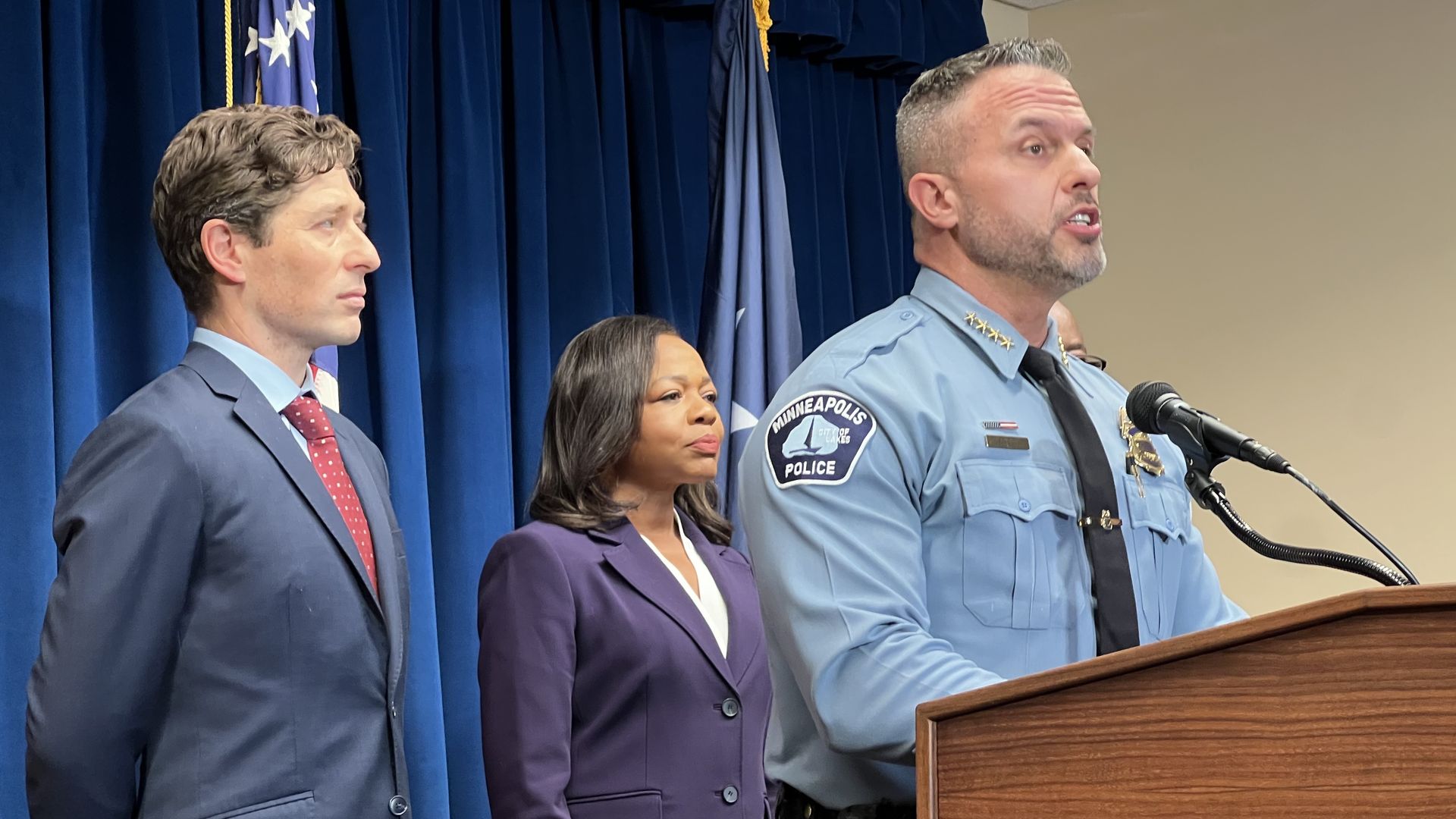
Minneapolis police chief Brian O'Hara speaks at a press conference unveiling an agreement on a federal reform plan for the department he leads. Photo: Kyle Stokes/Axios
The newly unveiled federal consent decree for the Minneapolis Police Department calls for a lot of the same changes as an earlier state reform plan — but the oversight document does include some new requirements.
Why it matters: Though advocates and officials say Minnesota's settlement agreement was robust, a federal consent decree (if approved) would add another layer of court oversight to a troubled department.
Here's where the consent decree would add new details or requirements to the earlier reform plan:
- Handcuffing minors: Prohibits officers from cuffing someone age 14 or younger and requires specific training on working with youth.
- Off-duty work: Bars police from working freelance gigs — such as moonlighting as bar security — while suspended or on leave. It also forbids officers from connecting their superiors with these side gigs, a practice federal investigators have flagged as problematic.
- Protests: Limits how much force police can use to handle crowds at demonstrations and bars the use of some types of tear gas or so-called flash-bang devices.
- New journalist protections: Bars officers from detaining or destroying the equipment of reporters covering a news story and affirms that anyone has a right to record interactions with officers in public.
- Coaching: Outlines detailed procedures for referring an officer for "coaching," a practice that critics have said allows MPD to avoid formally disciplining officers accused of misconduct.
- Supervision: Pushes for officers to report to the same superior officer for at least a year, promotions or departures notwithstanding. Mayor Jacob Frey told reporters the change was aimed at creating consistency in the chain of command.
What they're saying: With the state agreement already in place, "we have full reason to be very encouraged," Assistant U.S. Attorney General Kristen Clarke told reporters Monday. "They're off to a sprinting start."
The other side: Michelle Gross, co-founder of Communities United Against Police Brutality, told Axios that compliance with the state agreement has been "slow."
- She said her group has found some of the new MPD policies stemming from the state agreement to be clunky or vague.
Between the lines: "The [state agreement] is good, but it cannot go as far as the federal consent decree," Gross told reporters.
- Gross said the U.S. Department of Justice has broader legal authority than the state officials who enforce Minnesota's human rights laws.
Reality check: Both advocates and department brass say the consent decree itself is not reform.
- "This agreement is more than just a checklist," police chief Brian O'Hara told reporters. "It is a commitment to the sworn and professional staff of the Minneapolis Police Department that leadership will support you."