Minnesota leaders strike budget deal just days ahead of deadline

Add Axios as your preferred source to
see more of our stories on Google.
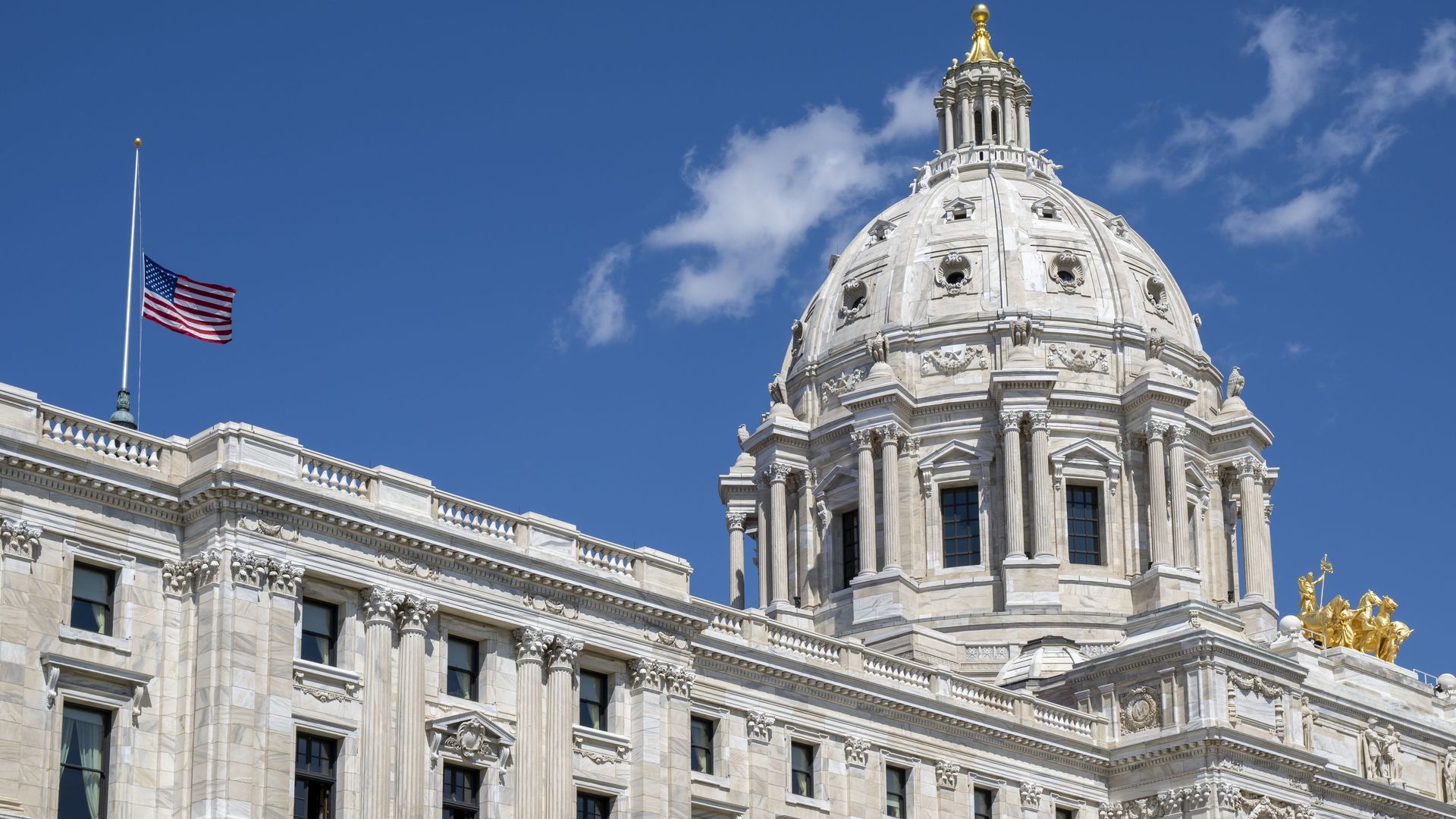
The Legislature is set to adjourn on Monday. Photo: Michael Siluk/UCG/Universal Images Group via Getty Images
Gov. Tim Walz and legislative majority leaders say they've reached an agreement on a state budget framework, but the end-of-session drama appears far from over.
The big picture: The roughly $66 billion two-year budget package, reached after over a week of marathon negotiations, includes policy concessions from both sides and cuts that officials said will make major progress toward resolving a projected budget deficit down the road.
State of play: Lawmakers now face the challenge of finalizing the details and getting a deal full of difficult compromises through the tied house and DFL-majority Senate with just days until the session ends.
- Initial reactions suggested it won't be smooth.
Friction point: Signs of trouble emerged before the leaders could finish outlining the deal, as progressive Democrats and activists furious over an agreement to roll back state-funded health care for adult undocumented immigrants protested outside the news conference.
- Hours later, over two dozen DFL members pledged to vote no on a crucial human services funding bill unless the coverage is restored.
The intrigue: Any dissent from Senate Democrats would mean GOP votes will be needed for bills to clear that chamber, given the DFL's one-vote edge.
- Senate GOP Leader Mark Johnson, who did not sign the agreement despite being at the negotiating table, said his caucus is still reviewing the proposals.
Threat level: The adjournment deadline is Monday, though lawmakers have already signaled that a short special session is likely sometime next week.
- If this deal falls apart, the threat of a July 1 shutdown without an adopted budget looms.
Zoom in: Here is where leaders landed on key sticking points:
⚕️ MinnesotaCare for undocumented immigrants: Adults without legal status would no longer be eligible for MinnesotaCare, the state-funded health insurance program for low-income residents, starting in 2026.
- Children — who make up about a quarter of the roughly 20,000 enrollees so far — would remain covered under the deal.
📚 Hourly school workers: Bus drivers, cafeteria workers and other hourly school workers would continue to get unemployment benefits during the summer break.
- The state would help school districts cover the cost for two more years.
👩🍼Paid family leave: A new law guaranteeing paid time off for Minnesotans who need to care for themselves or a loved one would remain intact and on track to launch in January.
- But the maximum payroll tax rate allowed to fund the benefit would be cut from 1.2% to 1.1%
🏫 Private school funding: Walz's proposal to cut state aid to non-public schools for the first time in decades failed to make the agreement.
💵 Sales taxes: Walz also said his pitch to reduce the state sales tax rate, while adding lawyers and financial advisers to the services subjected to the sales tax, was "compromised out."
🚔 Stillwater Prison: The state's second largest correctional facility would close by 2029, saving the state $40 million annually. Inmates and correctional officers would be transferred to other facilities.
🏗️ Bonding: Talks aimed at reaching a bipartisan capital investment package that would rely on borrowing to fund infrastructure and other projects are ongoing.
What's next: Conference committees involving members from both chambers will hammer out the details of sweeping spending and policy bills ahead of final floor votes.
What to watch: An eventual bonding bill, which requires three-fifths support for passage, could be crucial for cobbling together a bipartisan coalition to pass the budget bills through both chambers.
Editor's note: This developing story has been updated with additional details and reactions.