Twin Cities law enforcement says it will resist Trump's immigration crackdown


Add Axios as your preferred source to
see more of our stories on Google.
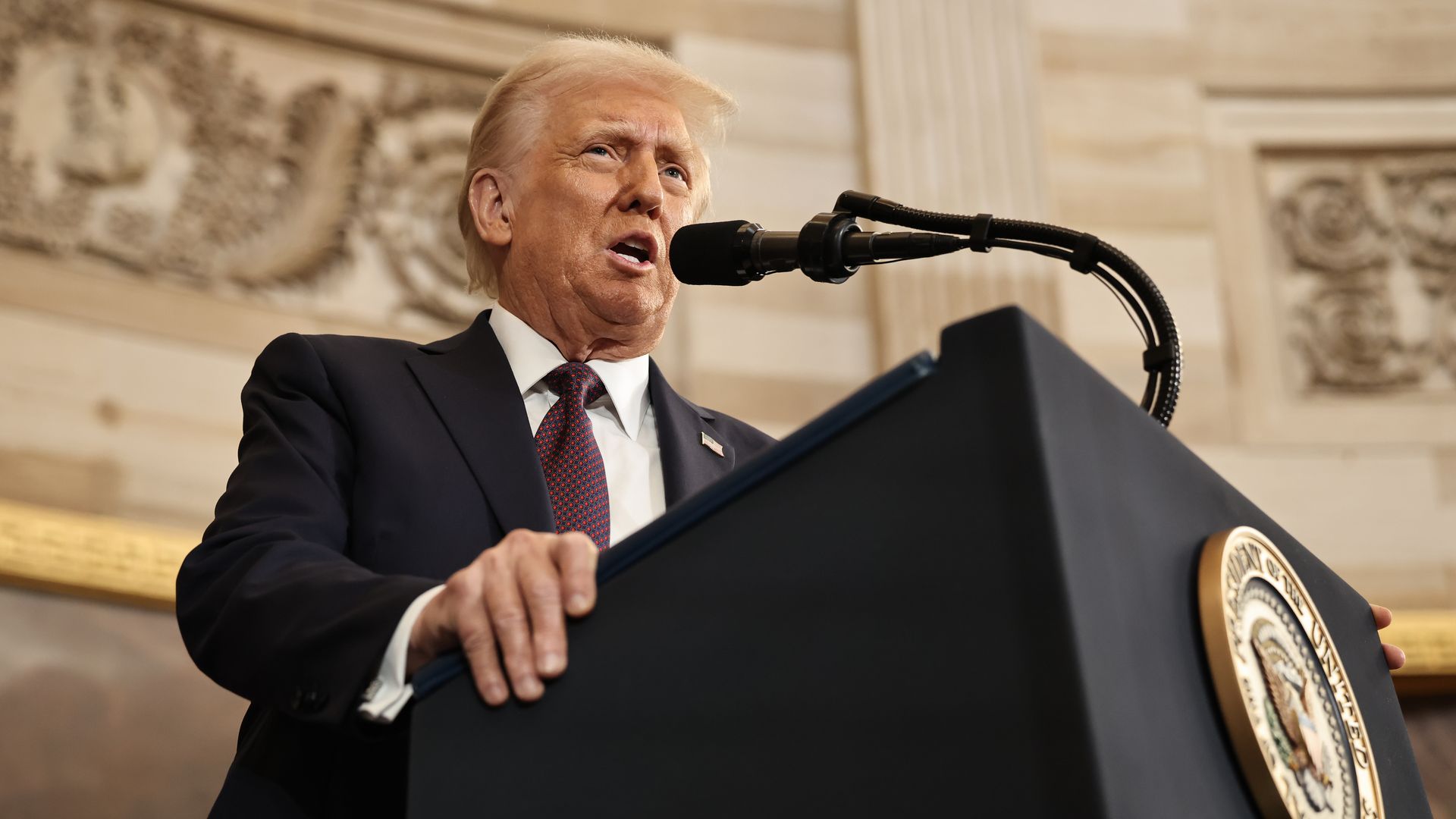
President Trump signed immigration-related executive orders this week. Photo: Chip Somodevilla/Getty Images
Top law enforcement officials in the Twin Cities are already pushing back against President Trump's new hardline immigration policies.
The big picture: Just days into the new administration, Trump's campaign pledge to oversee mass deportations of immigrants is taking shape, with U.S. Immigration and Customs Enforcement (ICE) raids expected.
Friction point: Trump has threatened to withhold millions in federal funding from cities that do not cooperate.
- On Wednesday, the Associated Press reported that Trump's Department of Justice has instructed federal prosecutors to investigate local officials who "threaten to impede" the efforts.
State of play: Minneapolis and St. Paul have for years had "sanctuary" policies that seek to protect undocumented immigrants and limit what officials can share with federal immigration authorities.
- A dozen Minnesota counties, including Anoka, Dakota, Hennepin and Ramsey, have policies limiting cooperation, per the Center for Immigration Studies.
What they're saying: Minneapolis Police Chief Brian O'Hara reiterated last week that city policy prohibits officers from asking about immigration status, unless they are investigating related crimes such as human trafficking or smuggling.
- He told MPR News that a reversal would have a "very chilling effect on our ability to provide public safety" if people without legal status are afraid to talk to police.
Hennepin County Sheriff Dawanna Witt struck a similar tone on Wednesday, telling WCCO radio that assisting ICE on immigration-related matters is "not our job."
- "I will assure you we are not looking for people based off of their immigration status," Witt said. "We are looking for people who commit heinous acts."
St. Paul Mayor Melvin Carter told Axios that the city's workers — including police — "never had a role in enforcing federal immigration laws, nor asked for papers as a condition to receive city services, and we never will."
- "Our city workers fight fires, investigate crimes, fill potholes, and provide safe spaces for youth with no regard to citizenship status," he said in a statement.
Zoom out: The comments come as a growing number of police departments across the nation announce that they don't intend to assist with immigration enforcement in cases where no crime has been reported.
- Chicago, Omaha and Las Vegas are among those that have announced or reaffirmed their policies in recent days.
Between the lines: A vow to cut funding to jurisdictions that did not help ICE during Trump's first term was derailed by the courts, the Star Tribune noted, and it's unclear whether new legal challenges to standing statutes will succeed.
By the numbers: Minnesota is home to an estimated 81,000 undocumented immigrants. Just over 200 are in ICE detention, per the Star Tribune, mostly related to criminal charges or convictions.
- Another 40,000 residents are temporarily protected from deportation due to pending immigration court cases.
What we're watching: Other executive orders, including one suspending all refugee resettlement, are already having an impact on Minnesota's immigrant communities.
- A 26-year-old planning to reunite with her family and a pair of siblings set to live with relatives after their parents were killed in an accident were among those whose flights to the United States were canceled, MPR News reported.
The bottom line: Federal authorities would need the cooperation of state and local law enforcement agencies for any mass deportation, Axios' Russell Contreras writes.
- If state and local agencies refuse to work with ICE, it will make immigration arrests more difficult, time-consuming and expensive.