How St. Paul is clearing medical debt for 32,000 residents

Add Axios as your preferred source to
see more of our stories on Google.
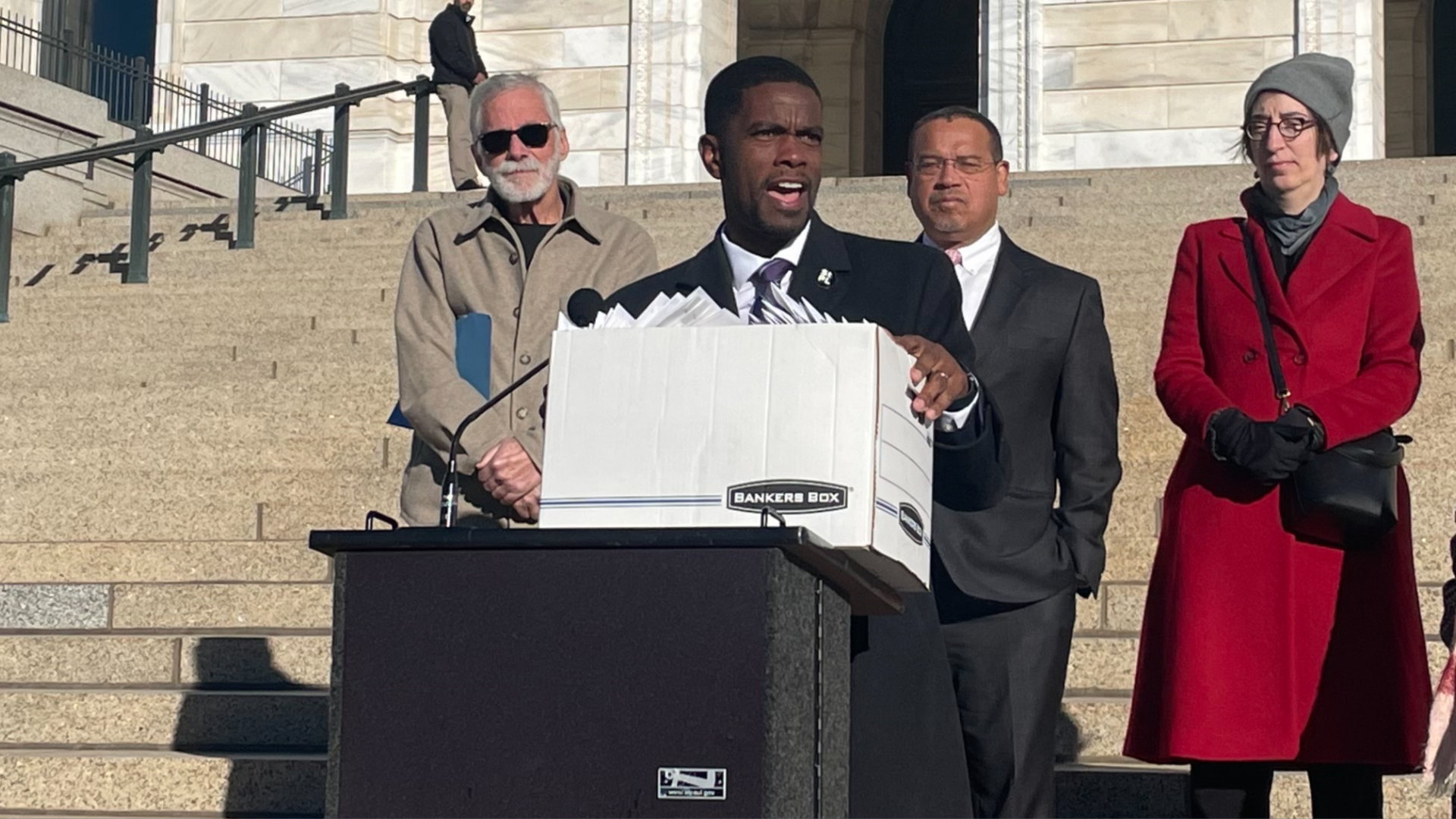
Mayor Melvin Carter with a box of about 400 letters Tuesday. Photo: Torey Van Oot/Axios
More than 32,000 St. Paul residents will soon receive letters telling them their unpaid doctor's bills are no longer due.
Why it matters: It's not a scam. It's the first round of a city-backed effort to eliminate $100 million in medical debt for unsuspecting community members — no application or action required.
- "It won't be a surprise to them that they owe that debt, it'll be a surprise to them that they don't owe it anymore," Mayor Melvin Carter said at a Tuesday news conference.
The big picture: Debt related to soaring health care costs can have sweeping and destabilizing effects, with research showing it causes increased risks of eviction, food insecurity and poor health outcomes, regardless of income.
- Nearly half of all bankruptcies are linked to medical issues.
Catch up quick: St. Paul's 2024 budget included spending more than $1 million in leftover federal COVID relief to work with the nonprofit Undue Medical Debt on forgiving unpaid bills.
How it works: Undue Medical Debt, formerly known as RIP Medical Debt, negotiates with hospital systems to purchase eligible debt in batches at a steep discount. It then forgives the bills, relieving consumers of the burden to pay.
- St. Paul's program will cover those who make up to 400% of the federal poverty guidelines — about $54,000 for an individual or $111,000 for a family of four — or who have medical debt that equates to 5% or more of their annual household income.
The fine print: The funds will only cover residents' unpaid bills at health systems within the city.
- Because the city used one-time federal funding for the initiative, future bills will still need to be paid.
- Carter describes it as a "reset" for those who have struggled post-pandemic.
Zoom in: The first wave of forgiveness, announced Tuesday, covered $40 million in debt owed to M Health Fairview.
- While the average balance in this batch was $268, one person will see a $104,972 bill disappear, Carter said.
- Other local health systems have said they'll work with the city and nonprofit to settle the bills.
Between the lines: Backers say they hope the effort will have a positive ripple effect on public health, with residents more willing to seek medical care once their debts are cleared.
What's next: Residents whose bills were cleared under this first wave of debt forgiveness should get a letter in the next 10 days or so.