If St. Paul voters approve a new child care program, finding seats could be tricky

Add Axios as your preferred source to
see more of our stories on Google.
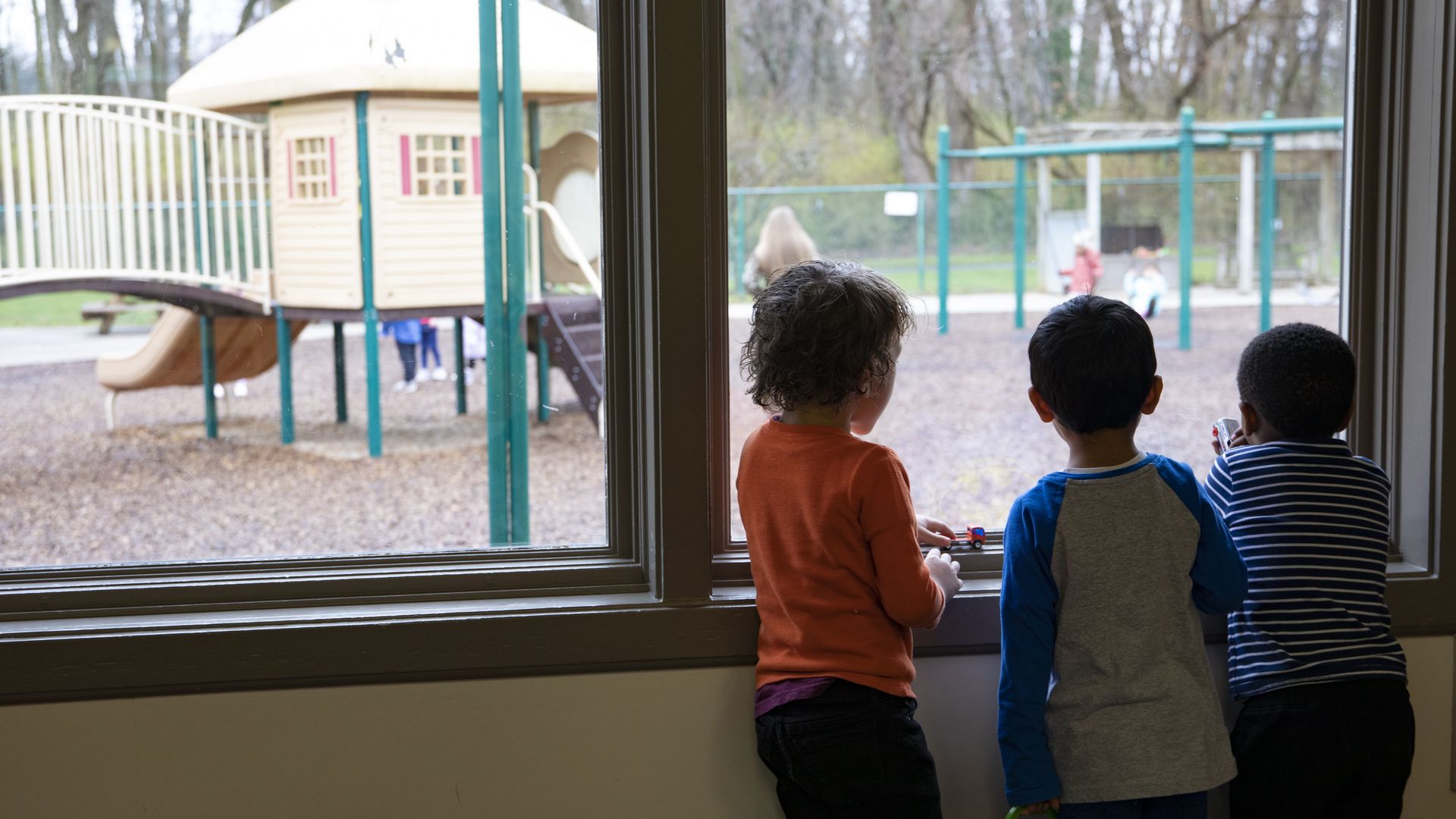
Children look out the window of a Head Start program in 2023. Photo: Maansi Srivastava/The Washington Post via Getty Images
Critics say the child care measure on St. Paul's ballot is missing a key detail: a plan to guarantee that families who receive a child care scholarship would be able to use it.
Why it matters: A main reason why child care in the U.S. is a mess is a lack of available space in programs that struggle to remain fully staffed.
- Many St. Paul neighborhoods are "child care deserts," where kids outnumber available seats by more than 3-to-1.
Details: St. Paul's program would phase in gradually, starting with subsidies for a handful of infants and toddlers, whom providers struggle the most to serve.
Yes, but: Celeste Finn, who runs Big Wonder Child Care in St. Paul, believes the initiative wouldn't offer enough money to encourage providers to open new seats or classrooms to accommodate these scholarship recipients.
The intrigue: The capacity concern is among the reasons Mayor Melvin Carter has vowed not to implement the program even if voters approve it.
- The mayor told reporters the ballot language misleads voters by promising to "increase the number of child care slots" when, he argues, supporters lack a clear plan for how to do this.
Reality check: Finn still plans to vote "yes" on the measure, because "the industry will go belly up if we don't get an influx of money," she told Axios.
- She's hoping that city officials refine the program as the property tax levy ramps up — from $2 million in the first year, to $20 million by year 10.
The other side: City Council Member Rebecca Noecker told Axios there aren't currently many subsidies available at all for infant and toddler care, so she's more optimistic the city's scholarships would make a difference.
- She has also pushed back on Carter's criticism about a lack of detail: "We have all the detail we need to get started."
Between the lines: It's "unclear" that the small initial amounts of funding will inspire providers to add seats to their programs, former Federal Reserve economist Rob Grunewald told Axios.
- But he said things may improve as the program ramps up and the size of the tax levy grows: "Larger and sustained amounts of funding would likely encourage some providers to serve more children."
What we're watching: Supporters' plans call for the program to evolve and establish contracts with child care providers to reserve seats, or even whole classrooms, for the city's program.
- The architects of the ballot measure opted to start with scholarships because it would be simpler and faster to roll out, according to the program plan.