St. Paul voters could approve a child care tax. The mayor doesn't want to collect it

Add Axios as your preferred source to
see more of our stories on Google.
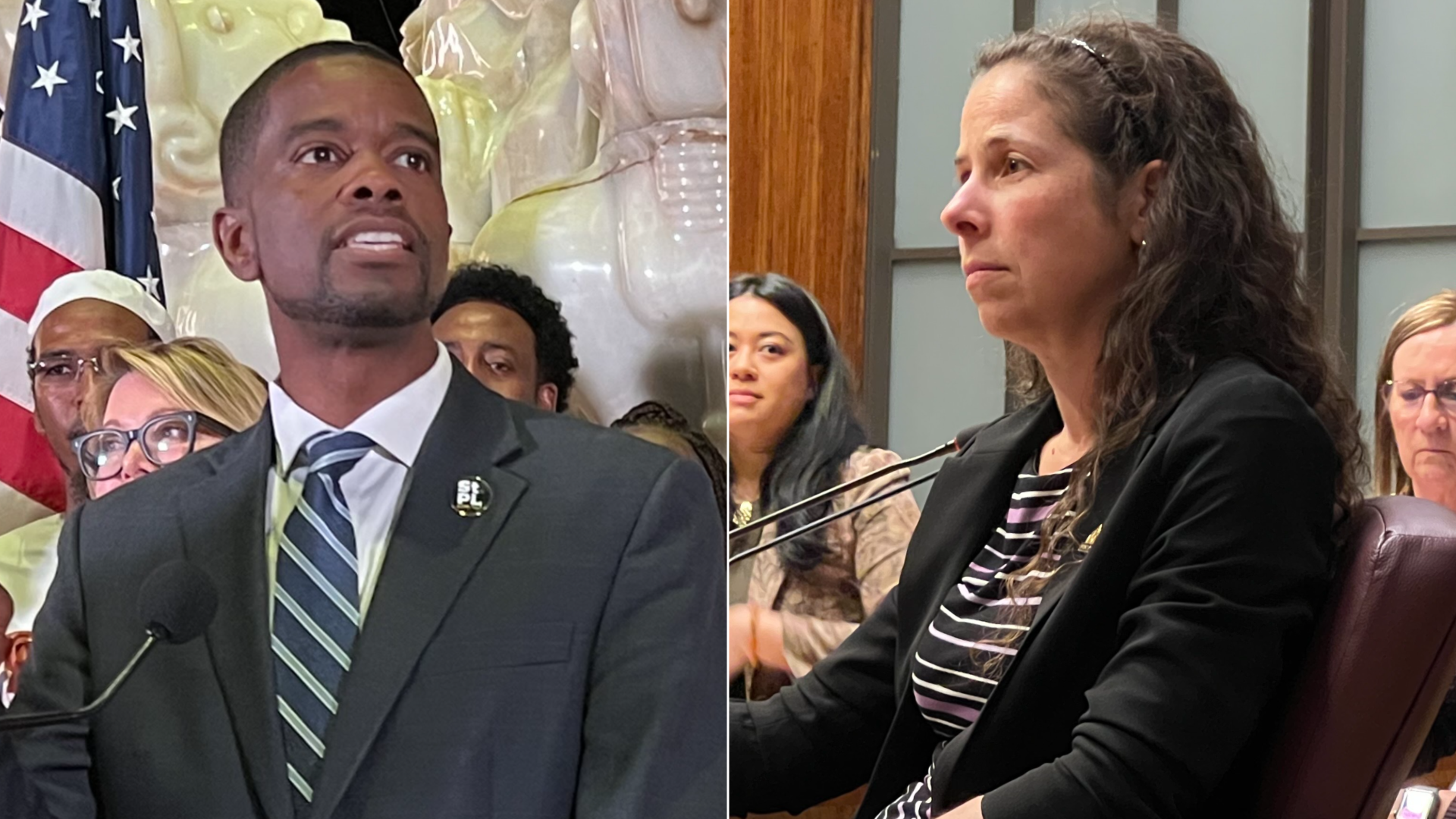
St. Paul Mayor Melvin Carter and Council Member Rebecca Noecker. Photos: Kyle Stokes/Axios
If St. Paul voters OK a tax increase on Election Day to pay for a city-run child care program, Mayor Melvin Carter says he will block its implementation.
Why it matters: Carter's threat creates uncertainty about what could become of a $20 million-a-year program that supporters say will chip away at a nationwide child care crisis.
- Ultimately, his administration could be in charge of carrying out a program that Carter believes is being set up to fail.
Catch up quick: According to supporters' plans, St. Paul's program would help cover child care costs for 150 low-income infants in its first year and scale up over 10 years to serve 4,000 kids.
What they're saying: Carter contends many voters will read the ballot language as ultimately authorizing help over 10 years for all 10,500 low-income kids ages 0-5 in St. Paul.
- "If that's the question that we're putting in front of voters, we'd better be ready to back it up, because otherwise it's a bait and switch," the mayor told reporters last week.
- He said if it passes he would decline to implement the program and veto any move to collect the tax.
Yes, but: City Council Member Rebecca Noecker told Axios this week she's confident a supermajority of city council members would overrule the mayor.
Supporters say they've always emphasized that the program would not serve all children, and Noecker accused Carter of "willfully misreading" the ballot question, which spells out how funding will gradually phase in.
- Voters "completely understand that this is like every other public program in existence," Noecker said. "It's not going to have funding to cover every single child who's eligible."
Zoom in: The mayor's staff produced their own projection showing that after inflation, the program might be able to serve only one-third as many children as originally envisioned — around 1,200 total.
- Noecker contends an alternative scenario is just as likely: State and federal funding for child care or early education could increase, meaning the number of children who could benefit from St. Paul's spending would grow.
The intrigue: A court's intervention may ultimately be necessary if the mayor tries to stop the program. Noecker said supporters have "legal options" and "political options."
- Carter also noted the city has been sued over ballot language in the past.