Minnesota Wild owner pledges $250 million for arena renovations, but that won't be enough

Add Axios as your preferred source to
see more of our stories on Google.
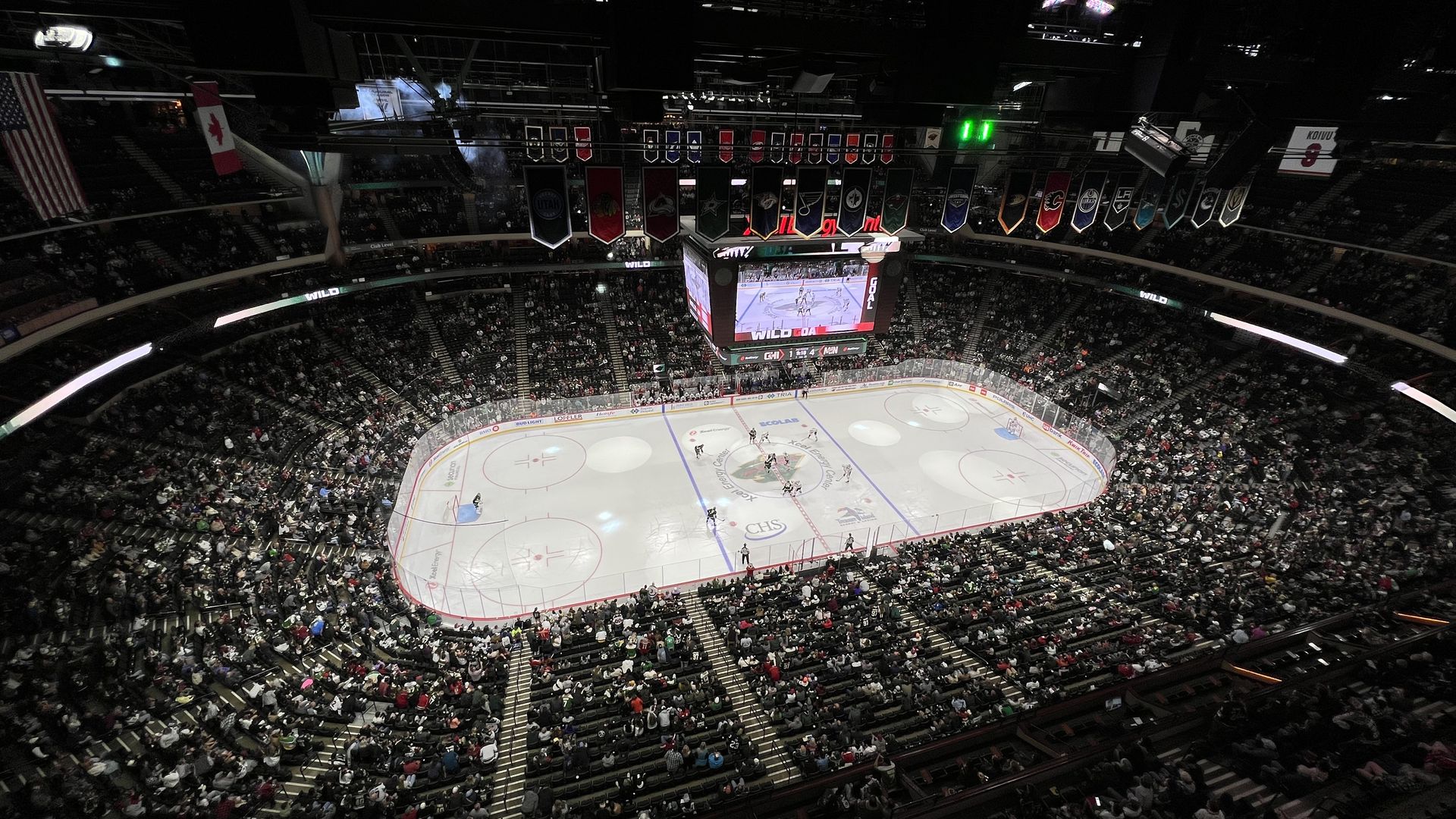
Xcel Energy Center, home of the NHL's Minnesota Wild, first opened in 2000 and was built mostly with public funding. Photo: Kyle Stokes/Axios
The Minnesota Wild plan to spend up to $250 million for facility upgrades in and around Xcel Energy Center — but the team's owner confirmed the whole project would likely cost "a lot more" than that.
Why it matters: Craig Leipold hopes to convince the Minnesota Legislature to contribute taxpayer dollars to a renovation of his team's 24-year-old arena and surrounding RiverCentre complex.
- The "X" remains popular with NHL fans, but city leaders have said it is too crucial an asset to downtown St. Paul's economy to age.
What they're saying: "It's time. The window is right now," Leipold told reporters Tuesday.
- "Either we continue to put Band-Aids on things, or we do the whole project — and the whole project is so great for downtown St. Paul."
Zoom in: Along with arena upgrades, the Wild envision building a 650-room hotel adjoined to the RiverCentre convention hall and renovations of the attached parking ramp and Roy Wilkins Auditorium, he said.
State of play: Initial reports on the Wild's plans quoted a $200-300 million estimate. On Tuesday, Leipold said the all-in price tag would be much higher, and the team is "still working on" a source for the rest of the funds.
- Most options for publicly financing the project — including a local sales tax increase or borrowing through the state's bonding bill — require convincing the Legislature.
Catch up quick: The City of St. Paul owns the arena and convention center complex. The Wild manage day-to-day operations and have leased the facility through 2035.
- Last session, city officials asked state lawmakers for a $2 million planning grant for the arena project. The request went nowhere.
The intrigue: St. Paul Mayor Melvin Carter hopes the renovations help make the arena a draw during the 200-plus nights each year that it's not hosting hockey games, state tournaments, concerts or rodeos.
- Carter told reporters in August he hopes for a revamp of both the arena's interior and exterior. He noted newer arenas often feature sidewalk cafés and bars that remain open on non-event days.
Reality check: Most academic studies have found public subsidies for sports arena projects have "very limited economic impact."
- The benefits mostly accrue to team owners and to proprietors of nearby or related businesses, according to three economists who summarized more than 100 studies on the subject.
What's next: The team is awaiting the results of the November election before ramping up lobbying at the state level.
- "We're kind of at a tough spot right now," Leipold said. "We don't know who the governor is going to be," or whether DFL lawmakers will retain control of the Capitol.
- Yes, but: The project would need bipartisan support regardless. A three-fifths vote of the Legislature is required to borrow money to finance construction projects like this.
What we're watching: This may not be the only arena project that public officials consider bolstering soon. The Timberwolves' Target Center is now the second-oldest facility in the NBA.