Minnesota has one of the lowest rates of low-wage workers

Add Axios as your preferred source to
see more of our stories on Google.
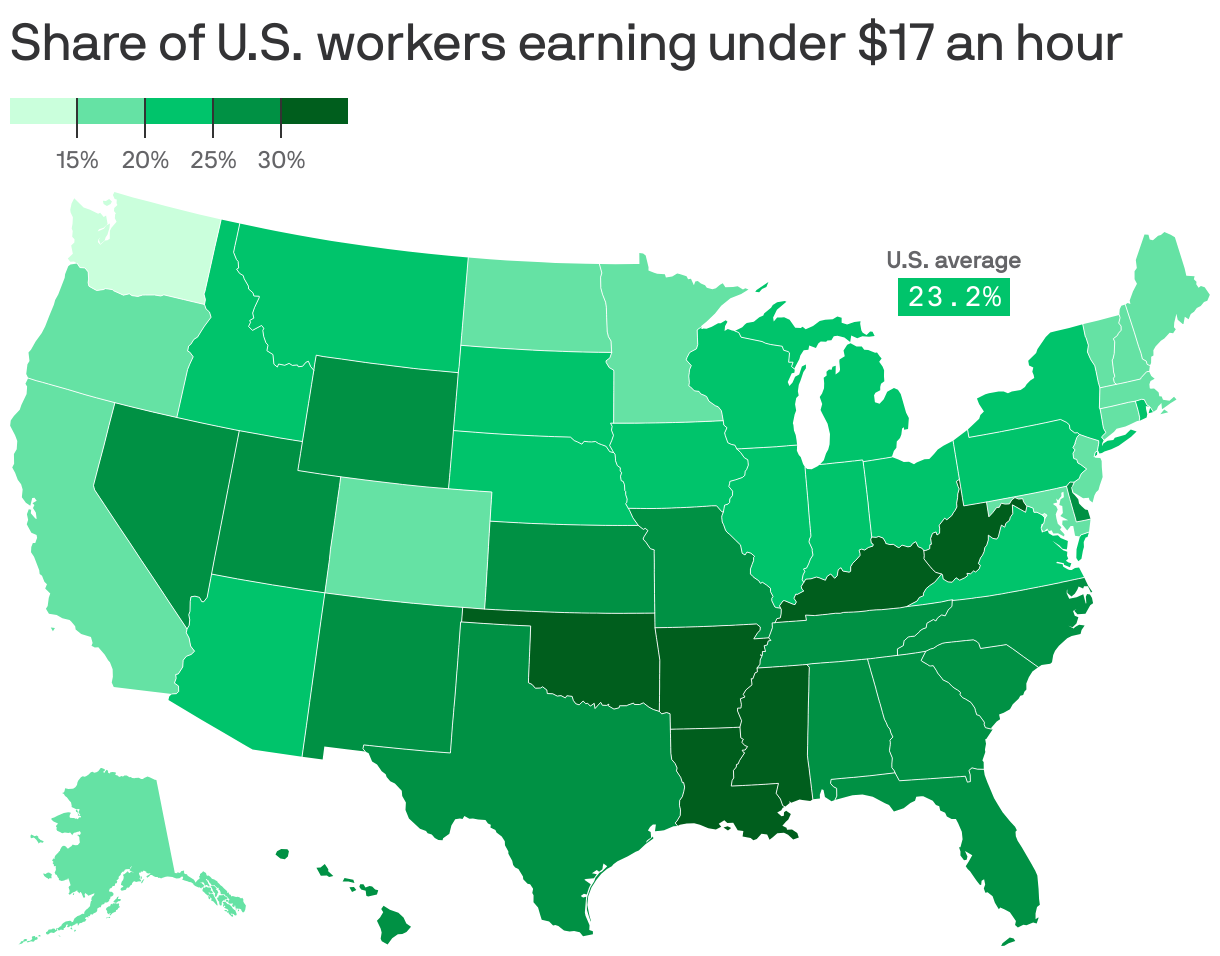
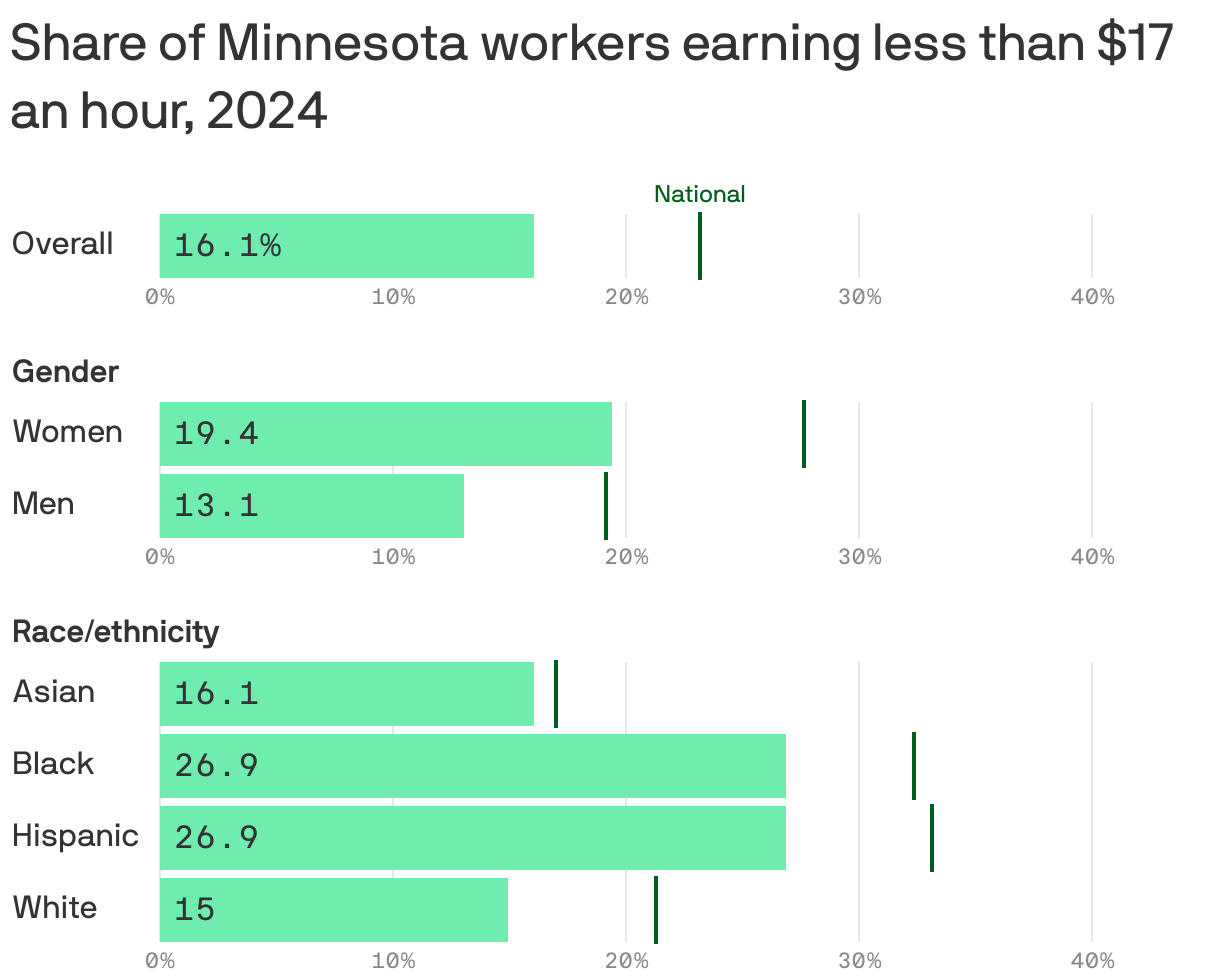
Just 16.1% of Minnesota workers make less than $17 an hour, one of the lowest rates in the country, according to a new report by Oxfam.
Why it matters: Minnesotans on the lowest end of the economic spectrum have seen some of the biggest raises in recent years, and many of them have risen above the $17 hourly threshold of what Oxfam calls a "low-wage worker."
Yes, but: The data also underlines Minnesota's wide racial wage gap. Black and Hispanic workers are much more likely to make less than $17 an hour compared to white and Asian workers.
- However, every gender and racial group in Minnesota is doing better than their respective national averages.
State of play: Minnesota's wage gap narrowed during the pandemic as the lowest-paid workers saw the biggest gains in pay, particularly in the hospitality and construction industries, according to research by the state's employment and economic development department.
- Wage gains in construction outpaced inflation, but in the hospitality sector, they didn't quite keep up with rising costs.
Between the lines: Washington, California, Colorado, and Oregon are the states with smaller shares of sub-$17 hour workers than Minnesota, but those states have higher costs of living.
By the numbers: Minnesota's minimum wage on Jan. 1 increased to $10.85 an hour for large employers and $8.85 for small employers.
- Minneapolis' minimum wage this month reached $15.57 for small and large employers, and St. Paul's just inched up to $15.57 for large organizations and $14 for small ones.
What's ahead: A bill in the most recent legislative session sought to raise the state's minimum wage to $15 in 2024 and $20 an hour by 2028, though it never made it to the floor for a vote.
- Just under 500,000 workers in Minnesota would see more pay if the state raised its minimum wage to $17 an hour, according to Oxfam.