The creeping re-segregation of Minneapolis and St. Paul schools

Add Axios as your preferred source to
see more of our stories on Google.
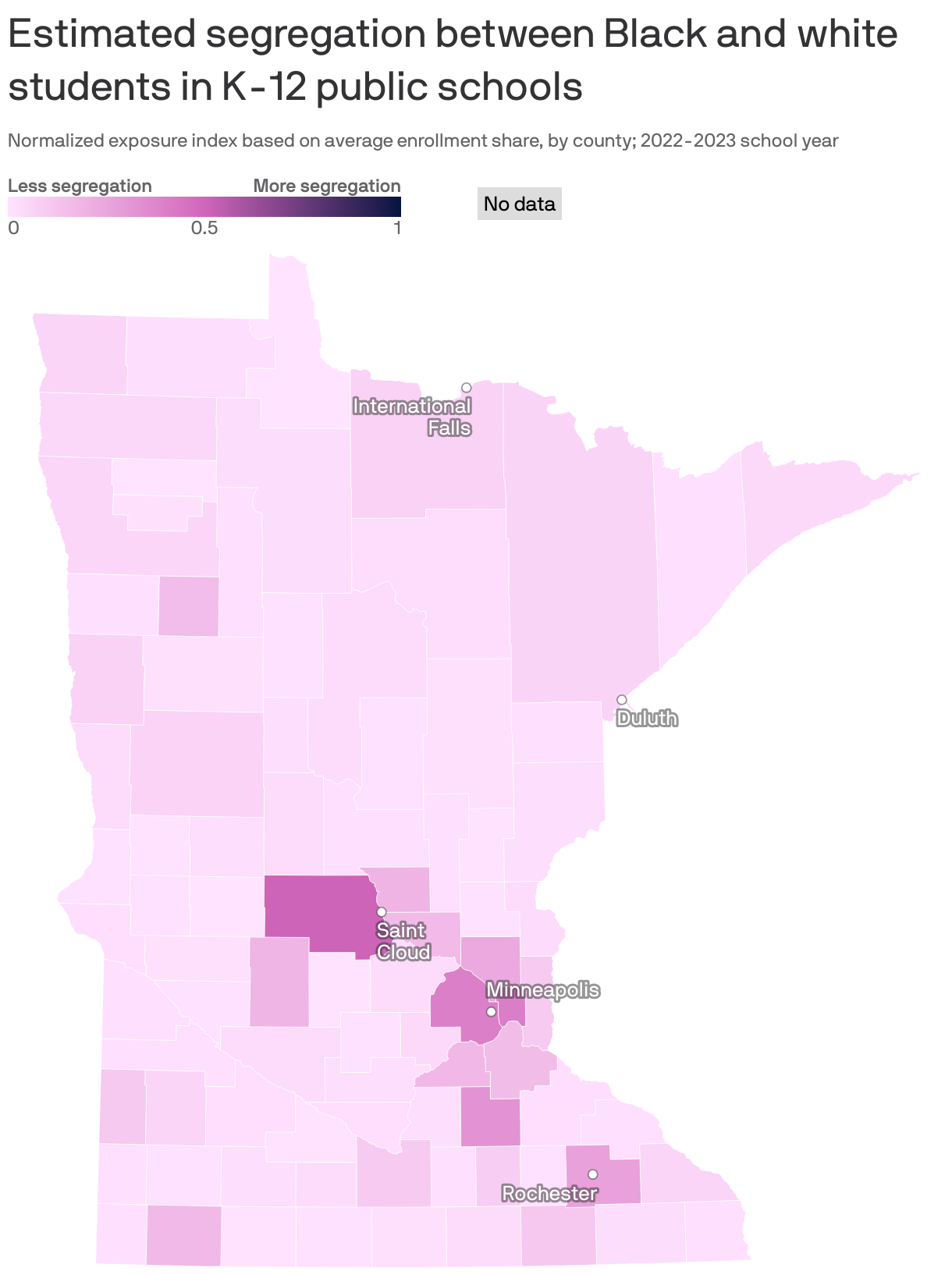
Three decades ago, the public schools in Minneapolis and St. Paul were largely racially integrated.
- Today, students of color in both cities' districts are far less likely to share classrooms with white peers, researchers have shown.
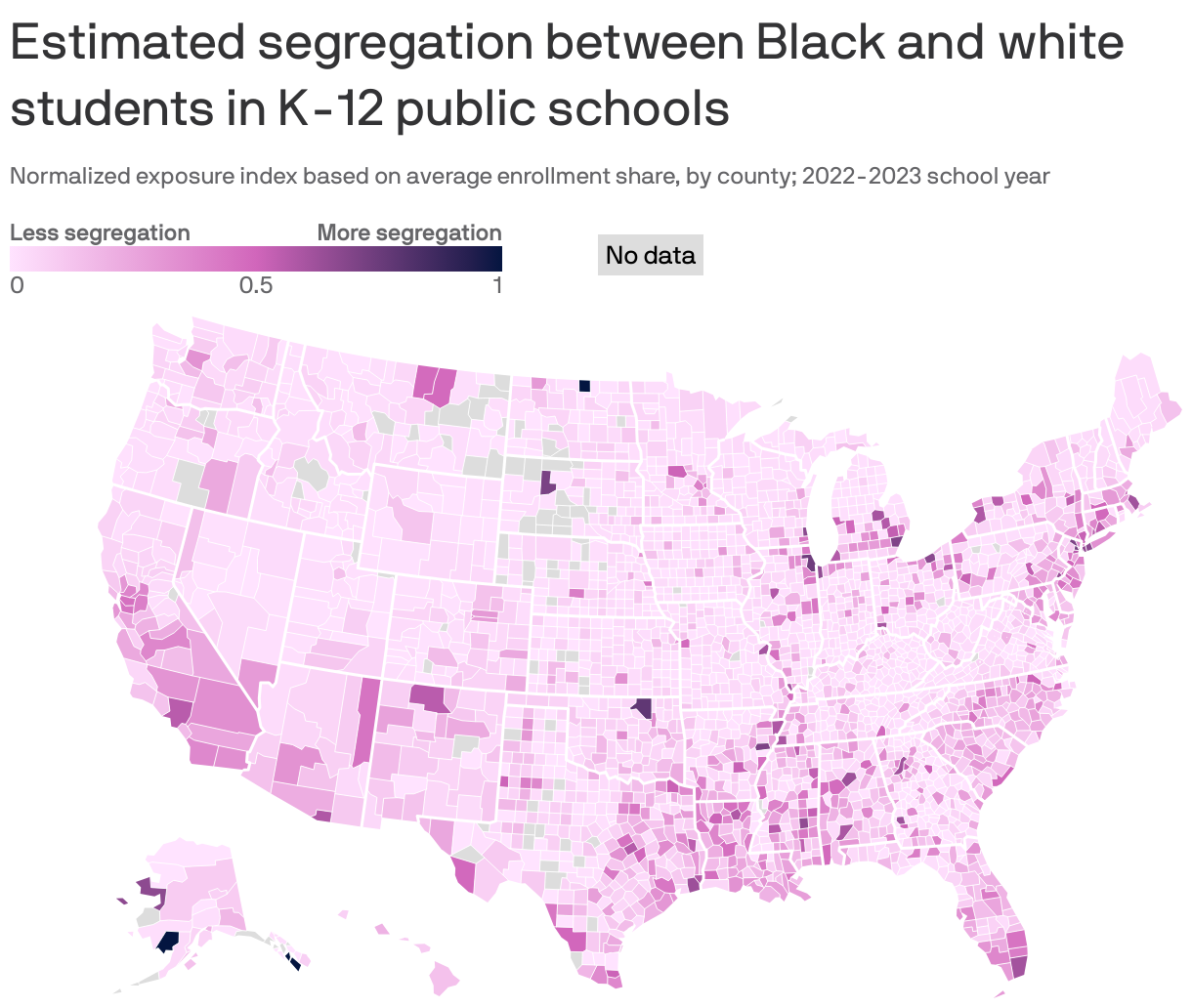
The big picture: Friday is the 70th anniversary of the landmark Brown v. Board of Education ruling — meant to end legal school segregation in the U.S. Yet new reports show Minneapolis and St. Paul mirror a national trend: racial segregation in K-12 public schools has increased dramatically.
Why it matters: Researchers have found school segregation disproportionately hurts Black and Latino students since those schools tend to have fewer resources, higher teacher turnover, and fewer advanced classes.
Zoom in: In 1991, Minneapolis and St. Paul schools barely registered on an index of racial segregation published by researchers at Stanford and the University of Southern California.
- Today, segregation between white students and kids of color in both cities is comparable to levels that districts like New Orleans and Atlanta have seen for years, according to their index.
- In Minneapolis, the index shows Black students are particularly racially isolated from their white peers.
- In St. Paul, the rate of segregation between Asian and white students stands out in the numbers.
Zoom out: The data also show segregation creeping up in suburban districts like Osseo and Robbinsdale as non-white enrollment increases in schools across the Twin Cities.
State of play: School segregation is at the heart of an ongoing lawsuit a group of Minneapolis and St. Paul parents filed against the state in 2015.
Catch up quick: The parents argued school segregation violated their children's constitutional rights to an adequate education.
- Late last year, the Minnesota Supreme Court ruled that the mere existence of "racial imbalances" between schools isn't necessarily proof that children's rights had been violated.
- Next, plaintiffs will return to a lower court to offer evidence the high court demanded: that segregation is a "substantial factor" in educational harms to children.
Friction point: In a forceful dissent, Chief Justice Natalie Hudson — the court's only Black member — said the latest test score data should've been enough to prove that segregation "has gone hand in hand with depressed academic outcomes for students of color."
- Black, Latino, and Indigenous students were less likely to meet standards on state tests than white and Asian students.
What they're saying: "People became convinced that desegregation didn't work, and you couldn't do it. And so there's just a lack of attention to this," Patricia Gándara, co-director of UCLA's Civil Rights Project, told Axios' Russell Contreras.
Go deeper: Nationwide, school segregation surges 70 years after Brown ruling