Minnesota's electric vehicle hotspots, mapped

Add Axios as your preferred source to
see more of our stories on Google.
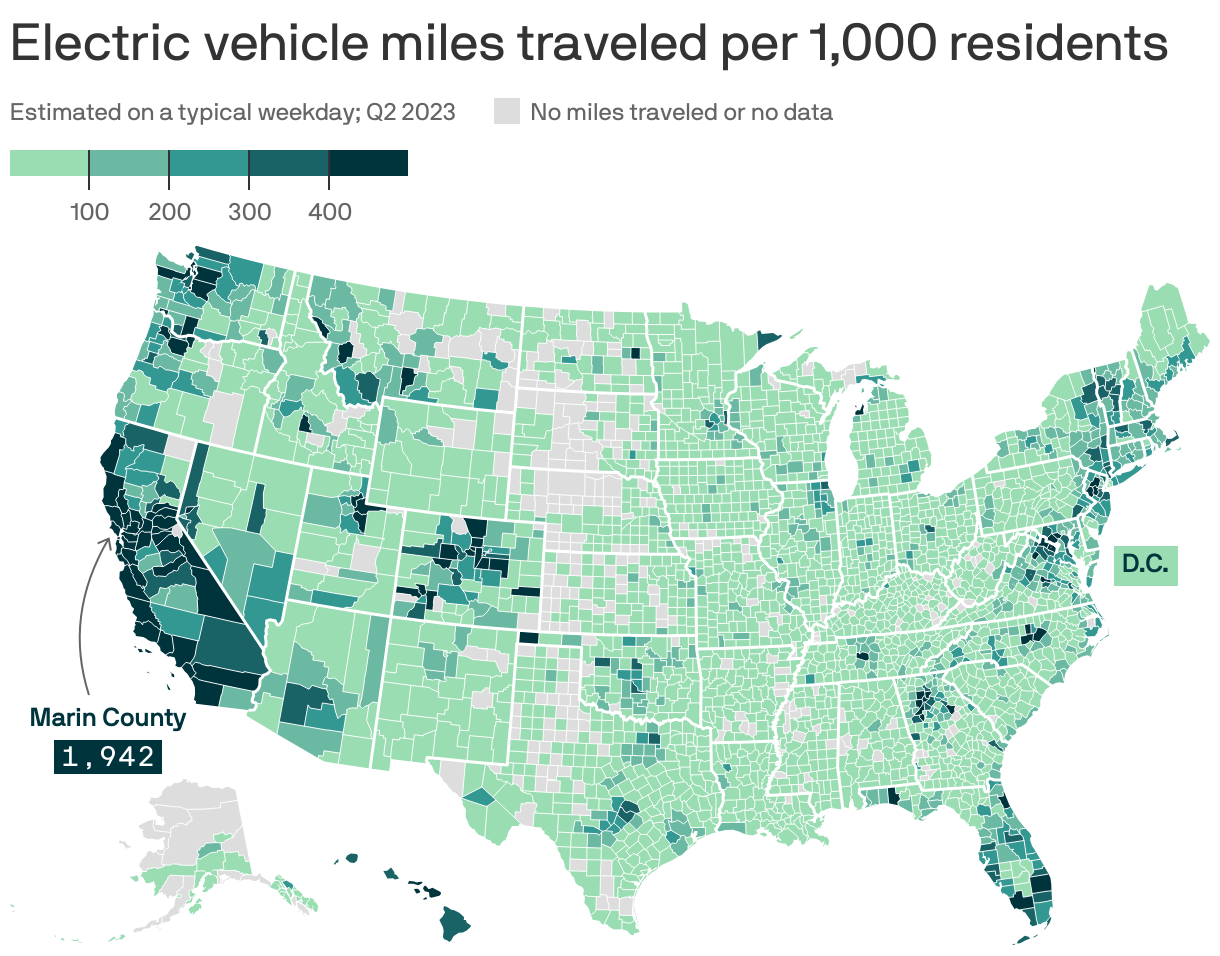
The Twin Cities trails electric vehicle hotspots across the country when it comes to EV miles driven in a typical week.
The big picture: Much of the country's EV use is concentrated in the "four corners" — California, the Pacific Northwest, the Northeast, and the Southeast — Alex Fitzpatrick and Kavya Beheraj report from data shared with Axios.
- The analysis, produced by the mobility analytics platform Replica, shows the uneven distribution of EV adoption across the state and nation.
Why it matters: Minnesota wants EVs to make up 20% of vehicles on the road by 2030. But a relatively slow start — fueled by cold-weather concerns and questions about charging infrastructure — threatens to hamper the goal.
- Fewer than 1% of vehicles in the state were EVs as of 2021.
Zoom in: Much of Minnesota's EV use is concentrated in the seven-county Twin Cities metro, the analysis found.
- Carver County topped the list, with 353 miles driven per 1,000 residents on the typical weekday. Washington (316) and Hennepin (233) counties were also near the top.
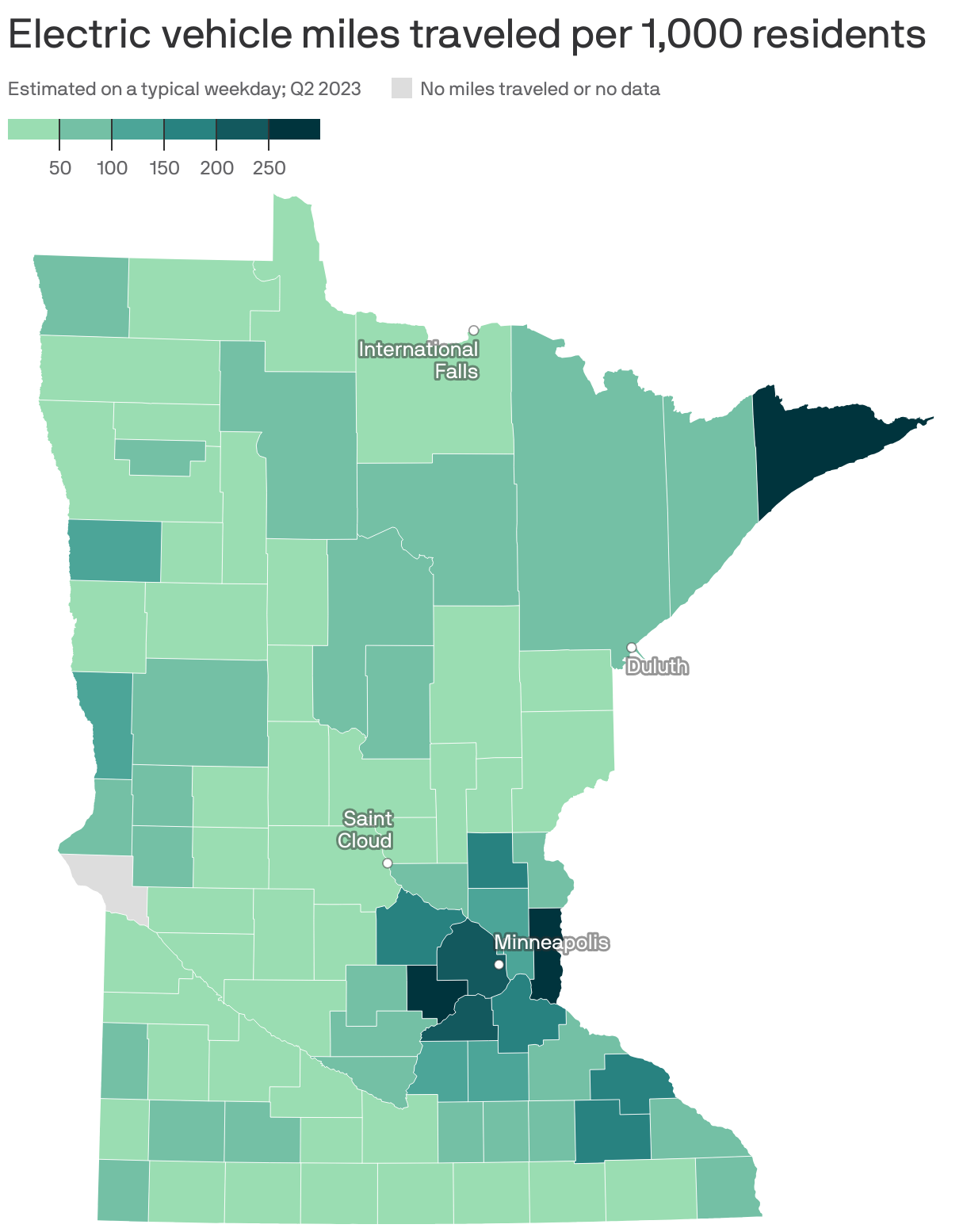
For context: The overall weekly miles traveled per 1,000 residents in the metro ranged from 18,000 to 31,000.
Zoom out: Some parts of the country saw EV mileage rates that were four or five times as high as Minnesota's top-ranked counties.
- Marin County, in Northern California, took the crown among large U.S. counties at 1,942.
Between the lines: The areas with the most EV activity are generally those with better-developed charging infrastructure, as well as higher income.
- Most of Minnesota's 1,450 public charging stations are located in the metro. Finding a charge in rural parts of the state can be a challenge, as the Star Tribune's Christopher Vondracek recently chronicled.
What's happening: Automakers, public agencies, and utilities are doubling down on their investments in charging infrastructure to help solve the range anxiety issue.
- Minnesota lawmakers included funding for more charging stations in the recent state budget. Xcel, meanwhile, recently rolled out a scaled-back EV plan focused on improving infrastructure at residential homes, where most people charge their cars.
What we're watching: A new state rebate program will provide buyers of many new EVs with $2,500 starting next year. Those purchasing used cars can get up to $600 back.
- House Majority Leader Jamie Long, a top advocate on energy and climate issues, told Axios he expects action to boost charging options at multi-family homes next session.