"In Our Hands" at Minneapolis Institute of Art puts Native photographers in control

Add Axios as your preferred source to
see more of our stories on Google.
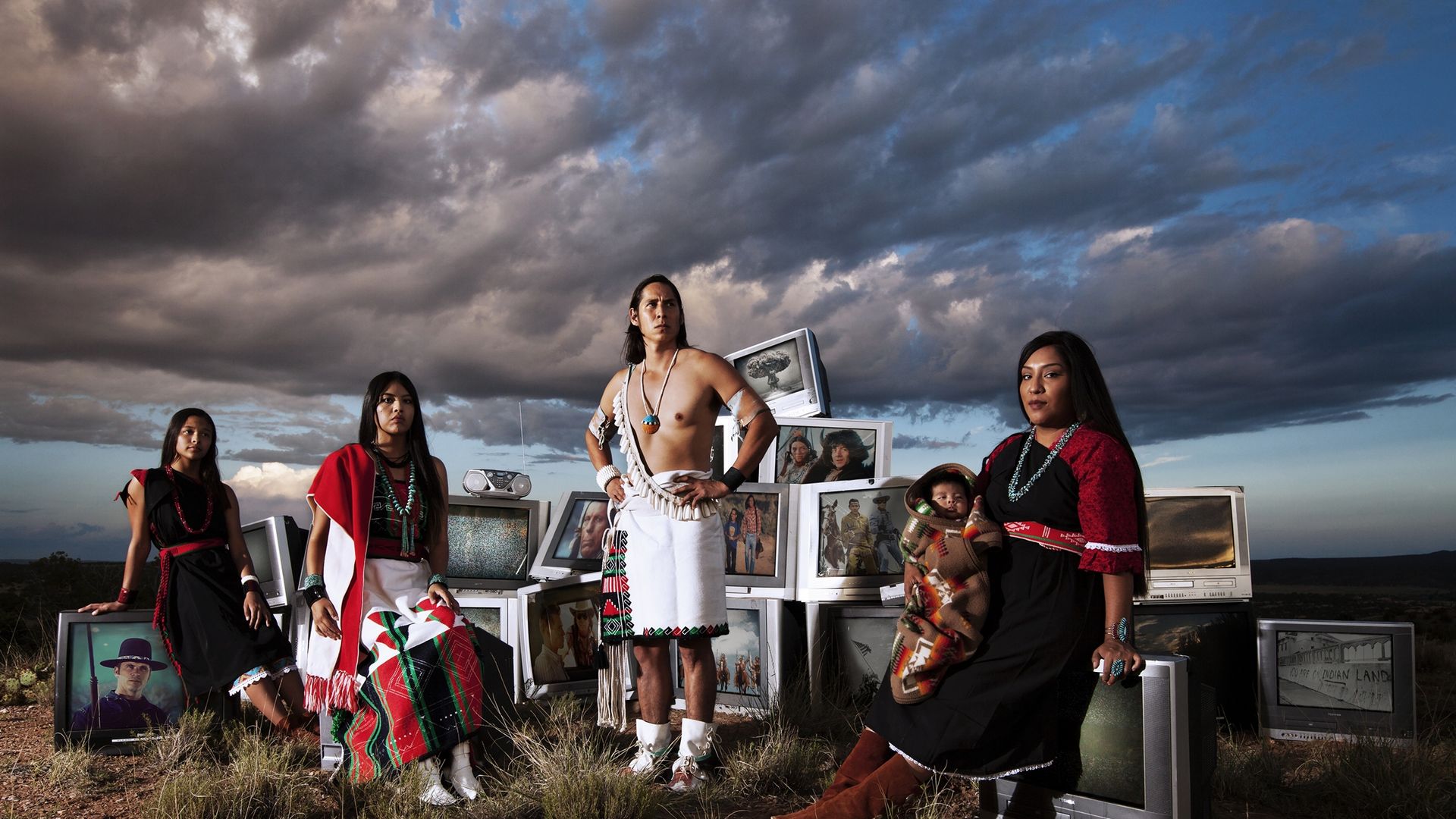
"TV Indians" by Cara Romero. Photo: Courtesy of Minneapolis Institute of Art
A new exhibit at Minneapolis Institute of Art is putting Native voices front and center.
What's happening: "In Our Hands: Native Photography, 1890 to Now", which opened Oct. 22, is the museum's largest exhibition of Indigenous photography to date, Mia's chair of global contemporary art and curator of photography & new media, Casey Riley, told Axios.
- It includes representation from First Nations, Métis, Inuit, and Native American cultures, from the Rio Grande to the Arctic Circle.
Why it matters: Works by white artists — particularly white men — dominate art museums nationwide, and the Indigenous art that is on display is often stolen, excluding Native voices and leaving out its true history.
- Mia's exhibit was created by and for Native people, illuminating the ways they've advanced the medium of photography for more than a century.
Background: The exhibition has been in the works since 2020 and was organized in partnership with a curatorial council largely made up of Indigenous artists and academics from the U.S. and Canada.
- An additional community council consisting of local Indigenous leaders, artists and tribal members also advised the project, photojournalist and Mia guest curator Jaida Grey Eagle said.
- Most of the art is loaned from private lenders and the artists themselves, Mia's associate curator of Native American art, Jill Ahlberg Yohe, added.
What to expect: "In Our Hands" features more than 150 photographs and is broken into three thematic sections, Ahlberg Yohe said.
- A World of Relations showcases Native peoples and cultures connections to land, animals, biology and more.
- Always Leaders recognizes Native leaders' work in championing environmental and social justice, past and present.
- Always Present illuminates the resilience, tenacity and vision of Native photographers and their communities, rejecting narratives that portray cultures as declining or disappearing.
Plus: There are two reflection spaces where both Native and non-Native visitors can pray, make offerings, write and hold discussions.
What they're saying: "I rarely see photography made by Native people within museums, and having access to something like this when I was younger would have greatly encouraged me," Grey Eagle told me.
- "I hope visitors, particularly youth, leave inspired — recognizing their history and the legends on these walls so that they can honor them in their own work."
📍 Details: "In Our Hands" is open through Jan. 14, 2024 in the Target Gallery. Tickets are $20; the rest of Mia is free.